
Rigid boxes are often associated with premium unboxing experiences, luxury branding, and strong product protection.Among all structural elements, corners are the most vulnerable part of a rigid box.
There are four common and effective ways to reinforce rigid box corners, including: Thickened Grayboard Corner Construction, Corner Wrapping Reinforcement with High-Strength Paper Layers, Decorative Corner Protectors, Internal Corner Locking and Adhesive Structure Optimization.
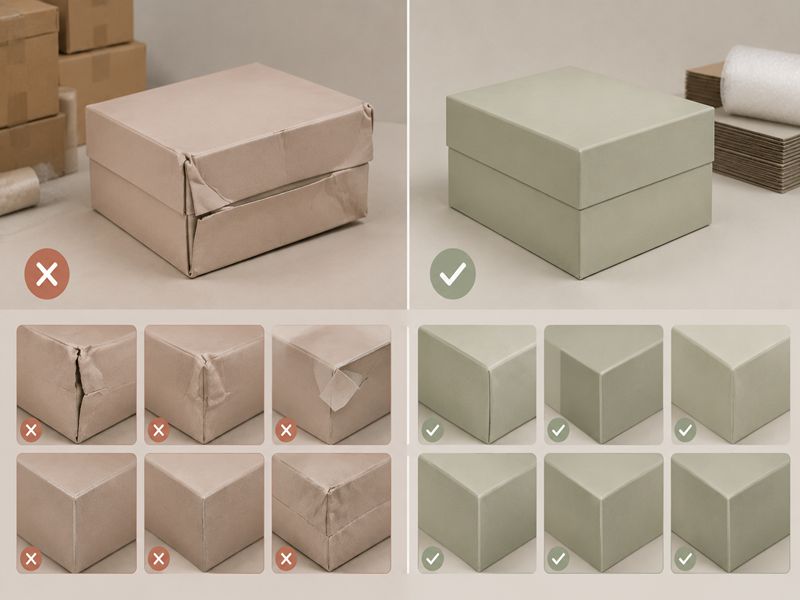
The Importance of Rigid Box Corners in Packaging Design
Rigid box packaging typically uses grayboard as the base structure, finished with printed paper or premium specialty materials. While the flat surfaces distribute pressure evenly, corners concentrate stress from multiple directions.
Common corner-related issues include:
- Edge cracking during transport compression
- Corner denting from stacking pressure
- Surface paper peeling due to impact
- Weak glue bonding at fold intersections
- Visible white lines after wrapping damage
- Loss of geometric shape over time
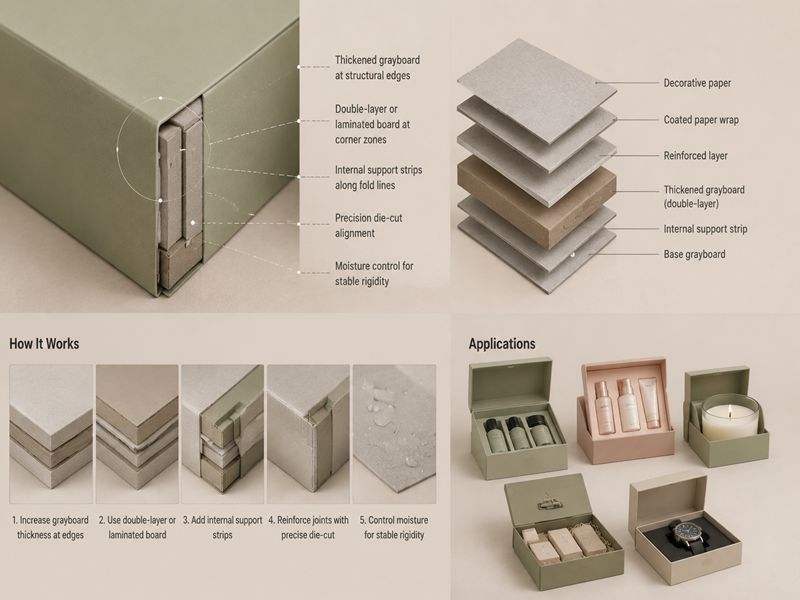
Method 1: Thickened Grayboard Corner Construction
The most fundamental way to reinforce corners is through grayboard structure optimization. Instead of relying solely on surface wrapping, this method strengthens the internal skeleton of the box.
1. How it works
Manufacturers adjust the corner strength by:
- Increasing grayboard thickness at structural edges
- Using double-layer or laminated board at corner zones
- Adding internal support strips along fold lines
- Reinforcing corner joints with precise die-cut alignment
- Controlling moisture content for stable rigidity
2. Applications
It is especially useful for:
- Heavy gift sets
- Cosmetic multi-piece boxes
- Candle and glass packaging
- Subscription boxes with multiple items
- High-value collectible packaging
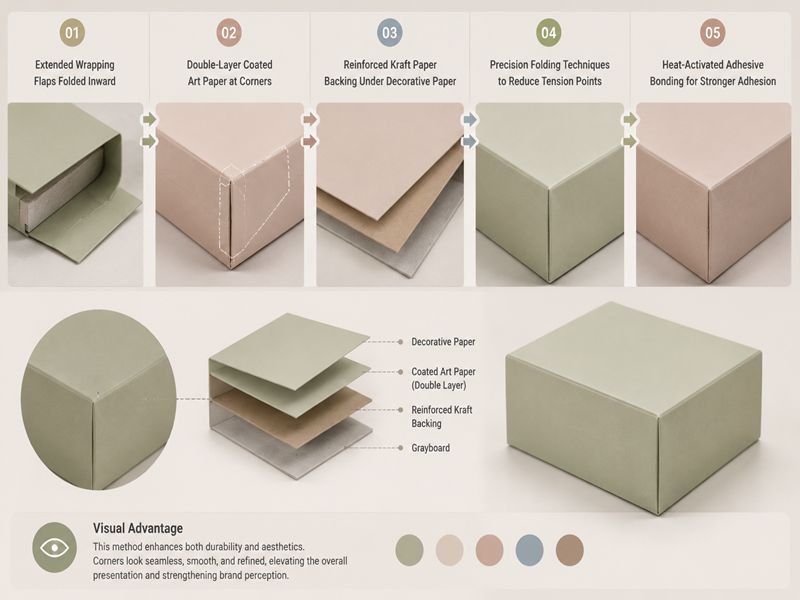
Method 2: Corner Wrapping Reinforcement with High-Strength Paper Layers
Another widely used method is corner wrapping reinforcement, where surface materials are engineered to strengthen vulnerable edge areas.
1. How it works
Additional material layers are applied to corners:
- Extended wrapping flaps folded inward
- Double-layer coated art paper at corner zones
- Reinforced kraft paper backing under decorative paper
- Precision folding techniques to reduce tension points
- Heat-activated adhesive bonding for stronger adhesion
2. Applications
It is especially useful for:
- Luxury cosmetic packaging
- Perfume rigid boxes
- Chocolate and confectionery packaging
- Seasonal gift packaging
- Boutique retail packaging
3. Visual advantage
Compared with structural thickening, this method improves durability while maintaining aesthetic quality. A well-wrapped corner appears seamless, smooth, and refined—important for brands emphasizing elegance and visual perfection.
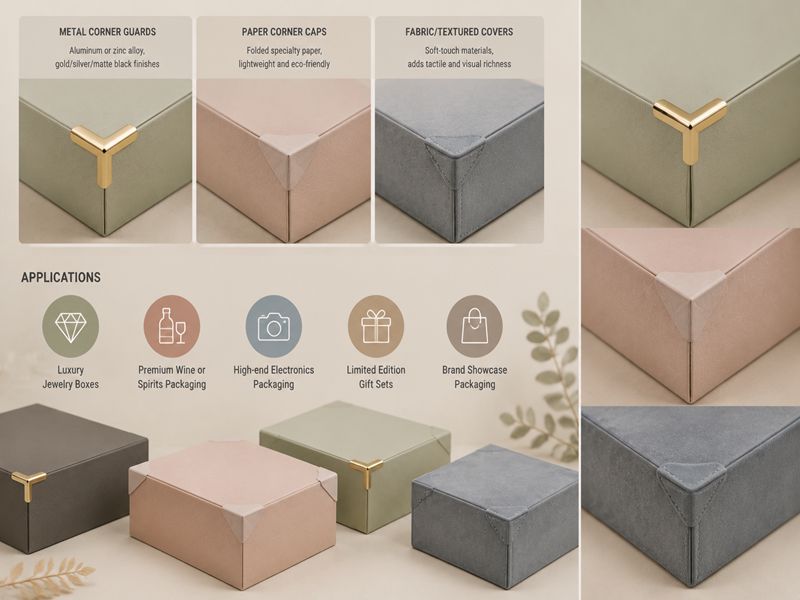
Method 3: Decorative Corner Protectors
In premium and luxury packaging, corners are not only reinforced—they are also designed as visual highlights. This method uses external or semi-external corner protectors.
1. Types of corner protectors:
| Corner Protector Type | Key Features | Typical Use |
| Metal corner guards | Aluminum or zinc alloy, available in gold/silver/matte black finishes | Luxury gift boxes, high-end rigid packaging |
| Paper corner caps | Folded specialty paper, brand-integrated design, lightweight and eco-friendly | Branded gift boxes, sustainable packaging |
| Fabric/textured covers | Soft-touch materials, adds tactile and visual richness | Boutique packaging, premium lifestyle products |
2. Applications
It is especially suitable for:
- Luxury jewelry boxes
- Premium wine or spirits packaging
- High-end electronics packaging
- Limited edition gift sets
- Brand showcase packaging
3. Experience impact
Corner protectors create a feeling of craftsmanship. When customers see reinforced edges with decorative finishes, the packaging communicates durability, care, and attention to detail.
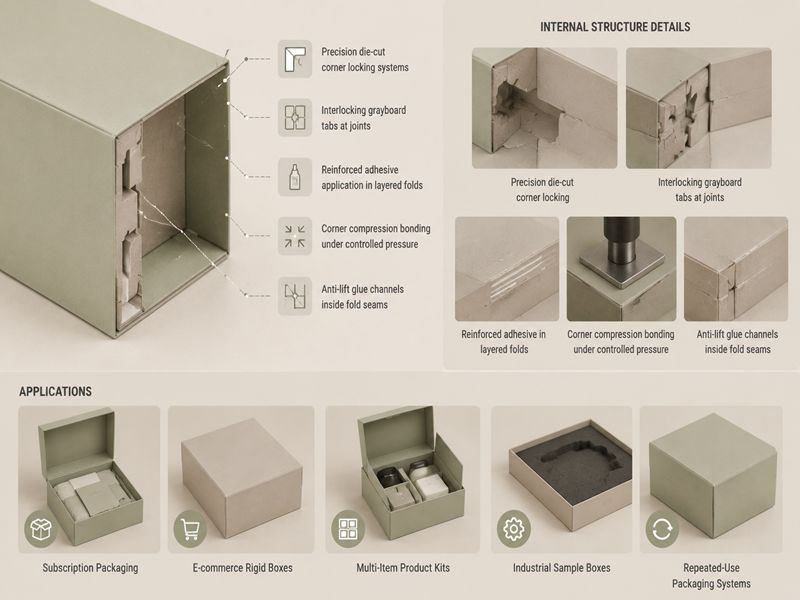
Method 4: Internal Corner Locking and Adhesive Structure Optimization
While external reinforcement is visible, internal bonding is equally important. This method focuses on hidden structural strength inside the box.
1. How it works
- Precision die-cut corner locking systems
- Interlocking grayboard tabs at joints
- Reinforced adhesive application in layered folds
- Corner compression bonding under controlled pressure
- Anti-lift glue channels inside fold seams
2. Applications
- Subscription packaging
- E-commerce rigid boxes
- Multi-item product kits
- Industrial sample boxes
- Repeated-use packaging systems
Sustainability Considerations in Corner Reinforcement
Modern packaging design also considers environmental impact.
Sustainable corner reinforcement options include:
- Recyclable kraft-based reinforcement layers
- Reduced plastic usage in corner protectors
- Water-based adhesive systems
- Mono-material grayboard structures
- Lightweight engineering to reduce material waste
Sustainability does not mean weaker packaging. With proper engineering, eco-friendly materials can still deliver strong corner performance.
Choosing the Right Corner Reinforcement Method
Not all packaging requires the same level of reinforcement. The best approach depends on product type, weight, and brand positioning.
| Product Type / Scenario | Recommended Corner Reinforcement Method |
| Lightweight luxury packaging | Corner wrapping reinforcement |
| Heavy or multi-item packaging | Thickened grayboard structure |
| Premium branding focus | Decorative corner protectors |
| E-commerce / shipping-intensive use | Internal locking structure |
In many cases, the strongest solution is a combination of two or more methods.
| Combined Solutions Examples | Application Scenario |
| Grayboard reinforcement + internal locking | Shipping / logistics boxes |
| Corner wrapping + decorative protectors | Luxury retail packaging |
This layered approach is often used in high-end Custom rigid box production, where both performance and presentation are equally important.
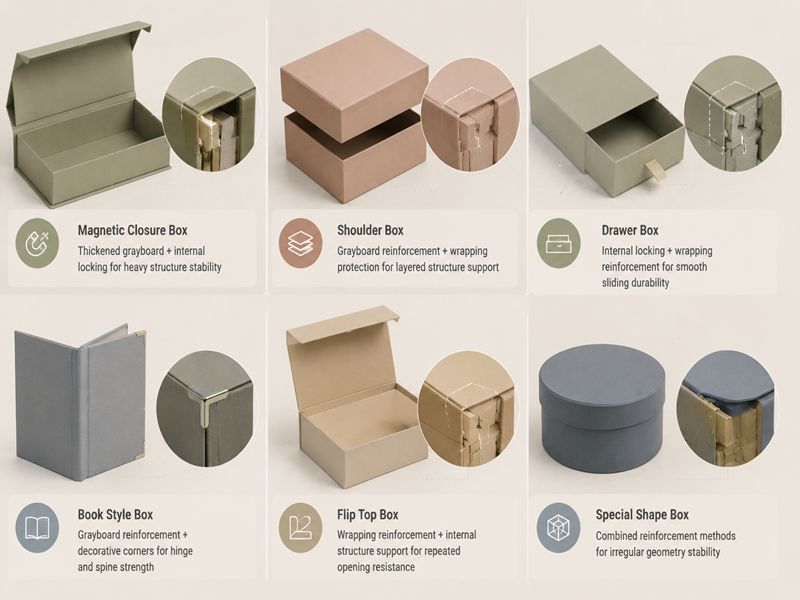
Corner Reinforcement Applications in Different Box Types
| Box Type | Reinforcement Strategy |
| Magnetic Closure Box | Thickened grayboard + internal locking for heavy structure stability |
| Shoulder Box | Grayboard reinforcement + wrapping protection for layered structure support |
| Drawer Box | Internal locking + wrapping reinforcement for smooth sliding durability |
| Book Style Box | Grayboard reinforcement + decorative corners for hinge and spine strength |
| Flip Top Box | Wrapping reinforcement + internal structure support for repeated opening resistance |
| Special Shape Box | Combined reinforcement methods for irregular geometry stability |
Common Mistakes in Corner Design
1. Over-reliance on surface paper
While decorative paper contributes to visual appeal and brand identity, it does not provide structural support.
When corners are not reinforced internally, surface paper is forced to absorb impact and tension. Over time, this leads to:
- Corner
- Edge lifting or bubbling
- Surface cracking at fold lines
- Visible wear after short-term use
Without proper grayboard or internal support, even the most premium paper cannot prevent structural failure.
2. Ignoring product weight distribution
Even if the box structure is strong, uneven weight distribution inside can create constant pressure on specific corners.
This often happens when:
- Heavy items are placed off-center
- Accessories shift during transport
- Inserts do not fully secure the product
- Multi-item kits lack proper compartment balance
When pressure is not evenly distributed, corners become stress concentration points during vibration, stacking, or dropping.A well-designed structure should always consider how the product moves inside the box—not just how it fits visually.
3. Weak adhesive control
Adhesive application is often underestimated in rigid box production, but it plays a critical role in corner durability.
If glue coverage is inconsistent or insufficient, problems may appear such as:
- Delamination at corner folds
- Paper separation after humidity exposure
- Weak bonding between grayboard joints
- Gradual loosening after repeated opening
Even a strong structural design can fail if bonding strength is uneven. In professional production, adhesive control is treated as a precision process, involving temperature, pressure, drying time, and material compatibility.
4. Sharp geometry without reinforcement
The sharper the edge, the more concentrated the stress becomes at the fold point. Without reinforcement, this can lead to:
- Edge crushing during stacking
- Corner indentation from minor impacts
- Faster wear in transit handling
- Loss of geometric accuracy over time
A visually sharp corner should always be supported by internal reinforcement techniques such as laminated grayboard, folded support layers, or hidden corner locks.
5. One-size-fits-all design approach
Different products place completely different demands on corner strength:
| Product Type | Corner Design Requirement |
| Fragile items | Shock absorption and impact protection |
| Heavy items | High load-bearing corner reinforcement |
| Luxury packaging | Structural strength + visual refinement |
| E-commerce packaging | Repeated handling durability |
| Gift packaging | Balanced protection and presentation |
In modern packaging engineering, flexibility is more important than uniformity.A well-designed Custom rigid box does not just hold a product—it protects the brand story from the very first edge to the final impression.