Custom rigid boxes can use many printing and finishing methods, including offset printing, digital printing, screen printing, flexographic printing, gravure printing, UV printing, hot foil stamping, embossing, and debossing.
Offset printing delivers premium full-color results, digital printing fits samples and short runs, while screen printing is ideal for simple logos and specialty papers.
Printing Method Comparison
| Printing Method | Best For | Suitable Quantity | Visual Effect |
| Offset printing | Full-color premium packaging | Medium to large orders | Sharp, detailed, high quality |
| Digital printing | Samples and small orders | Small quantity | Flexible and fast |
| Screen printing | Simple logos and solid colors | Small to medium orders | Bold and strong ink |
| Flexographic printing | Simple repeated patterns | Large orders | Efficient and practical |
| Gravure printing | Very large production runs | Very large orders | Rich and stable color |
| UV printing | Highlighted logos or patterns | Medium to large orders | Glossy and premium |
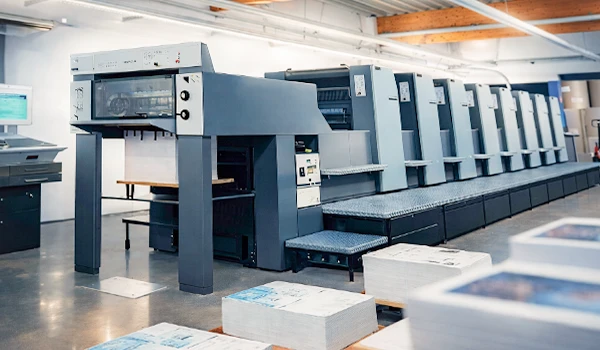
Offset Printing
Offset printing is widely used for producing high-quality custom rigid box packaging. It is widely used for high-quality packaging because it provides sharp images, stable colors, and excellent detail.
In rigid box production, offset printing is usually applied to coated paper or art paper before the paper is mounted onto the rigid board.
Advantages of Offset Printing
Offset printing is suitable for full-color designs, product images, gradients, patterns, and detailed brand graphics. It offers excellent color consistency, especially for medium and large production runs.
Common Applications
Offset printing is commonly used for:
- Cosmetic rigid boxes
- Perfume boxes
- Electronics packaging
- Luxury gift boxes
- Retail product boxes
- Food gift packaging
- Jewelry and watch boxes
| Pros | Cons |
| High printing quality | Higher setup cost |
| Good for full-color artwork | Not ideal for very small orders |
| Stable color consistency | Plate making is required |
| Suitable for mass production | Longer preparation time than digital printing |
| Works well with surface finishing | Design changes after plate making may increase cost |
Offset printing is usually the best choice when the order quantity is medium to large and the design requires high-quality color performance.
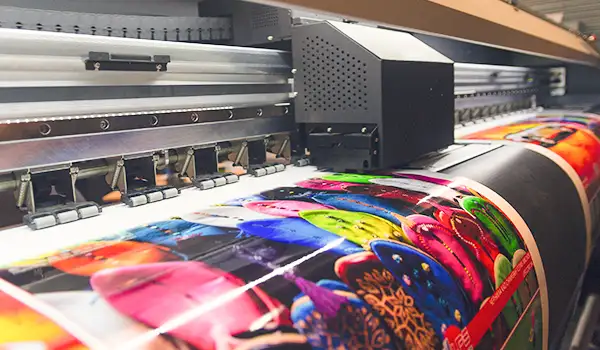
Digital Printing
Digital printing prints directly from files without using plates. The design file can be printed directly onto paper, making it suitable for small orders, sample boxes, short-run packaging, and personalized designs.
For custom rigid boxes, digital printing is often used during product development or when brands need fast packaging samples.
Advantages of Digital Printing
The biggest advantage of digital printing is flexibility. It has a lower setup cost and a faster production process for small quantities. It is also suitable for variable data printing, such as different names, serial numbers, limited edition designs, or customized packaging versions.
Common Applications
Digital printing is commonly used for:
- Packaging samples
- Small-batch gift boxes
- Startup brand packaging
- Personalized rigid boxes
- Limited edition packaging
- Event or promotional packaging
| Pros | Cons |
| No plate cost | Unit cost may be higher for bulk orders |
| Fast sample production | Color consistency may be less stable than offset |
| Suitable for small orders | Limited material compatibility in some cases |
| Easy to modify artwork | Not always ideal for very high-end mass production |
| Supports personalized printing | Some finishes may require additional testing |
Digital printing is a good option when speed, flexibility, and low minimum order quantity are more important than the lowest unit cost.
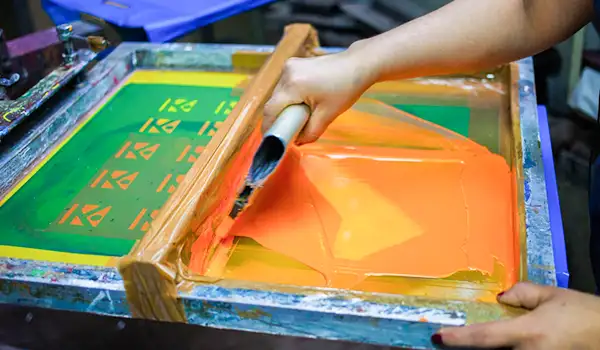
Screen Printing
Screen printing transfers ink onto a surface through a fine mesh stencil. It is often used for bold colors, simple graphics, logos, and special ink effects.
For rigid boxes, screen printing is especially useful on specialty paper, textured paper, kraft paper, black card paper, and certain luxury wrapping materials.
Advantages of Screen Printing
Screen printing can create strong ink coverage and vivid solid colors. It performs well on darker papers or textured surfaces where normal offset printing may not achieve the desired result.
It can also be used for special effects, such as thick ink, metallic ink, white ink, fluorescent ink, and raised printing effects.
Common Applications
Screen printing is commonly used for:
- Luxury rigid boxes
- Black card packaging
- Kraft paper boxes
- Textured paper gift boxes
- Simple logo packaging
- Premium brand packaging
| Pros | Cons |
| Strong ink coverage | Not ideal for complex full-color images |
| Good for dark or textured paper | Slower than offset printing |
| Suitable for simple logos | Higher labor and setup requirements |
| Can create special ink effects | Less efficient for large detailed artwork |
| Works well for luxury minimalist designs | Color registration may need careful control |
Screen printing is a good choice when the design is simple, bold, and focused on logo or brand identity rather than full-color images.
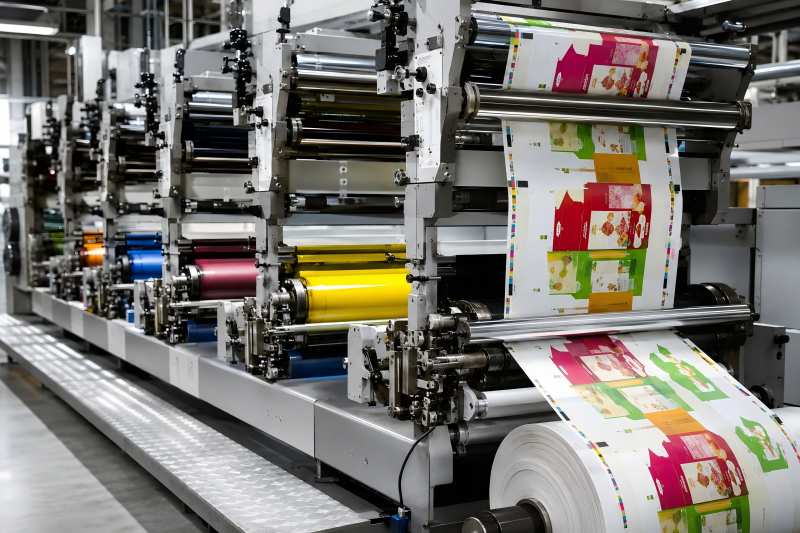
Flexographic Printing
For custom rigid boxes, flexographic printing is less common than offset printing, but it can still be used in certain packaging projects, especially when simple graphics, large quantities, or cost efficiency are important.
Advantages of Flexographic Printing
Flexo printing offers high-speed output and works well for bulk packaging orders. It can print on different materials and is efficient for simple repeated patterns, brand marks, and basic color designs.
Common Applications
Flexographic printing may be used for:
- Simple gift box wrapping paper
- Kraft-style packaging
- Large-volume packaging production
- Basic logo or pattern printing
- Eco-style paper packaging
| Pros | Cons |
| Fast production speed | Lower image detail than offset printing |
| Suitable for large quantities | Not ideal for luxury photo-quality designs |
| Can print on various materials | Plate cost is required |
| Good for simple patterns | Color precision may be limited |
| Efficient for repeated designs | Less common for premium rigid boxes |
Flexographic printing is more suitable for simple and large-volume packaging rather than high-end luxury rigid boxes with detailed artwork.
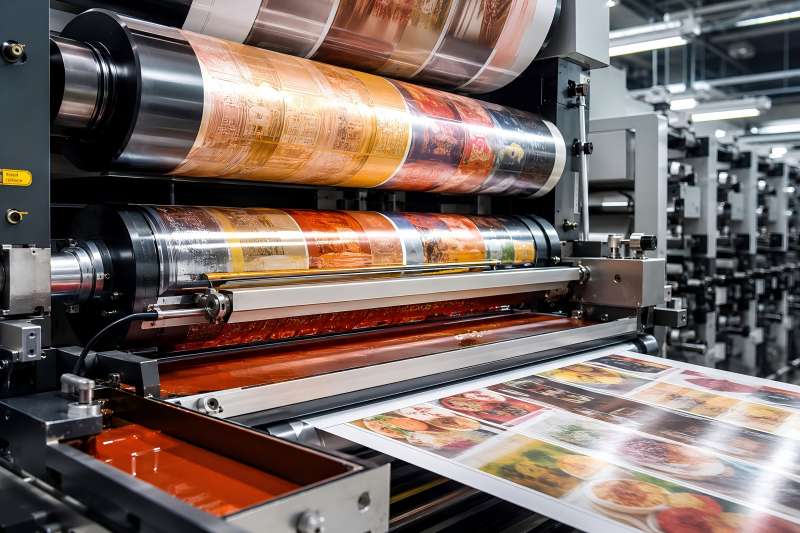
Gravure Printing
Gravure printing transfers ink through engraved cylinders for fast, consistent printing. It provides excellent color density and stable quality for very large production runs.
In rigid box packaging, gravure printing is not as common as offset printing because the setup cost is high. However, it can be used when the same printed wrapping paper is required in very large quantities.
Advantages of Gravure Printing
Gravure printing delivers vivid colors, smooth transitions, and stable print quality. It is efficient for long-run production and can be suitable for repeated packaging designs.
Common Applications
Gravure printing may be used for:
- Large-volume gift packaging
- Premium printed wrapping paper
- High-volume retail packaging
- Seasonal packaging with repeated designs
- Luxury product packaging in large batches
| Pros | Cons |
| Excellent color density | High cylinder-making cost |
| Very stable for long runs | Not suitable for small orders |
| Good for rich images and gradients | Longer setup time |
| High production speed | Design changes are expensive |
| Suitable for repeated mass production | Less flexible than digital printing |
Gravure printing is mainly suitable for large brands or packaging projects with high and stable order quantities.
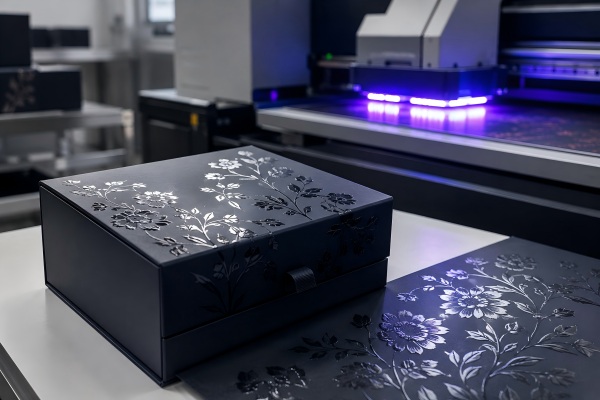
UV Printing
UV printing uses ultraviolet light to cure ink quickly after printing. It can create sharp, durable, and glossy printing effects. UV printing can be used as a main printing method in some cases, but in rigid box packaging, it is also commonly used as a finishing effect, such as spot UV.
Advantages of UV Printing
UV printing can create bright colors, strong surface effects, and good resistance to wear. Spot UV adds glossy emphasis to logos, patterns, or key box details.
For example, a matte black rigid box with a glossy UV logo can create a subtle but premium contrast.
Common Applications
UV printing is commonly used for:
- Luxury gift boxes
- Cosmetic packaging
- Electronics boxes
- Black card boxes
- High-end brand logos
- Premium retail packaging
| Pros | Cons |
| Creates glossy and premium effects | May increase production cost |
| Good durability | Not suitable for all paper surfaces |
| Useful for highlighting logos | Requires accurate positioning |
| Works well with matte lamination | Testing may be needed for specialty paper |
| Enhances visual contrast | Large UV areas may affect folding |
UV printing is especially useful when the brand wants a more refined and high-end visual effect.
How to Choose the Right Printing Method
Choose a printing method based on artwork complexity, order volume, material, budget, and desired brand image.
For full-color artwork, product images, and detailed patterns, offset printing is usually the most suitable choice. It provides high-quality results and stable color performance.
For samples, short-run orders, or personalized packaging, digital printing is more flexible and cost-effective.
For simple logos on kraft paper, black paper, or textured paper, screen printing can provide strong color coverage.
For luxury packaging, foil stamping, embossing, debossing, and UV effects are often added to improve brand image and unboxing experience.
For very large production orders, gravure printing or flexographic printing may be considered if the design and material are suitable.