
Rigid boxes need both visual appeal and transport strength. Compression resistance, protected corners, firm inserts, stable stacking, humidity control, and drop testing all help the package survive international shipping.
What to Check Before Shipping Rigid Boxes
| Shipping Detail | What It Protects | Buyer Checkpoint |
| Compression Strength | Box shape under stacking pressure | Confirm board thickness, box size, and product weight |
| Edge and Corner Protection | Corners, wrapped paper, lid shape | Check wrapping tightness and corner hardness |
| Insert Positioning and Fit | Product shifting inside the package | Check the insert using the actual product |
| Stacking Design | Boxes stored in warehouse or container | Test loaded cartons under stacking pressure |
| Humidity Resistance | Paper surface, glue, board shape | Check lamination, storage condition, and moisture control |
| Drop Risk Control | Impact during handling and delivery | Run drop tests with finished packaging |
Compression Strength: Prevent Box Deformation
1. Board Thickness Must Match Product Weight
Compression strength is one of the first details to review in rigid box packaging. A rigid box may look premium, but weak board can still bend when cartons are stacked during shipping.
| Greyboard Thickness | Product Weight | Suitable Packaging |
| 0.8–1.0 mm | Under 100 g | Cards, samples, small accessories |
| 1.2–1.5 mm | 100–300 g | Jewelry boxes, small beauty boxes |
| 1.5–2.0 mm | 300–800 g | Perfume boxes, small candle boxes, cosmetic sets |
| 2.0–2.5 mm | 800 g–1.5 kg | Glass candle jars, rigid gift boxes with lids |
| 2.5–3.0 mm+ | Over 1.5 kg | Large gift sets, heavy luxury rigid boxes |
Rigid candle boxes need extra attention because candles are dense and often packed in glass jars or tins. Once the board is too thin, the lid may sink, the base may deform, and the whole package may lose its gift-ready shape.
2. Box Size Affects Pressure Resistance
A larger rigid box does not always offer better strength. Wide lids, deep bases, and empty inner space can make the structure easier to press down during stacking.
Key points to confirm include:
- Product weight
- Box length, width, and height
- Board thickness
- Lid depth
- Bottom support
- Insert structure
- Carton packing quantity
A two piece rigid box with a deeper lid can improve coverage and presentation. The base still needs enough strength to carry the product without bending. A rigid drawer box also needs a firm sleeve and tray, otherwise the sliding structure may become loose after transport.
Edge and Corner Protection: Reduce Visible Damage
1. Corners Are the First Area to Get Damaged
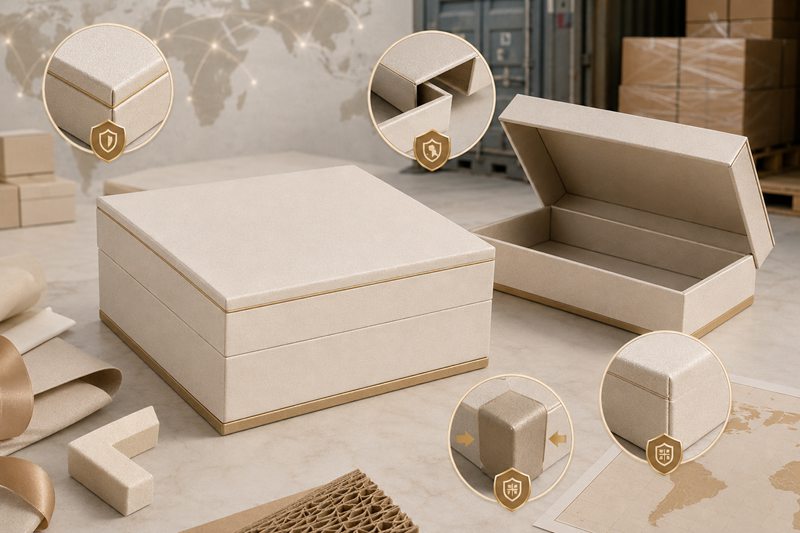
Edges and corners often show shipping damage earlier than the flat surface. Cartons may be pushed, stacked, dragged, or handled roughly, and impact usually reaches the box corners first.
Small dents can affect the premium feeling of luxury rigid boxes. Rigid gift boxes with lids are especially sensitive because the lid edge is visible as soon as the customer opens the package.
Strong corner quality depends on accurate board cutting, tight paper wrapping, clean folding, and stable glue bonding. Loose paper around the corners may wrinkle, peel, or crack after long-distance shipping.
2. Wrapped Edges Need Clean Finishing
Custom printed rigid boxes require careful edge finishing because printed paper can make cracks, scratches, and pressure lines more noticeable. Dark colors, metallic paper, soft-touch lamination, and foil areas often highlight small defects.
Corner inspection can focus on:
- Lid corner sharpness
- Base corner strength
- Paper wrapping tightness
- Glue marks
- Edge cracks
- Color breaking on folded areas
- Corner alignment between lid and base
Magnetic rigid boxes also need stable wrapping around the flap area. Weak flap corners may peel after repeated opening, especially when the box is used as a reusable gift package.
Inner Insert Fit: Stop Product Movement
1. The Product Should Not Shake Inside the Box
An insert does more than improve display. It keeps the product in position during shipping and reduces movement inside the box.
Loose products may hit the lid, side walls, or other items in the same gift set. Scratches, dented candle tins, broken corners, loose caps, and damaged bottles can all come from poor insert fit.
For e-commerce rigid box packaging, testing should be based on the real product instead of relying only on drawings.The insert should secure the item in place without making it difficult for customers to take out.
2. Common Insert Options
Different products need different insert materials. Product weight, surface finish, sustainability goals, and presentation style all affect the final choice.
Common insert options include:
- Paperboard insert
- Greyboard insert
- Corrugated insert
- EVA insert
- Foam insert
- Molded pulp insert
- Velvet insert
- Satin lining
- Fabric insert
Rigid candle boxes may use paperboard, molded pulp, or EVA inserts based on candle weight and jar shape. Jewelry, cosmetics, and premium gift sets often use velvet, satin, or foam inserts to improve both protection and unboxing experience.
3. Multi-Product Sets Need More Space Control
Gift sets often include bottles, jars, cards, accessories, refills, or small tools. Each item needs a stable position, otherwise products may collide during shipping.
Good insert design leaves enough clearance around each product. Too much space makes the package feel loose, while too little space can make the item difficult to remove.
A loaded sample gives the clearest result before mass production. Checking only the empty rigid gift box may miss movement problems that appear during real delivery.
Stacking Design: Avoid Pressure in Warehousing
1. Stacking Happens Before and After Shipping
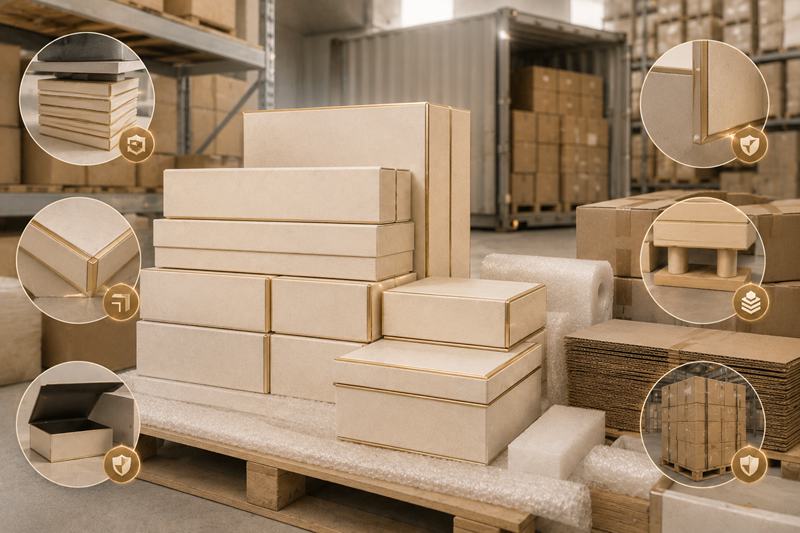
Rigid boxes may be stacked at the factory, export warehouse, shipping container, local warehouse, and retail storage area. The package may carry weight for weeks before the customer opens it.
DTC and retail brands need the box to arrive ready for gifting. A crushed lid, bent base, or marked surface can make the product feel cheaper, even if the item inside is not damaged.
Stacking design needs to consider both the individual rigid box and the outer carton. A premium display box alone cannot solve all transport pressure problems.
2. Foldable Structures Need Stacking Strength Checks
A foldable rigid box can reduce shipping volume and warehouse space, but its stacking strength needs extra attention after assembly.
Stacking-related checks include:
- Side wall stability after assembly
- Bottom board strength after product loading
- Folded corner tightness under pressure
- Magnetic flap stability during stacking
- Loaded box compression test
- Export carton stacking test
- Shape recovery after long-time pressure
Foldable rigid box packaging can work well for gift and retail products. Real packing tests are still necessary because the assembled structure carries the product differently from a fixed rigid box.
Humidity Resistance: Control Paper and Glue Problems
1. Moisture Can Change the Box Shape
Rigid boxes are made with paper, board, glue, and surface wrapping material. These materials may react to humidity during sea shipping, warehouse storage, or rainy-season delivery.
Moisture can lead to warping, paper bubbling, glue failure, soft corners, and surface marks. Climate changes between the factory, port, container, and destination country may increase the risk.
Moisture damage is especially noticeable on luxury rigid boxes and custom printed rigid boxes because the surface finish shows defects more clearly. Smooth printed lids may show waves, stains, or uneven texture after moisture exposure.
2. Surface Finishing Helps but Does Not Solve Everything
Lamination can improve surface protection, but it cannot make the whole rigid box waterproof. Matte, gloss, soft-touch, and anti-scratch lamination mainly protect the printed surface, while board edges and inner layers still need proper moisture control.
Important checks include:
- Paper moisture level
- Glue drying time
- Storage humidity
- Carton protection
- Plastic bag use
- Desiccant use
- Sea shipping conditions
- Warehouse environment
Rigid gift boxes with lids need to be fully dry before carton packing. Early packing may trap moisture inside the carton and affect the box surface during long-distance transport.
Drop Risk Control: Prepare for Rough Handling
1. Drops Can Damage Both the Box and the Product
International shipping includes many handling steps. Cartons may move through forklifts, trucks, conveyors, couriers, and manual loading.
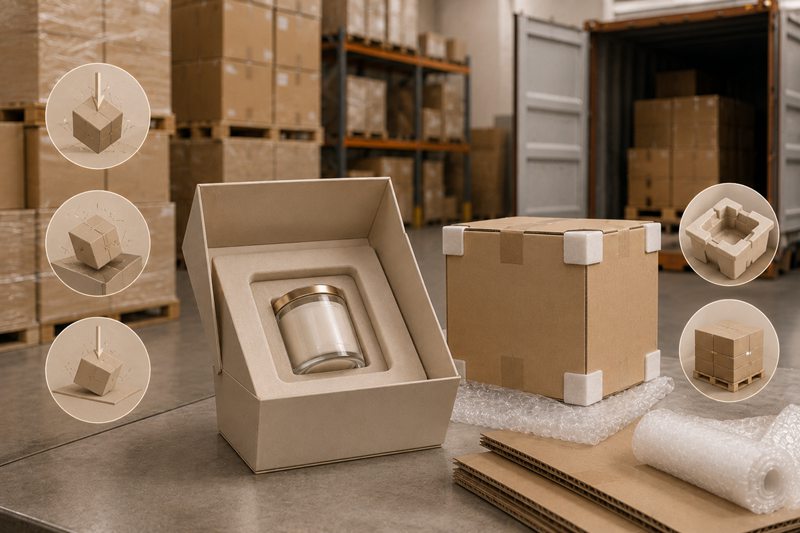
A sudden drop can damage the rigid box corner, loosen the insert, crack the product, or deform the lid. Glass jars, candles, cosmetics, electronics, and fragile gift sets carry higher risk.
Rigid candle boxes need careful drop testing because candle jars are often heavy and breakable. Impact protection depends on the insert, box walls, and outer carton working together during storage and shipping.
2. Drop Testing Should Use the Final Packing Method
A sample box may look strong when tested alone. The real result depends on the finished product, insert, rigid box, inner protection, and outer carton.
Useful drop test directions include:
- Flat drop
- Edge drop
- Corner drop
- Side drop
- Carton drop
- Loaded box test
- Full shipping sample test
A rigid drawer box should be tested from both the sleeve side and tray side. A two piece rigid box needs checking after impact to confirm whether the lid still aligns well with the base.

How Buyers Can Work Better with a Rigid Box Maker
1. Share Shipping Details Early
A rigid box maker can design stronger packaging when the buyer provides real shipping details before sampling. Product information and delivery conditions help the supplier choose a safer structure.
Helpful information includes:
- Product weight
- Product size
- Product material
- Sales channel
- Shipping method
- Destination country
- Warehouse condition
- Retail or e-commerce use
- Gift-ready requirement
- Budget range
Custom rigid boxes should not be designed by appearance alone. Retail shelf display, influencer gift kits, and international e-commerce delivery may each need different board strength, insert design, and carton packing.
2. Test Before Mass Production
Photos and empty samples cannot show every shipping risk. A loaded sample gives a more accurate view of lid fit, insert fit, corner strength, surface condition, carton packing, stacking pressure, and drop resistance.
Before mass production of rigid box packaging, buyers need to test the approved sample with the actual product. Small changes in weight, product shape, or insert depth may affect the final transport result.
This step matters even more for rigid gift boxes, luxury rigid boxes, magnetic rigid boxes, rigid magnetic boxes, rigid candle boxes, and custom printed rigid boxes used for direct customer delivery.