Inserts are an important part of rigid box packaging. They protect the product, improve presentation, organize multiple items, and enhance the overall unboxing experience. Common rigid box inserts include paper inserts, cardboard inserts, EVA inserts, foam inserts, molded pulp inserts, plastic tray inserts, velvet inserts, satin lining, and fabric inserts.
Comparison Table of Common Rigid Box Inserts
| Insert Type | Protection Level | Appearance | Eco-Friendly Level | Cost Level |
| Paper insert | Low to medium | Clean and simple | High | Low |
| Cardboard insert | Medium | Practical | High | Low to medium |
| EVA insert | High | Clean and premium | Low to medium | Medium to high |
| Foam insert | High | Protective | Low | Medium |
| Molded pulp insert | Medium | Natural | High | Medium |
| Plastic tray | Medium | Clean and molded | Low to medium | Medium |
| Velvet insert | Medium | Luxury | Low to medium | High |
| Satin lining | Low to medium | Elegant | Low to medium | Medium to high |
| Fabric insert | Medium | Premium and textured | Medium | Medium to high |
Paper Insert
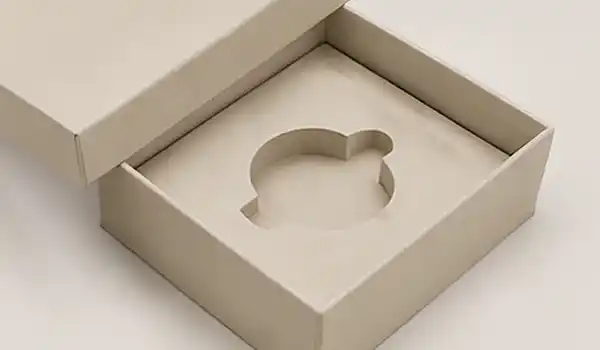
Paper inserts are popular, affordable options made from art paper, coated paper, kraft paper, or specialty paper. The paper can be folded, die-cut, printed, or laminated to match the box design.
Paper inserts are suitable for lightweight products and packaging projects that need a clean and recyclable structure.
Paper inserts are light, affordable, and highly customizable. They can be printed in the same color or design as the outer box, creating a consistent brand style. Paper inserts are also more environmentally friendly than many plastic-based options.
Common Applications
Paper inserts are often used for:
- Cosmetic boxes
- Gift boxes
- Tea packaging
- Small electronics packaging
- Stationery boxes
- Lightweight product sets
| Pros | Cons |
| Cost-effective | Not suitable for very heavy products |
| Lightweight | Limited cushioning ability |
| Easy to print and customize | Can deform under pressure |
| Recyclable and eco-friendly | Less premium than velvet or EVA |
| Good for organized display | Not ideal for fragile glass products |
Paper inserts are a good choice when the product is light and the brand wants a simple, clean, and sustainable packaging solution.
Cardboard Insert
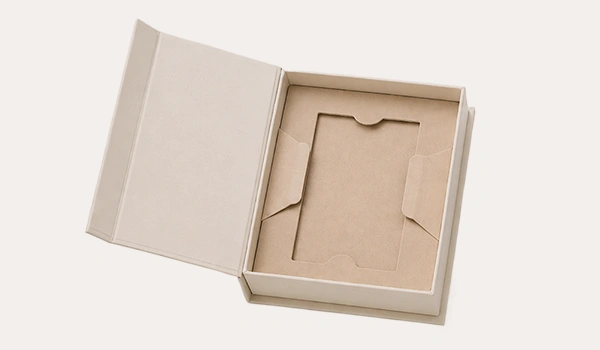
Cardboard inserts are stronger than normal paper inserts. They are commonly produced from grey board, white card, kraft board, or corrugated board. Cardboard inserts can be folded into dividers, partitions, trays, or support frames.
They are often used to separate and organize multiple products inside one box. Cardboard inserts provide better structure than thin paper inserts. They can hold products more firmly and create clear compartments inside the rigid box. They are also recyclable and relatively affordable.
Common Applications
Cardboard inserts are often used for:
- Food gift boxes
- Cosmetic gift sets
- Tea and wine packaging
- Apparel accessories
- Promotional gift boxes
- Multi-piece product sets
| Pros | Cons |
| Stronger than paper inserts | Less soft than foam or velvet |
| Good for dividers and partitions | May not fit complex product shapes perfectly |
| Recyclable | Limited shock absorption |
| Suitable for multiple items | Can look plain without surface treatment |
| Cost-friendly | Not ideal for very delicate products |
Cardboard inserts are practical when products need separation, organization, and moderate protection.
EVA Insert
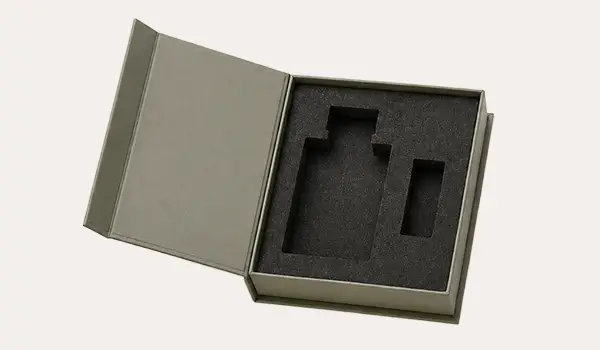
EVA insert is a popular choice for premium rigid boxes. EVA is a foam-like material with good flexibility, cushioning, and shape retention. It can be custom cut according to the product shape, making it ideal for precise product placement.
EVA inserts are usually available in black, white, grey, or customized colors. The surface can also be covered with velvet, paper, or fabric to improve appearance.
EVA provides strong support and a clean product display. It holds the product firmly and reduces movement inside the box. EVA’s precise cutting makes it ideal for products with unique or irregular shapes.
Common Applications
EVA inserts are often used for:
- Perfume boxes
- Electronics packaging
- Jewelry boxes
- Watch boxes
- Tool packaging
- Cosmetic sets
- Luxury gift boxes
| Pros | Cons |
| Excellent product fixing | Higher cost than paper inserts |
| Good cushioning performance | Less eco-friendly than paper |
| Custom-cut for precise fit | May require tooling or cutting cost |
| Premium and clean appearance | Can increase packaging weight |
| Suitable for fragile products | Not always recyclable |
EVA inserts are a strong choice for high-value products that need both protection and premium presentation.
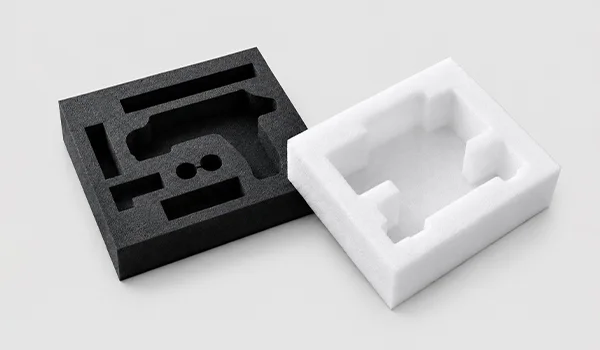
Foam Insert
Foam inserts are widely used for protective packaging. They can be made from PU foam, PE foam, sponge foam, or other cushioning materials. Foam can absorb shock and protect fragile products during storage and shipping.
Foam inserts are often used when protection is more important than sustainability.
Foam provides excellent cushioning and impact resistance. It can protect fragile products from collision and vibration. It can be custom-cut to fit bottles, tools, electronics, and fragile accessories.
Common Applications
Foam inserts are often used for:
- Glass bottles
- Electronics
- Instruments
- Medical devices
- Fragile gift items
- Tools and hardware
- Luxury product sets
| Pros | Cons |
| Strong cushioning | Not the most eco-friendly option |
| Good shock absorption | May look less premium without covering |
| Customizable shape | Some foam can yellow over time |
| Suitable for fragile items | Can add material cost |
| Protects during shipping | May not match luxury aesthetics alone |
Foam inserts are suitable for fragile or high-value products that require strong protection.
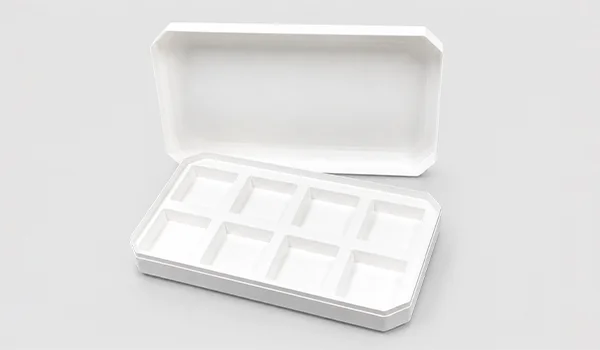
Molded Pulp Insert
Molded pulp inserts are becoming more popular because of growing demand for sustainable packaging. They are made from recycled paper pulp or plant fiber and molded into specific shapes.
Molded pulp is a greener, recyclable alternative to plastic trays and foam. It is a good choice for brands that want to reduce plastic use.
Molded pulp inserts offer a natural look and good protection for many products. They can be shaped to hold products securely and provide moderate cushioning. They also match eco-friendly brand positioning.
Common Applications
Molded pulp inserts are often used for:
- Cosmetics
- Electronics accessories
- Food gift boxes
- Tea packaging
- Health products
- Sustainable gift packaging
- Consumer goods
| Pros | Cons |
| Eco-friendly and recyclable | Surface may look rougher than plastic |
| Good for sustainable packaging | Tooling may be required |
| Custom molded shape | Less suitable for luxury glossy presentation |
| Moderate cushioning | Limited color options |
| Reduces plastic use | Precision may be lower than EVA |
Molded pulp inserts are ideal for brands that value environmental responsibility and natural packaging design.
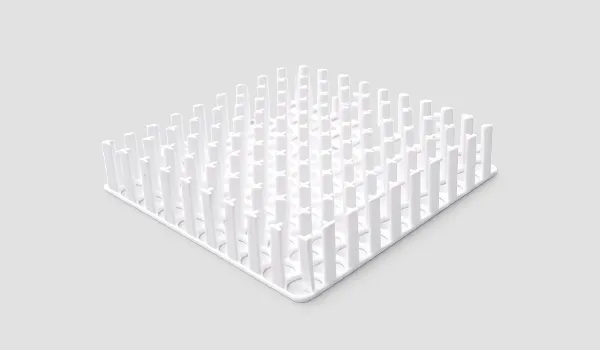
Plastic Tray Insert
Plastic tray inserts are commonly used when products need precise positioning and a clean molded structure. Common materials include PET, PVC, PP, and PS. The tray is usually vacuum formed to match the product shape.
Plastic trays are often used in cosmetics, electronics, food, and retail packaging.
Plastic trays can provide accurate product placement and a neat display. Transparent plastic trays can show the product clearly, while black or white plastic trays can create a cleaner presentation.
Common Applications
Plastic tray inserts are often used for:
- Cosmetic sets
- Electronics accessories
- Food packaging
- Toy packaging
- Retail gift sets
- Beauty tools
| Pros | Cons |
| Accurate product positioning | Less eco-friendly than paper options |
| Clean molded appearance | Tooling cost may be required |
| Available in transparent or colored options | Can crack if material is too thin |
| Good for display packaging | May reduce luxury feel if poorly designed |
| Suitable for mass production | Plastic use may not fit sustainable branding |
Plastic trays are practical for brands that need clear positioning and high production consistency.
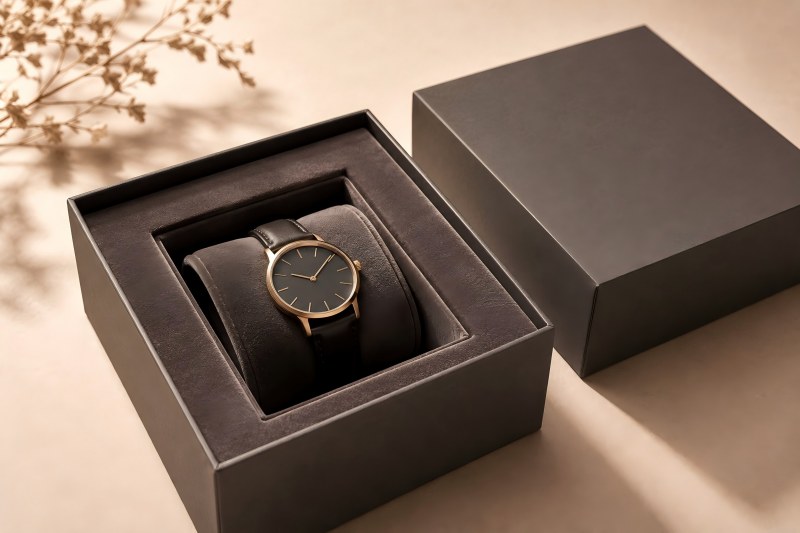
Velvet Insert
Velvet inserts are widely used in luxury packaging. They provide a soft, elegant, and premium feeling. Velvet can be applied over foam, EVA, cardboard, or plastic structures to create a refined surface.
Velvet inserts are especially common in jewelry, watches, medals, perfumes, and high-end gifts.
Velvet protects delicate products from scratches and improves the luxury experience. When customers open the box, the soft velvet surface makes the product look more valuable.
Common Applications
Velvet inserts are often used for:
- Jewelry boxes
- Watch boxes
- Medal boxes
- Perfume gift boxes
- Luxury gift sets
- Premium accessories
| Pros | Cons |
| Very premium appearance | Higher cost than paper inserts |
| Soft surface protects products | Can collect dust |
| Excellent for jewelry and watches | Not suitable for wet or oily products |
| Enhances unboxing experience | Color consistency needs control |
| Can cover EVA or foam | May require careful assembly |
Velvet inserts are ideal for luxury products where appearance and touch feeling are important.
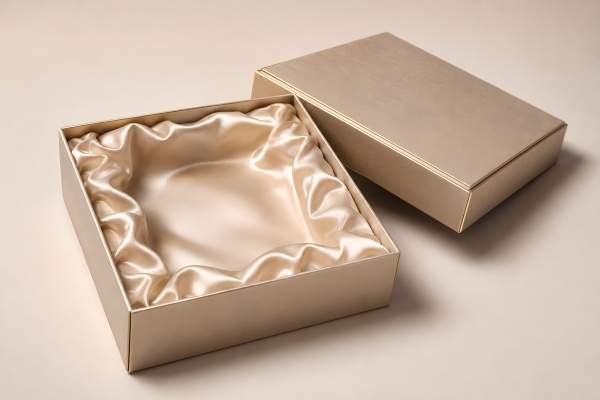
Satin Lining Insert
Satin lining is often used for decorative gift boxes. It has a smooth, shiny, and elegant fabric surface. Satin is commonly used as an inner lining or decorative insert rather than a strong structural insert.
It is often combined with cardboard or foam support underneath.
Satin creates a soft and elegant visual effect. It is suitable for gift packaging that needs a ceremonial or luxury presentation. It can make the box interior look more refined and attractive.
Common Applications
Satin lining is often used for:
- Gift boxes
- Jewelry packaging
- Perfume packaging
- Award boxes
- Luxury product sets
- Wedding gift boxes
| Pros | Cons |
| Elegant and decorative | Limited structural support alone |
| Smooth and shiny surface | Can wrinkle if not assembled well |
| Good for luxury gift presentation | Higher labor cost |
| Soft touch feeling | Less suitable for heavy products |
| Works with foam or cardboard base | May not fit eco-friendly packaging goals |
Satin lining is suitable when visual presentation is more important than strong product fixing.
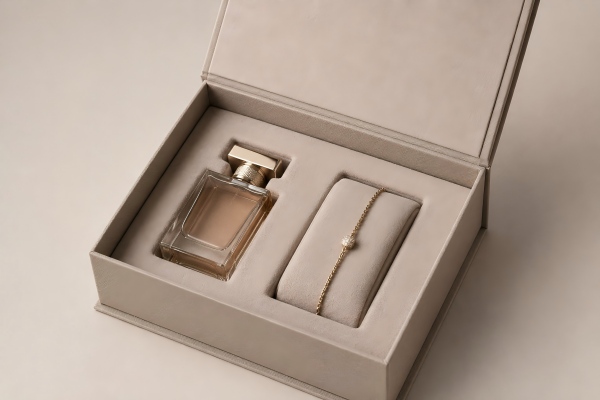
Fabric Insert
Fabric inserts include cotton, linen, suede, microfiber, and other textile materials. They add a soft, premium feel inside the box. Fabric can be wrapped over cardboard, EVA, or foam to create a customized insert.
Fabric inserts offer many texture choices. Linen can create a natural and handmade look, while suede or microfiber can create a luxury feeling. Fabric inserts are especially useful when the brand wants the interior to match the outer box style.
Common Applications
Fabric inserts are often used for:
- Jewelry boxes
- Watch boxes
- Fashion accessories
- Luxury gifts
- Handmade product packaging
- Premium cosmetic boxes
| Pros | Cons |
| Wide texture options | Higher production cost |
| Premium touch feeling | May require more manual work |
| Good for brand customization | Not ideal for moisture-sensitive use |
| Can protect delicate surfaces | Cleaning may be difficult |
| Matches luxury packaging style | Material selection affects durability |
Fabric inserts are a good option for brands that care about interior texture and refined presentation.
How to Choose the Right Insert
Choosing the right insert depends on product type, weight, fragility, box size, brand style, budget, and sustainability requirements.
For fragile products, EVA or foam inserts are usually better because they provide strong cushioning and stable product fixing.
For luxury products, velvet, satin, or fabric-covered inserts can improve the unboxing experience.
For eco-friendly packaging, paper, cardboard, or molded pulp inserts are better choices.
For cosmetic and electronics sets, plastic trays or EVA inserts can provide accurate product positioning.
For food gift boxes or tea boxes, cardboard partitions and molded pulp inserts are often practical and cost-effective.
No single insert suits every product. The right choice depends on the product’s value, shape, weight, fragility, brand positioning, and budget. A well-designed insert should hold the product securely, match the box style, and create a better customer experience.
Inserts are essential to premium rigid box design. It is part of the packaging design and often determines how customers feel when they first open the box.