
Flat-packed, stacked flat, pre-folded, nested, separated component, and retail-ready set storage of collapsible rigid boxes each fit different packaging situations. The best choice depends on the product, box structure, packing line, and order scale.
Why Storage Method Matters for Collapsible Boxes
Collapsible packaging saves space during shipping, but warehouse storage also matters. Poor storage may damage folding lines, surface paper, corners, or magnetic closures before the box reaches the packing line.
Rigid box packaging often carries a premium image, so scratches, dust, pressure marks, or mixed components can weaken the final presentation. Luxury rigid boxes and custom printed rigid boxes need extra care because surface defects are easier to notice.
Clear storage instructions help buyers protect packaging quality and improve packing efficiency. They also reduce errors when several box sizes, colors, inserts, or accessories are used in the same project.
Storage Methods Comparison
| Storage Method | Best Use | Main Benefit | Buyer Should Check |
| Flat-Packed Storage | Large-volume orders and export projects | Saves warehouse and shipping space | Bundle protection, carton strength, folding guide |
| Stacked Flat Storage | Fast packing lines and repeated orders | Makes counting and access easier | Stack height, surface protection, batch labeling |
| Pre-Folded Storage | Magnetic boxes and thicker foldable structures | Speeds up final assembly | Crease accuracy, pressure marks, closing performance |
| Nested Storage | Lid-and-base boxes and candle boxes | Keeps matching parts organized | Lid-base fit, stacking direction, deformation risk |
| Separated Component Storage | Gift sets with inserts or accessories | Prevents mixed parts and missing items | Component labels, insert matching, packing sequence |
| Retail-Ready Set Storage | Promotional kits and fast product packing | Shortens final packing steps | Set completeness, dust protection, carton planning |
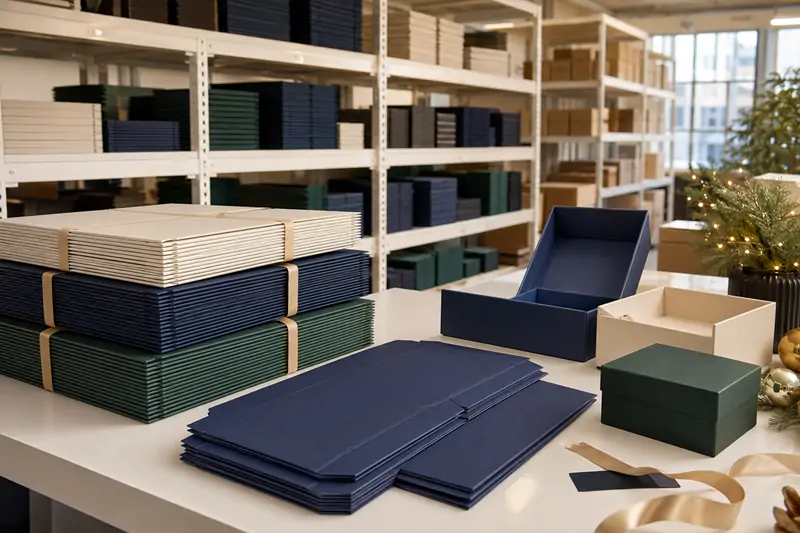
Flat-Packed Storage
Best for Reducing Warehouse Space
Flat-packed storage keeps collapsible boxes fully flat before assembly. This option is widely used for rigid collapsible box projects because it reduces carton volume and makes bulk storage easier.
Large orders of rigid gift boxes can take up much less warehouse space when stored flat. Export packaging, online gift sets, and seasonal promotions often benefit from this arrangement.
Flat storage also makes inventory planning easier. Packaging teams can assemble boxes according to the daily packing schedule instead of keeping large numbers of finished boxes on shelves.
Buyer Scenario
A beauty brand preparing a holiday gift set may receive thousands of flat-packed boxes before the campaign begins. Instead of filling the warehouse with finished rigid gift boxes, the team can store compact bundles and assemble them closer to the packing date.
Simple structures work best with this storage method. When the box includes many accessories, inserts, or special closures, buyers may need a more organized component system.
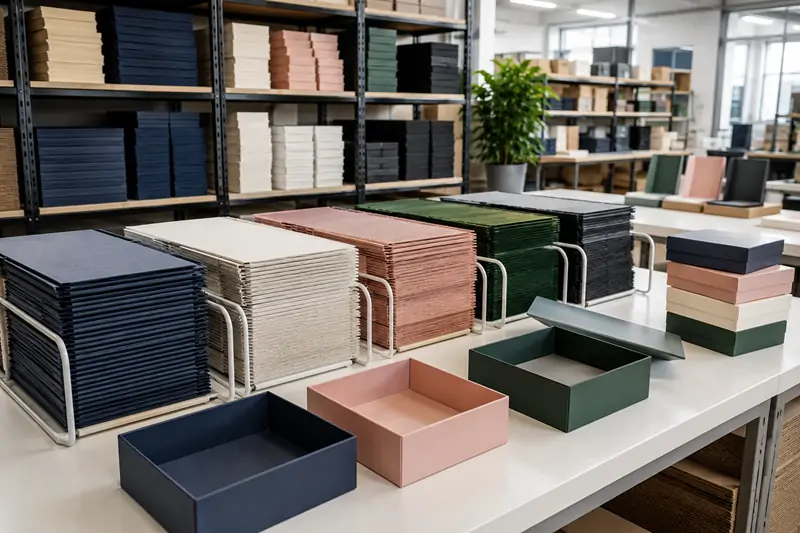
Stacked Flat Storage
Designed for Fast Packing Lines
Stacked flat storage places multiple flat box pieces in neat piles, usually grouped by size, color, structure, or order batch. The goal is to make counting, moving, and distribution easier during daily packing work.
Custom rigid boxes used in repeated production runs often need this storage style. Workers can take one stack at a time without opening multiple cartons or sorting mixed materials.
Proper stacking also protects the box surface. Custom printed rigid boxes need aligned piles, clean separators, and controlled stack height to reduce scratches or pressure marks.
Buyer Scenario
A subscription box brand may prepare several stacks near the assembly line every week. With each stack clearly labeled, the packing team can work faster and avoid mixing old and new batches.
This approach works well when the box size and folding direction are consistent. Batch labels, stack limits, and simple handling rules help reduce mistakes.
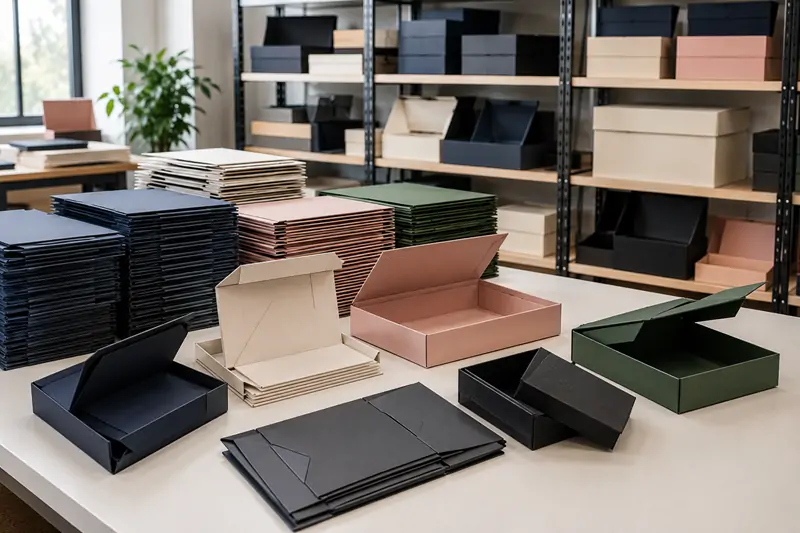
Pre-Folded Storage
Useful for Faster Final Assembly
Pre-folded storage means the box is partially folded along key crease lines before final assembly. The trained folding lines help workers form the box more quickly during packing.
A thicker foldable rigid box may need this approach because heavy board can take more time to shape. Pre-folding can also help the box close more naturally after assembly.
Magnetic rigid boxes and rigid magnetic boxes often benefit from pre-folding around the spine, flap, or cover panel. Better pre-shaping can improve closing performance and reduce assembly effort.
Buyer Scenario
A cosmetics buyer may choose pre-folded storage for magnetic rigid boxes used in skincare gift sets. The boxes arrive partially shaped, allowing the packing team to assemble them faster before inserting the products.
Pressure control matters during storage. If pre-folded boxes are stacked too tightly, visible marks or panel shifting may appear before packing begins.
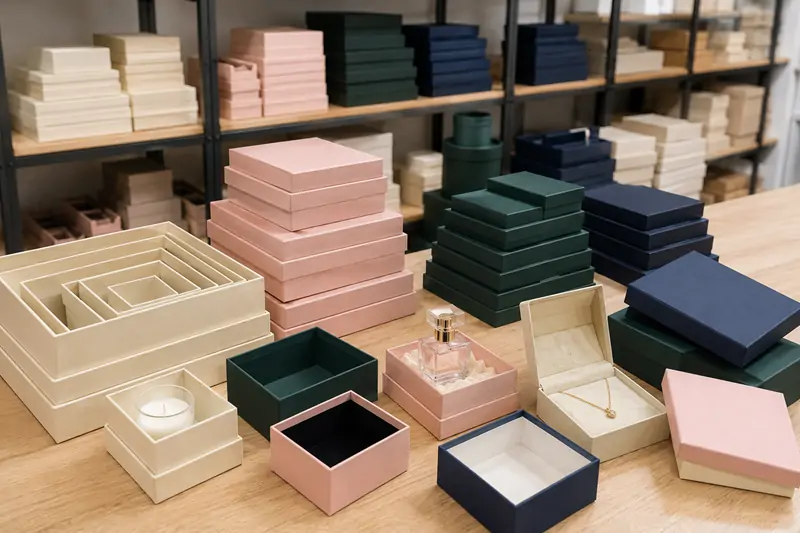
Nested Storage
Suitable for Lid-and-Base Box Parts
Nested storage works well for rigid gift boxes with lids, especially when the lid and base are produced as separate parts. Lids can be stacked together, while bases can be nested or grouped by size.
Rigid candle boxes, perfume boxes, jewelry boxes, and classic gift packaging often use this method. Matching parts stay easier to manage when the lid and base are arranged clearly.
Compared with fully finished luxury rigid boxes, nested storage can reduce space when the structure allows safe stacking. Excessive pressure still needs to be avoided because rigid box edges may deform.
Buyer Scenario
A candle brand may store lids and bases separately before placing glass candle jars into the boxes. The packing team can prepare the base first, add the insert, place the candle, and close the lid at the final step.
Size control becomes very important here. If lids and bases from different batches are mixed, the final fit may become too loose or too tight.
Separated Component Storage
Better for Inserts and Accessories
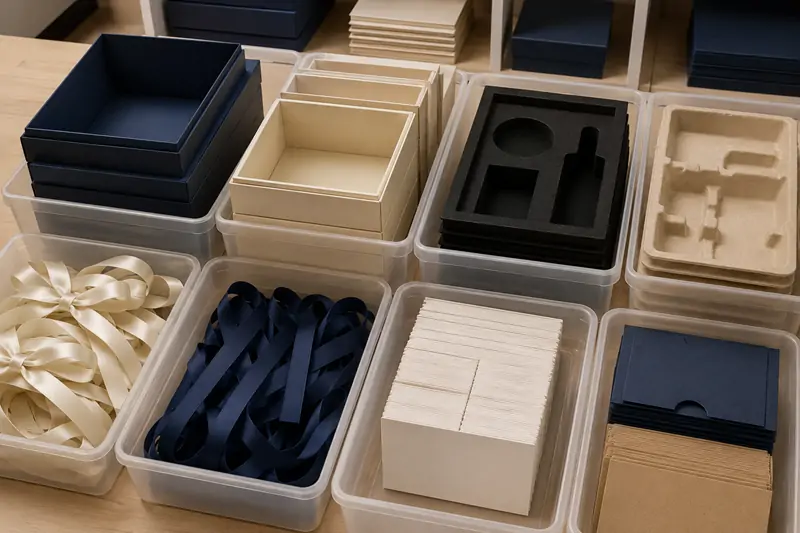
Separated component storage keeps box shells, inserts, ribbons, pull tabs, paper cards, sleeves, and dividers in different areas. Complex rigid box packaging often needs this system because several parts must match correctly.
Multi-product rigid gift boxes usually require separate storage. Beauty sets, candle diffuser sets, jewelry kits, and promotional bundles may include paperboard inserts, molded pulp trays, ribbons, or printed cards.
A rigid drawer box may also need this method because the outer sleeve, inner tray, pull ribbon, and insert need accurate pairing. Clear labels reduce missing parts, slow assembly, and packing errors.
Buyer Scenario
A wellness brand selling a candle, diffuser, and essential oil set may order a rigid collapsible box with several inner components. Separate bins for box shells, paper inserts, ribbons, and instruction cards help workers complete each set correctly.
This method gives buyers better control over complex packaging projects. It also reduces the risk of mixing colors, sizes, or parts from different purchase orders.
Retail-Ready Set Storage
Prepared for Quick Product Packing
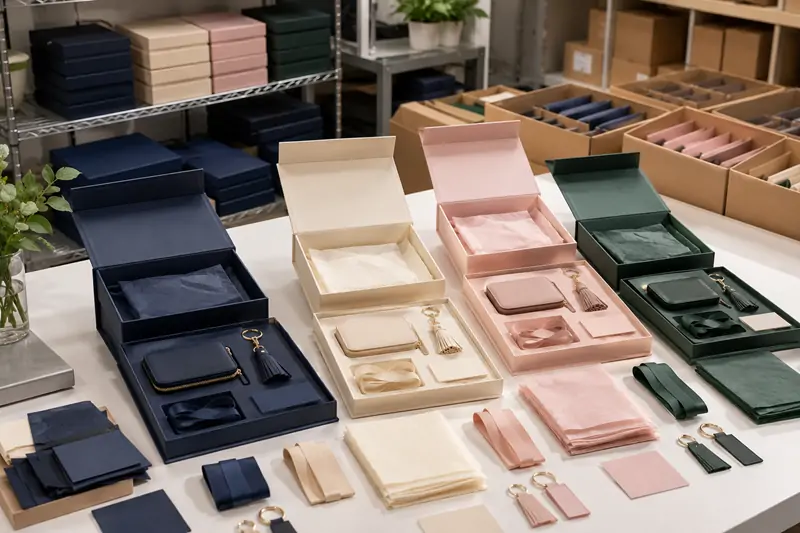
Retail-ready set storage organizes each packaging set in advance. A set may include the box, insert, tissue paper, product card, sleeve, or small accessory.
Promotional rigid gift boxes, influencer kits, limited-edition sets, and e-commerce launch campaigns often use this approach. Fewer steps on the final packing line can improve speed and consistency.
Retail-ready storage also helps create a more uniform unboxing experience. When each kit is prepared in the same order, customers receive a cleaner and more consistent package.
Buyer Scenario
A fashion accessories brand may prepare each set with a foldable rigid box, paper insert, tissue paper, and thank-you card. Once the product arrives, the packing team can finish the box quickly without searching for separate materials.
Good carton planning is necessary. Too many prepared sets under pressure may damage the box surface, insert shape, or tissue paper before use.
How Buyers Choose the Right Storage Method
The right storage method depends on product type, box structure, order size, and packing schedule. Simple flat-packed storage may suit lightweight products, while complex gift sets often need separated component storage.
Brands selling luxury rigid boxes usually care more about surface protection, corner quality, and final presentation. Large-volume e-commerce orders may give more attention to storage density, assembly speed, and carton handling.
Before confirming mass production, buyers can ask how the boxes will be packed, stacked, labeled, and protected. Storage planning should be part of the packaging project from the sampling stage.