
Choosing the right dimensions for collapsible rigid boxes affects more than product fit. It also changes the display effect, insert design, shipping volume, storage space, and customer unboxing experience.
Why Dimension is Important in Rigid Box Packaging
1. Product Fit Comes First
- An oversized collapsible rigid boxe can make the product appear less premium and poorly fitted.
- If the box is too tight, it may press against the product, damage the insert, or affect the surface finish.
- Proper dimensions help keep the product centered and stable.
- For rigid box packaging, inner size and outer size should be confirmed separately.
2. Better Size Means Better Cost Control
- Smaller carton volume can reduce shipping pressure.
- A foldable rigid box saves storage space before assembly.
- Correct sizing helps avoid unnecessary board and wrapping paper waste.
- For large orders, small size changes may affect total packaging cost.
3. Customer Experience Depends on Space
- A good box size makes the product easy to see and remove.
- Allowing enough insert space helps the box open more smoothly and gives customers a better unboxing experience.
- Clean layout makes rigid gift boxes feel more premium.
- Poor size planning can weaken the value of even expensive packaging.
Common Box Sizes for Different Products
| Article Section | Common Dimension Range | Best Box Structure | Size Focus |
| Small Gift Packaging | 120×90×40 mm to 180×130×60 mm | Foldable rigid box | Product fit, card space, tissue paper |
| Medium Gift Sets | 220×160×70 mm to 300×220×90 mm | Rigid collapsible box | Multi-product layout and insert spacing |
| Rings and Earrings | 60×60×35 mm to 100×100×40 mm | Magnetic rigid boxes | Insert depth and stable display |
| Necklaces and Bracelets | 120×90×35 mm to 180×130×45 mm | Rigid gift boxes with lids | Flat display and chain positioning |
| Straight Belt Packaging | 300×80×40 mm to 350×100×50 mm | Rigid drawer box | Belt length and buckle height |
| Coiled Belt Packaging | 180×180×55 mm to 220×220×60 mm | Rigid gift boxes with lids | Coil shape and leather protection |
| Magnetic Rigid Boxes | 100×80×35 mm to 280×200×80 mm | Rigid magnetic boxes | Flap size and magnet alignment |
| Rigid Drawer Box | 120×80×35 mm to 300×90×45 mm | Drawer-style rigid box | Tray clearance and smooth sliding |
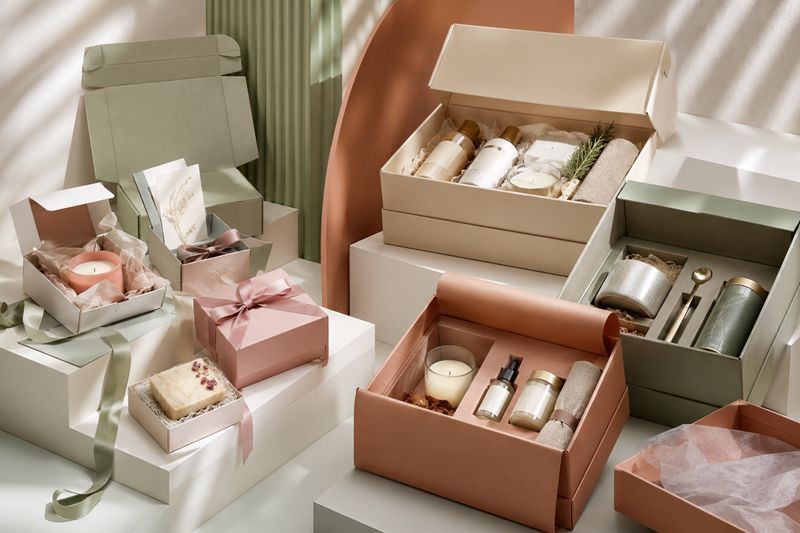
Gift Box Dimensions
1. Small Gift Packaging
Small gift boxes usually range from 120×90×40 mm to 180×130×60 mm. These sizes work well for candles, handmade soaps, scarves, small beauty products, stationery, and boutique accessories.
For this type of packaging, the box should leave enough space for tissue paper, thank-you cards, ribbons, or small inserts. A box that feels well-filled without looking crowded often gives customers a stronger first impression.
A foldable rigid box works well for seasonal gift packaging because it saves storage space before assembly. This is useful for online sellers preparing holiday orders or promotional campaigns in advance.
2. Medium Gift Sets
Medium gift sets usually need larger dimensions, such as 220×160×70 mm, 250×180×80 mm, or 300×220×90 mm. These sizes provide enough room for several products and a cleaner internal layout.
For skincare sets, candle sets, tea gifts, wellness kits, or small luxury bundles, the insert design should be planned together with the box size. If the products sit too close together, the package may look messy and create scratches during transport.
Rigid gift boxes with lids are a common choice for this category because they give customers a classic unboxing experience. For brands that need lower storage volume, a rigid collapsible box can offer a similar premium look with better space efficiency.
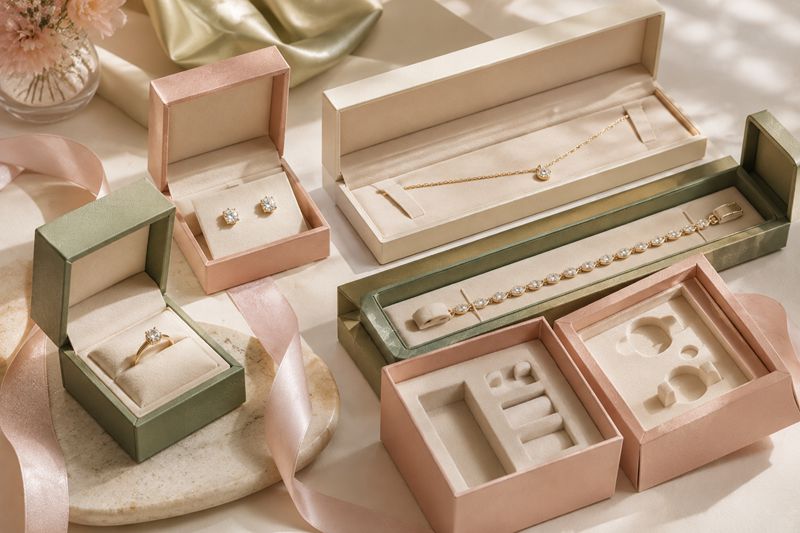
Jewelry Box Dimensions
1. Rings and Earrings
Ring boxes usually use compact sizes such as 60×60×35 mm or 70×70×40 mm. Even though the product is small, the insert must hold it firmly so the ring stays centered when the customer opens the box.
Earring boxes are usually slightly wider, with common sizes such as 80×80×30 mm or 100×100×35 mm. Flat display space matters because earrings need to be seen clearly at first glance.
Magnetic rigid boxes are popular for jewelry packaging because the opening and closing feel is smooth. For small boxes, magnet position and lid height need careful testing to avoid weak closure.
2. Necklaces and Bracelets
Necklace boxes usually range from 120×90×35 mm to 180×130×45 mm. A longer surface gives the chain and pendant more room to sit naturally.
Bracelet boxes may need a wider or slightly deeper structure depending on the product shape. If the bracelet is thick, the insert depth should be tested with the real item instead of estimated from photos.
Custom printed rigid boxes for jewelry usually keep the design simple. A clean logo, smooth wrapping paper, and precise insert often look more premium than a crowded print layout.
3. Insert Accuracy Matters More Than Large Size
Jewelry packaging does not need a large box, but it needs precise inner control. Velvet, suede, satin, foam, and paperboard inserts all change the final usable space.
When the insert is too loose, the jewelry may move during shipping; when it is too tight, customers may struggle to take the item out.
For jewelry rigid box packaging, buyers should test the box with the finished insert before mass production. This step is more reliable than confirming dimensions from a flat drawing only.
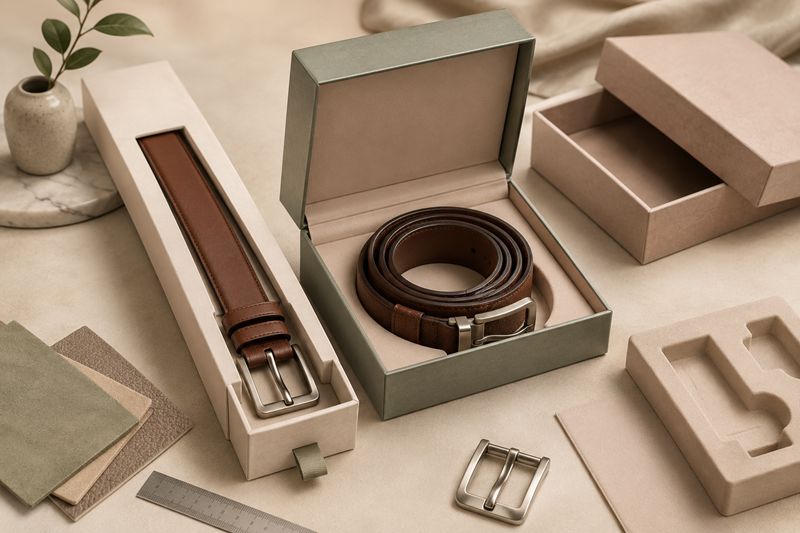
Belt Box Dimensions
1. Straight Belt Packaging
Straight belt boxes usually range from 300×80×40 mm to 350×100×50 mm. This long structure gives leather belts a clean and modern retail look.
The buckle height is the key detail when confirming the inner size. Some buckles need extra depth, especially when the design includes a thick metal frame or decorative finish.
A long rigid drawer box works well for belts because the sliding structure creates a slow reveal. It also keeps the product organized inside the tray.
2. Coiled Belt Packaging
Coiled belt boxes usually use square or near-square dimensions, such as 180×180×55 mm or 220×220×60 mm. This style creates a stronger gift feeling and reduces the box length.
For leather belts, the curve should not be too tight. If the box forces the belt into a small coil, the leather surface or buckle position may be affected.
Rigid gift boxes with lids are often chosen for rolled belt packaging because they provide suitable depth and a neat opening presentation.
3. Belt Packaging Size Choice
The best belt box size depends on how the product should be presented. A straight layout feels slim and retail-focused, while a coiled layout feels more compact and gift-oriented.
For premium belts, buyers should check the belt length, buckle size, leather thickness, and insert support before choosing the box. A small size difference can change both the appearance and protection level.
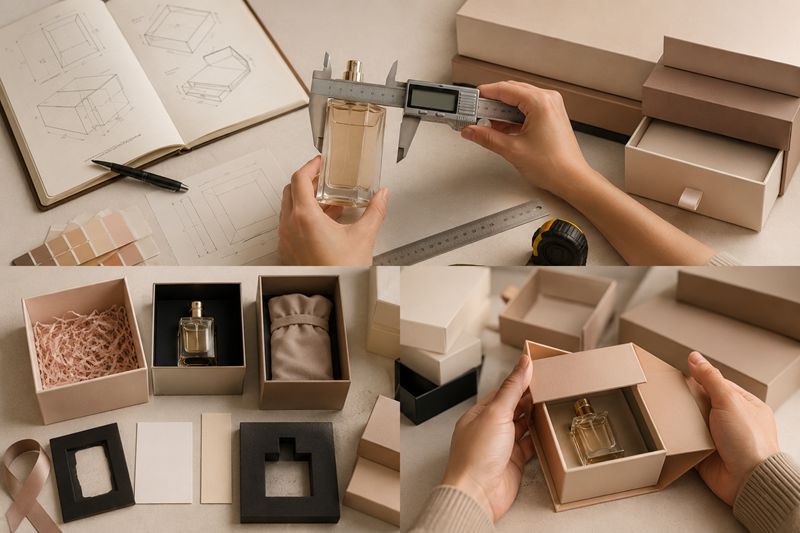
How to Choose the Right Dimensions
1. Start from the Real Product
- Check the length, width, and height based on the real product instead of estimates.
- Include the highest point, such as bottle caps, buckles, or decorative parts.
- Check product weight because heavier items need stronger board support.
- Product labels or catalog dimensions should not be the only reference for box sizing.
2. Add Space for Packaging Details
- Leave room for inserts, cards, ribbons, and tissue paper.
- Leave enough space so customers can remove the product easily.
- Keep the inner layout simple and organized rather than using every available corner.
- Match the box size with the visual style of the brand.
3. Confirm with a Sample
- A sample helps check the real fit before mass production.
- The assembled shape of a rigid collapsible box should stay flat and stable.
- Magnetic closure, drawer movement, and lid fit should be tested by hand.
- The final test should include the product, insert, box, and outer carton.
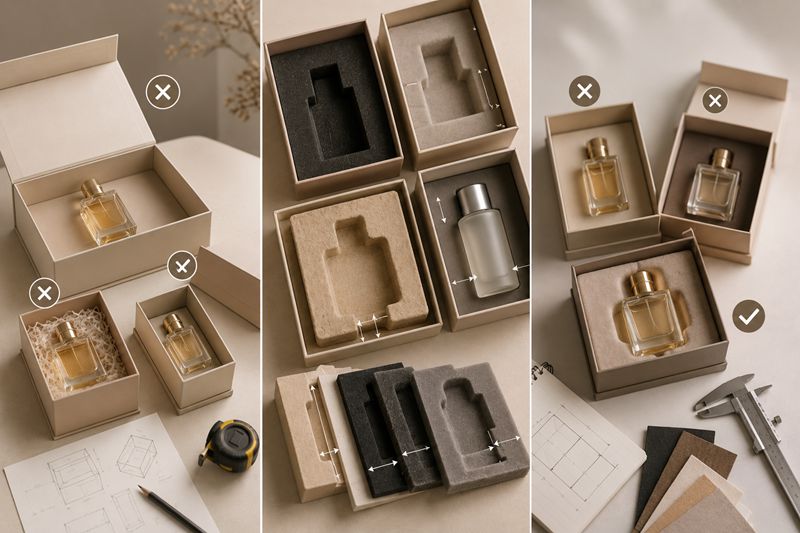
Common Sizing Mistakes
1. Choosing Only by Appearance
- A box may appear attractive in product photos but still perform poorly when tested with the actual item.
- Oversized boxes increase shipping cost and empty space.
- Undersized boxes may press the product or damage the insert.
- Product display should guide the final dimensions.
2. Ignoring the Insert
- The product may fit, but the insert may not.
- EVA, velvet, and molded pulp inserts all need extra space.
- Insert thickness affects both height and width.
- Buyers should confirm insert drawings together with the box dieline.
3. Copying Another Brand’s Size
- Similar products may still need different packaging dimensions.
- Product material, weight, shape, and brand positioning can change the best size.
- A copied size may not match your insert or shipping carton.
- Custom rigid boxes should be built around your own product.