
Before ordering collapsible rigid boxes wholesale, check MOQ and price tiers, flat packing volume, assembly speed, bulk quality, lead time and capacity, carton packing, sample approval, insert fit, and reorder consistency to reduce cost and risk.
Wholesale Checklist for Collapsible Rigid Boxes
| Priority | What Buyers Should Check | What to Confirm Before Ordering | Why It Matters for Wholesale |
| 1 | MOQ and Price Tiers | MOQ, price breaks, sample fee, setup cost | Controls unit cost and purchasing budget |
| 2 | Flat Packing Volume | Carton quantity, CBM, pallet loading, freight cost | Reduces shipping and warehouse pressure |
| 3 | Assembly Speed | Folding steps, magnet alignment, worker output | Affects labor cost and packing efficiency |
| 4 | Bulk Quality Consistency | Color, size, corners, glue, folding lines | Prevents large-scale quality issues |
| 5 | Lead Time and Capacity | Sample time, production time, daily output | Supports launches and repeat wholesale supply |
| 6 | Carton Packing | Outer carton size, labels, SKU separation | Helps warehouse receiving and sorting |
| 7 | Sample Approval | White sample, printed sample, pre-production sample | Reduces risk before mass production |
| 8 | Insert Fit | Insert material, product position, loading speed | Improves protection and packing speed |
| 9 | Reorder Consistency | Artwork, mold, color, material records | Keeps future batches consistent |
MOQ and Price Tiers
1. Confirm the Real Wholesale Quantity
MOQ and price tiers come first in most collapsible rigid boxes wholesale projects. For a small to medium foldable rigid box, the unit price may change clearly as the order quantity increases.
| Order Quantity | Reference Unit Price | Suitable Buying Situation |
| 1,000 pcs | USD 1.80–2.60 / pc | Sample launch, small gift set, market testing |
| 3,000 pcs | USD 1.35–2.00 / pc | Small batch retail sales or seasonal promotion |
| 5,000 pcs | USD 1.10–1.70 / pc | Stable product sales and regular packaging use |
| 10,000 pcs | USD 0.85–1.40 / pc | Large wholesale order or long-term supply plan |
A complete quotation needs to show more than the outer box price. The cost breakdown may include:
- Sample fee
- Mold cost
- Printing setup fee
- Insert cost
- Surface finishing cost
- Carton packing cost
- Shipping cost
A lower unit price for custom rigid boxes usually comes with a higher order quantity. That can reduce the cost per box, but it may also increase inventory pressure and warehouse space needs.
2. Match Quantity With Sales Plans
Wholesale packaging quantity needs to follow real sales plans, not only the lowest unit price. A candle brand preparing holiday rigid candle boxes may need a larger quantity, while a small jewelry brand testing a new gift set may prefer a lower MOQ.
Quantity decisions often depend on:
- Product launch date
- Seasonal sales plan
- Promotion schedule
- Warehouse space
- Reorder frequency
Market testing usually works better with a flexible MOQ. Stable-selling products can use larger wholesale quantities to control the total packaging cost.
Flat Packing Volume
1. Check Whether It Really Saves Freight
Flat-packed shipping is one of the main reasons brands choose a foldable rigid box. The structure needs to reduce carton volume in real bulk shipping, not only look compact in drawings.
Before placing a wholesale order, confirm:
- Quantity per carton
- Outer carton size
- Total CBM
- Pallet quantity
- Sea freight cost
- Air freight cost
- Warehouse space needed
A rigid collapsible box normally saves more space than fixed rigid gift boxes. Poor folding design, however, may weaken the freight-saving advantage.
2. Compare With Fixed Rigid Boxes
Traditional rigid gift boxes with lids, two piece rigid box styles, and fixed rigid drawer box packaging usually take more shipping space. They create a strong premium look, but freight cost can become high in large wholesale orders.
Collapsible rigid boxes are more practical when the project needs:
- Large order quantity
- Export shipping
- Lower storage pressure
- Faster warehouse handling
- Better freight control
After proper assembly, the final box can still look close to luxury rigid boxes. Many brands choose collapsible structures because they balance premium presentation with wholesale logistics efficiency.
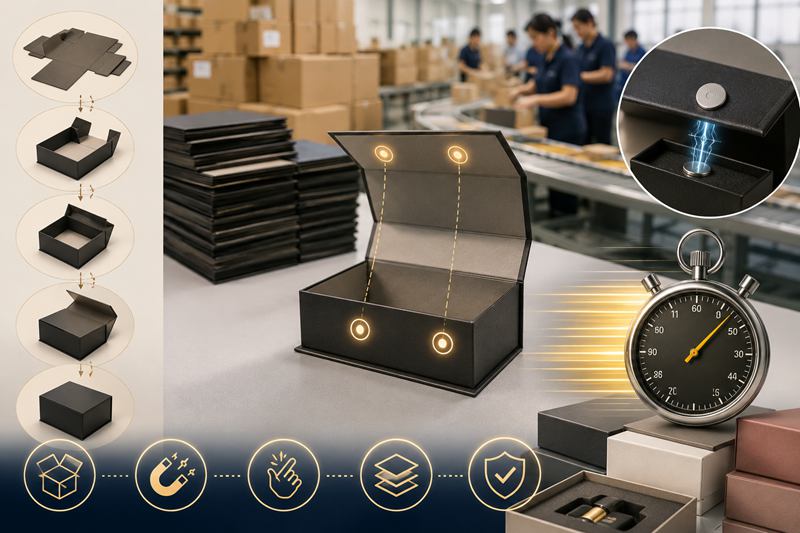
Assembly Speed
1. Test the Packing Process
Collapsible boxes usually arrive flat and need assembly before product packing. One simple test is to record how many boxes a worker can fold per hour.
Labor time directly affects the real packaging cost in wholesale projects. A low unit price offers little advantage if the box requires too much time and labor to assemble.
An efficient wholesale structure needs simple folding steps, stable corners, and a clean final shape. Warehouse teams or packing-line workers should be able to handle it without repeated adjustment.
2. Check Magnetic Closure
Magnet alignment matters a lot in magnetic rigid boxes and rigid magnetic boxes. After folding, the box needs to close naturally without strong pressure.
Key points include:
- Magnet position
- Closing strength
- Opening feel
- Folding alignment
- Stability after repeated use
Smooth magnetic closure improves the first touchpoint with customers. Cosmetics, jewelry, candles, and gift sets all benefit from a clean and premium opening feel.
Bulk Quality Consistency
1. Look Beyond the Sample
One perfect sample does not guarantee stable bulk quality. In wholesale collapsible rigid boxes, the real question is whether thousands of boxes can keep the same appearance, size, and assembly result.
Small differences may appear during mass production, especially when the order includes custom printed rigid boxes, foil stamping, embossing, soft-touch lamination, or dark surface paper. A sample may look clean, but bulk goods can still show color variation, shifted logos, uneven finishing, or surface marks.
Before approving mass production, buyers should compare the approved sample with bulk goods under the same light. Retail rigid box packaging needs strong consistency because customers can easily notice differences when products are displayed together.
2. Check Structure and Function in Bulk Goods
Bulk inspection should not focus only on printing and color. The structure also needs to stay stable after folding, packing, and repeated handling.
Key points to check include:
- Size tolerance
- Corner alignment
- Folding line strength
- Glue bonding
- Magnet position
- Lid fit
- Drawer movement
- Insert stability
- Box shape after assembly
- Surface scratches after packing
Luxury rigid boxes and premium rigid gift boxes need stricter control because the package is part of the product value. In C-end retail, a box with good printing but poor structure can still weaken the unboxing experience.
Lead Time and Production Capacity
1. Match the Delivery Schedule
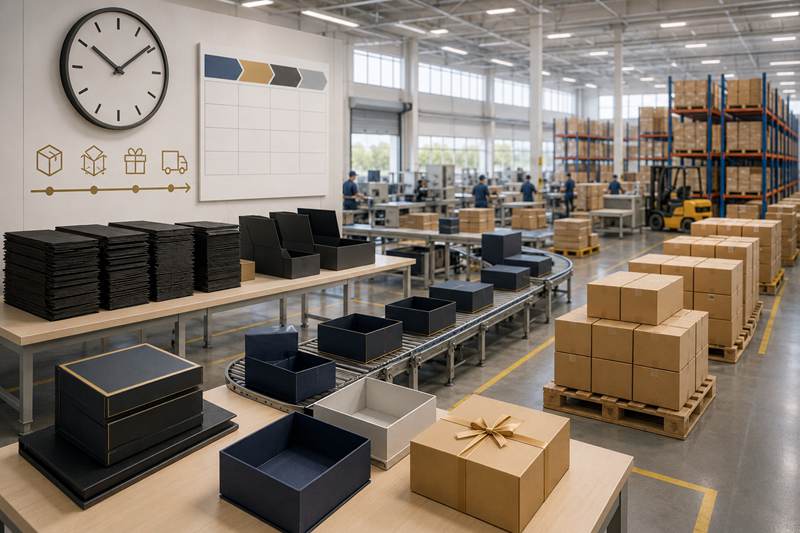
Wholesale orders often support product launches, holiday campaigns, subscription boxes, e-commerce restocking, or retail shelf plans. A full production timeline needs to be confirmed before mass production starts.
The schedule should include:
- Sample time
- Sample revision time
- Bulk production time
- Quality inspection time
- Carton packing time
- Shipping time
A reliable rigid box maker provides a clear delivery plan early. Clear timing helps brands avoid delays before retail launches or seasonal promotions.
2. Confirm Factory Capacity
Factory capacity becomes more important as order quantity increases. A supplier may produce a good sample but still struggle with stable quality or delivery speed in bulk production.
Before ordering large quantities of custom rigid boxes, ask about:
- Daily output
- Production lines
- Peak season lead time
- QC process
- Export experience
- Repeat order support
Long-term wholesale supply depends on stable capacity, not only a low first-order price. The supplier needs to support both the first order and later replenishment.
Carton Packing and Warehouse Handling
1. Confirm Outer Carton Details
Wholesale packaging involves more than the product box itself. Flat-packed boxes also need proper protection, labeling, and loading during shipping.
Important carton details include:
- Outer carton size
- Quantity per carton
- Gross weight
- Net weight
- Moisture protection
- Pallet packing
- Carton compression strength
Rigid candle boxes, rigid gift boxes, and luxury rigid boxes need outer carton protection against corner damage, surface scratches, and pressure marks. Transport damage can reduce the value of the entire packaging order.
2. Avoid Mixed Packing Problems
Orders with different sizes, colors, or SKUs need clear carton labeling. Poor labeling can slow down warehouse receiving and cause fulfillment mistakes.
Useful carton label details include:
- SKU
- Size
- Color
- Quantity
- Carton number
- Order number
Small labeling details can affect receiving, sorting, storage, and later packing speed. Clean warehouse handling helps reduce hidden operating costs in wholesale supply.
Sample Approval
1. Do Not Approve Only One Sample
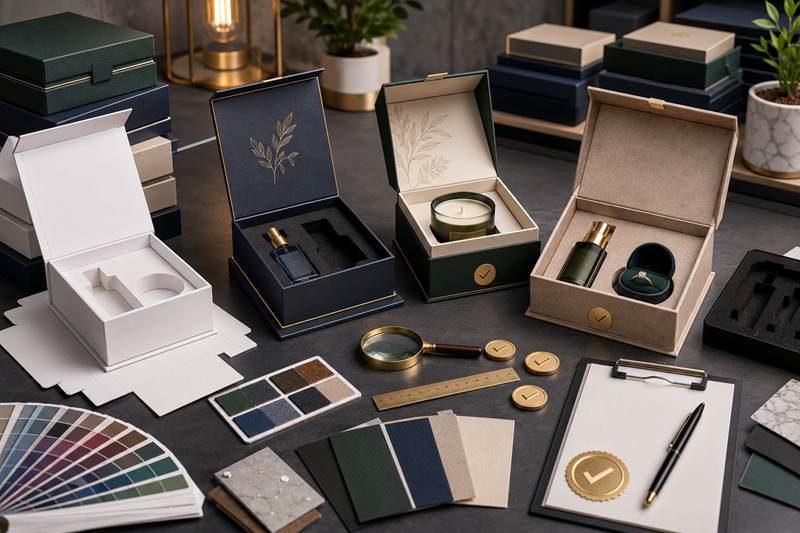
One sample is not enough for wholesale collapsible rigid boxes. Structure, printing, and final production standards need separate confirmation.
Common sample types include:
- White sample: checks size, structure, folding, and insert fit
- Printed sample: checks artwork, color, paper, and finishing
- Pre-production sample: confirms final standard before mass production
A step-by-step sample process reduces bulk order risk. Once thousands of boxes are produced, correction becomes expensive and time-consuming.
2. Test With the Real Product
The actual product should be placed inside the sample before approval. Candles, skincare bottles, perfume, jewelry, and gift sets all need real-fit testing.
The product needs to sit firmly, look centered, and remain easy to remove. Loose or crowded placement means the box or insert needs adjustment before wholesale production.
Insert Fit
1. Protect the Product and Save Packing Time
In wholesale packing, inserts affect both product safety and packing speed. A good insert helps workers load products quickly and keeps the display neat.
Common insert choices include:
- Paperboard insert
- Corrugated insert
- EVA insert
- Foam insert
- Molded pulp insert
- Velvet insert
- Satin or fabric lining
Rigid candle boxes need inserts that hold the jar firmly without pressing the glass or lid. Beauty and jewelry gift sets need each item to stay in the correct position.
2. Check the Customer Experience
The insert should not make the product difficult to remove. Smooth removal matters when the box is used as gift packaging.
In C-end retail, the box is often the first thing customers touch. Stable inserts make rigid gift boxes feel more organized, premium, and gift-ready.
Reorder Consistency
1. Keep Future Batches the Same
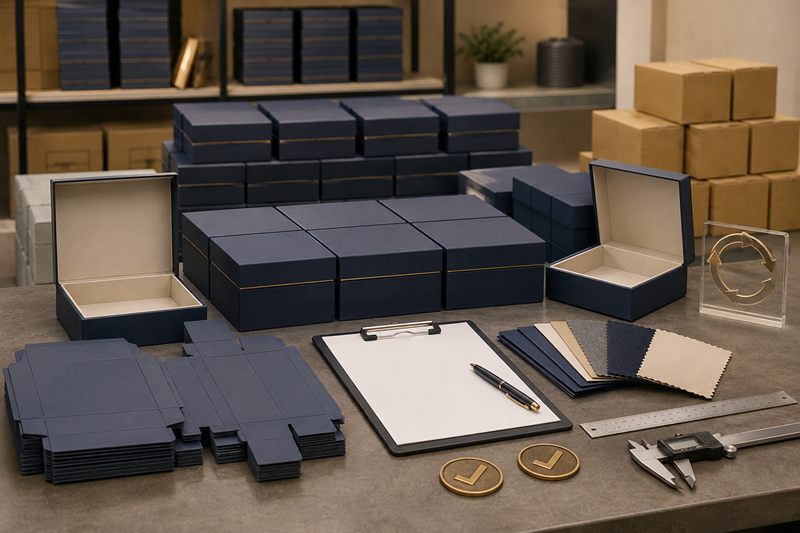
Wholesale buyers often reorder the same packaging. The supplier needs to keep key production records, including:
- Mold record
- Artwork file
- Color standard
- Material details
- Printing settings
- Production notes
These records help future custom rigid boxes match the first batch. Without them, the next order may show color, size, or material differences.
2. Choose a Long-Term Rigid Box Maker
A good rigid box maker does more than produce boxes. It helps buyers control cost, improve packing efficiency, reduce shipping volume, and keep quality stable across repeat orders.
Collapsible rigid boxes wholesale requires both premium packaging knowledge and bulk delivery experience. The supplier needs to understand appearance, structure, logistics, and long-term reorder control.