
Rigid boxes are layered products, odor usually does not come from only one place. It may come from raw board, wrapping paper, printing ink, lamination, glue, inserts, inner lining, accessories, or storage conditions.
Understanding these sources helps brands choose better Custom packaging materials, set clearer production standards, and avoid unpleasant surprises after bulk delivery.
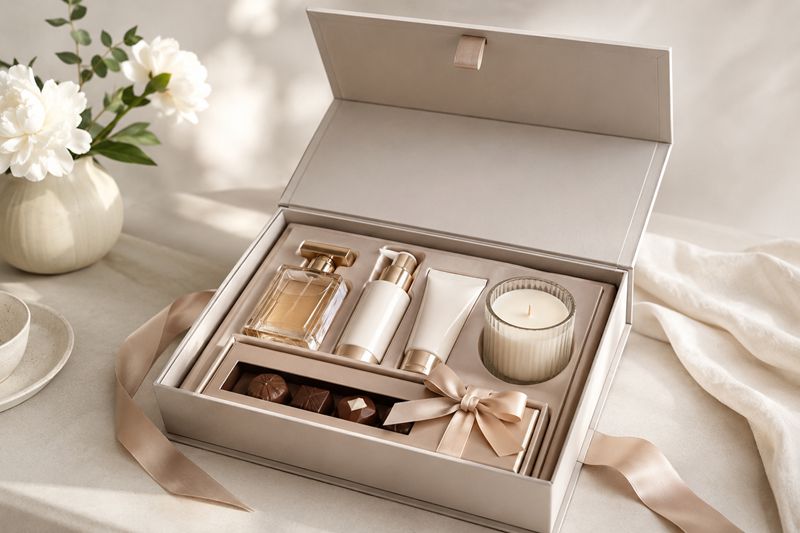
Why Odor Matters in Rigid Box Packaging?
Odor affects perceived product value. A rigid box may use thick board, elegant foil stamping, soft-touch lamination, ribbon pulls, magnetic closure, or velvet lining, but if the first smell is unpleasant, the customer may question the product inside.
Odor can influence:
- Customer trust
- Unboxing experience
- Product freshness perception
- Brand quality impression
- Repeat purchase intention
- Gift-giving satisfaction
- Product storage confidence
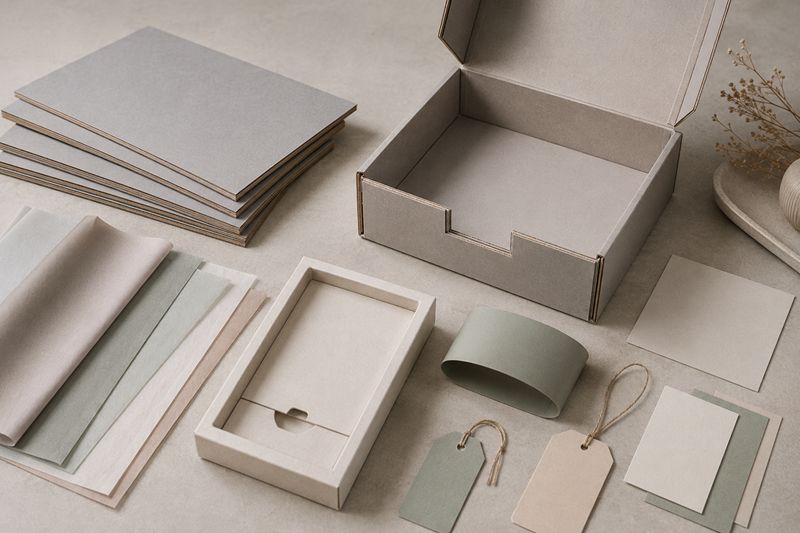
Source 1: Paperboard, Wrapping Paper, and Inner Paper Materials
Most rigid boxes use thick greyboard, chipboard, duplex board, specialty board, or similar base materials to create the strong structure.Inside the box, there may also be paper lining, paperboard inserts, paper trays, belly bands, paper tags, cards, sleeves, or decorative layers.
These paper-based materials can naturally carry a mild paper smell.Paperboard and paper raw materials may carry volatile components which cause unwanted scents.
1. Why Paper Odor Becomes More Noticeable in Rigid Boxes?
Paper odor may become stronger when:
- The board is thick and dense
- The box has a deep lid and base
- The inner space is tightly closed
- The box is packed too soon after production
- The warehouse is humid
- The wrapping paper has strong coating odor
- The inserts are made from multiple paper layers
- The box is stored inside sealed cartons for a long time
2. Common Smells from Paper-Based Materials
Paper-based materials may carry smells like cardboard, dry paper, wood pulp, kraft paper, recycled fiber, damp carton, musty storage, or warehouse dust.
A light paper smell is usually acceptable, but for chocolate, tea, cosmetics, perfume, skincare, candles, and wellness products, even mild odor can affect freshness and cleanliness.
3. Product Categories Most Sensitive to Paper Odor
Some products tolerate paper odor better than others. Such as:
- Cosmetics and skincare
- Perfume and fragrance sets
- Candles and aromatherapy products
- Tea and coffee gift boxes
- Chocolate and confectionery boxes
- Wellness and spa gift sets
- Baby care packaging
- Jewelry with velvet or satin lining
- Luxury gift boxes for direct presentation
4. How to Reduce Odor from Paper Materials?
The best solution is to control the material from the beginning rather than trying to fix odor after production. For Custom rigid boxes, material selection should match the product category.
For example, A luxury candle box may need a different paper and lining choice from an apparel gift box. A chocolate box should avoid strong-smelling recycled board. A cosmetic gift box may need cleaner wrapping paper, lighter adhesive use, and better ventilation time.
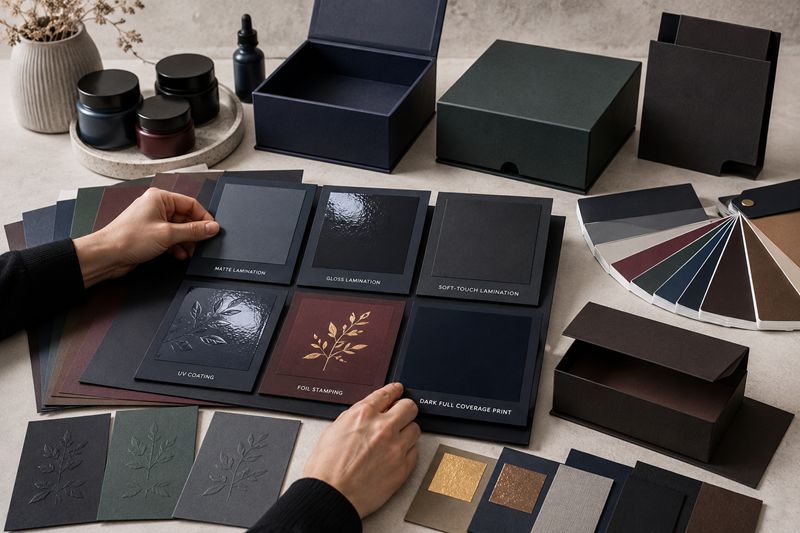
Source 2: Printing Ink, Surface Finishing, and Coating Processes
The second common source of odor comes from printing and surface finishing.Volatile organic compounds can be emitted as gases from certain solids or liquids, and many products, including paints, coatings, adhesives, and related materials, can release VOCs.
1. Why Printed Rigid Boxes May Smell Stronger?
A plain greyboard box may have only a paper smell. A fully printed Custom rigid box may involve ink, film, coating, glue, foil, and finishing materials. Each added layer can affect odor.
Printed rigid boxes may smell stronger when:
- Ink coverage is heavy
- Dark colors cover large areas
- Metallic ink is used
- UV coating is applied too heavily
- Lamination film has residual odor
- Soft-touch film is not suitable for the product
- Boxes are packed before ink fully dries
- The printed sheets are stacked too tightly
- Production is rushed before shipping
2. Odor from Different Printing and Finishing Choices
| Process | Possible Odor | Control Tip |
| Matte / Gloss Lamination | Plastic-like smell | Use low-odor film |
| Soft-Touch Lamination | Film smell | Test before bulk order |
| UV Coating / Varnish | Coating smell | Ensure full curing |
| Foil Stamping | Light adhesive smell | Use as accent detail |
| Heavy Ink Printing | Ink smell | Allow enough drying time |
Finishing odor does not always mean the box is unsafe or defective. Some smells fade after drying and ventilation. However, strong odor after several days may suggest unsuitable materials, rushed production, poor curing, or improper storage.
3. High-Ink Designs Need More Odor Control
High-ink rigid box designs often look more luxurious, especially in black, navy, burgundy, green, brown, purple, or full-brand colors. However, large ink coverage may need longer drying time and better ventilation.
For odor-sensitive Custom packaging, brands can choose lighter colors, less full-surface printing, low-odor ink, minimal UV coating, textured paper, foil accents, and longer airing time. Using fewer material types maintains an upscale appearance and brings a more refreshing unboxing feel.
4. Special Attention for Food, Tea, and Cosmetic Packaging
| Product Type | Odor Requirement | Key Check |
| Food Gift Boxes | Clean, safe, no chemical smell | Avoid strong ink or coating odor |
| Tea Boxes | Support natural tea aroma | Box smell should not cover tea fragrance |
| Chocolate Boxes | Sweet, clean, gift-ready feel | Avoid paper, glue, or coating smell |
| Skincare Boxes | Neutral and fresh smell | Check glue, ink, and inner lining odor |
| Fragrance Boxes | Clean smell, no odor conflict | Packaging should not affect product scent |
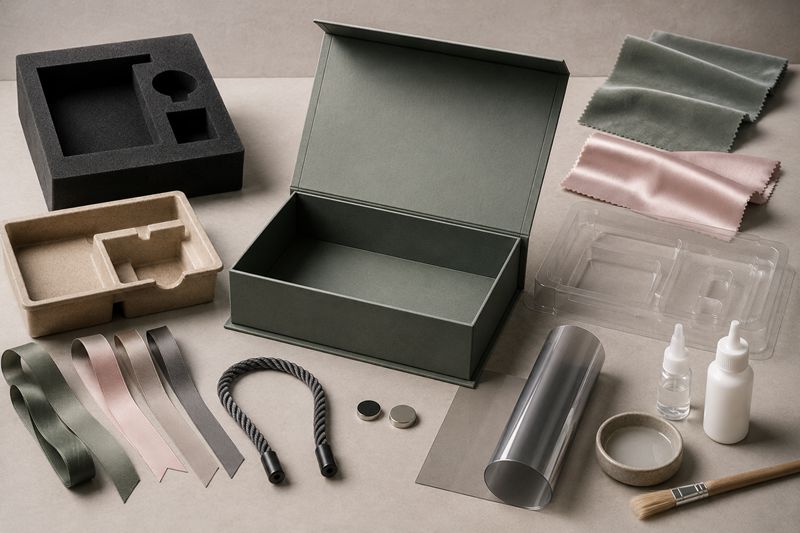
Source 3: Adhesives, Inserts, Accessories, and Storage Conditions
The third common source of odor is the assembly system around the box: glue, inserts, linings, accessories, and storage environment.
1. Why Glue Smell Is Common in Rigid Boxes?
Glue smell may come from:
- Excess glue application
- Low-quality adhesive
- Wrong adhesive for the material
- Insufficient drying time
- Poor airflow during production
- Dense lining materials
- Closed box structure
- Immediate carton packing after assembly
- Humid storage conditions
2. Inserts and Linings Can Trap Odor
| Insert / Lining Material | Possible Odor | Key Check |
| Paperboard Insert | Paper or glue smell | Check drying and adhesive use |
| EVA Foam | Foam or plastic smell | Test before bulk production |
| Sponge Foam | Strong synthetic odor | Avoid for odor-sensitive products |
| Molded Pulp | Natural fiber smell | Keep dry and well-ventilated |
| Velvet Lining | Glue or fabric odor | Check after full assembly |
| Satin Lining | Textile or adhesive smell | Avoid excessive glue |
| PET Tray | Light plastic smell | Choose low-odor material |
| Layered Paper Tray | Paper and glue smell | Allow enough airing time |
3. Accessories Can Add Unexpected Smell
Accessories such as magnets, ribbons, handles, belly bands, tags, seals, window films and linings can create odor. Ribbons may absorb glue smell, PU handles may smell synthetic, and window films or velvet lining may trap plastic or adhesive odor.
Careful material choice, glue control, and drying time help reduce issues.
4. Storage Conditions Can Make Odor Worse
Storage can make rigid box odor stronger, especially when boxes are packed warm, damp, or poorly ventilated. High humidity, dust, mold, smoke, chemicals, or sealed cartons may cause paper, fabric, foam, and lining to absorb smells. Keep boxes dry, ventilated, clean, and separated from strong odors before shipment.
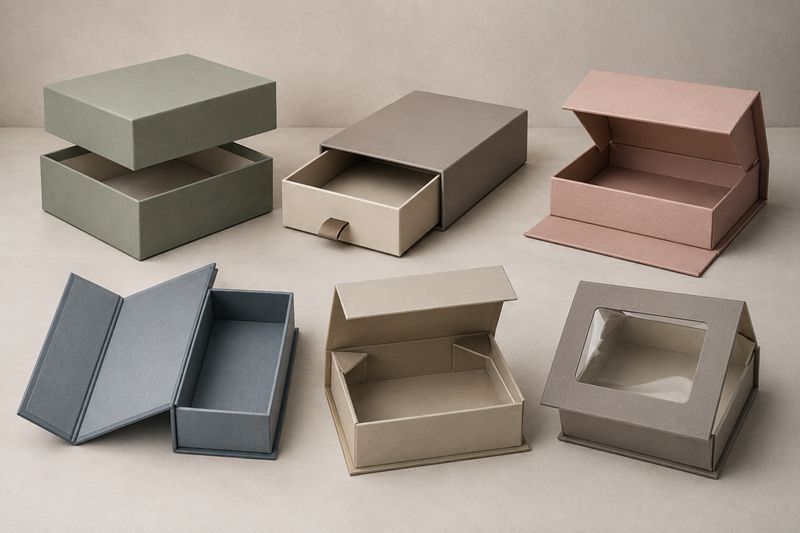
How Odor Affects Different Rigid Box Styles?
| Box Style | Odor Risk | Control Tip |
| Two Piece Box | Lid traps smell | Ventilate before packing |
| Drawer Box | Sleeve holds glue odor | Dry fully before closing |
| Magnetic Box | Flap traps adhesive smell | Check magnet area |
| Book Style Box | More inner layers | Inspect hinge and lining |
| Shoulder Neck Box | More board and glue | Control drying time |
| Window Box | Film or glue smell | Check film and adhesive |
1. Two Piece Rigid Box
The two-piece rigid box design features an independent cover and base component. Because the lid covers the base, odor can stay inside the closed space. Deep lids and thick inserts may increase trapped smell. For food gifts and skincare sets, ventilation before packing is important.
2. Drawer Rigid Box
Slide drawer rigid boxes feature an exterior jacket paired with an inner container tray. However, the sleeve and drawer create layered enclosed surfaces. Glue smell may stay between the sleeve and tray if the box is packed too quickly.
3. Magnetic Closure Box
Magnetic boxes feel smooth, secure, and premium. The magnetic flap usually includes board layers, magnets, lining paper, and adhesive. If the flap is thick and tightly closed, odor may remain inside unless properly aired.
4. Book Style Rigid Box
Book style rigid boxes use a hinged structure and often include magnets, ribbons, insert trays, or premium finishes. Because this structure often includes multiple internal layers, odor control should include the hinge area, inner tray, lining, and closure system.
5. Shoulder Neck Rigid Box
Shoulder neck boxes have a lid, base, and visible inner neck structure, creating a layered premium appearance. The inner neck adds more paperboard and glue area, so material quality and drying time matter.
6. Window Rigid Box
Transparent window rigid boxes permit shoppers to see the contents inside. They may include PET, PVC, or other transparent film materials. The film and adhesive around the window can add odor if not selected carefully.
How Manufacturers Can Reduce Odor in Custom Rigid Boxes?
- Low-odor materials
- Proper printing process
- Less heavy ink
- Controlled lamination
- Low-odor adhesive
- Even glue application
- Enough drying time
- Clean storage area
- Dry odor-free inserts
- Accessory inspection
- Delayed sealing
- Pre-shipment odor check
Practical Material Suggestions by Product Type
| Product Type | Odor Risk | Control Tip |
| Cosmetics & Skincare | Glue / coating odor | Use clean paper and ventilation |
| Perfume & Fragrance | Mixed packaging smell | Keep scent neutral |
| Candles | Storage / glue odor | Avoid strong-smell storage |
| Tea & Chocolate | Chemical / damp smell | Use clean, dry materials |
| Jewelry & Watches | Lining / foam odor | Test inserts before bulk |
| Apparel Gifts | Warehouse odor | Keep boxes dry and aired |
Common Odor Mistakes to Avoid
Many rigid box odor problems come from rushed production, excessive glue, untested inserts, heavy lamination, humid storage, or immediate packing after assembly.
Brands should check the complete Custom box, including lining, ribbons, handles, window film, and inserts. Enough drying, ventilation, and odor testing help create a cleaner, more reliable package.