
The seven main custom two piece rigid box options are lid height, base depth, board thickness, wrapping material, custom dimensions, printing options, and special add-ons. Each option affects the way the box looks, opens, protects, and displays the product.
| Custom Option | What Can Be Adjusted | Main Purpose | Common Use |
| Lid Height | Shallow, medium, or deep lid coverage | Changes opening feel and visual proportion | Gift boxes, cosmetics, candles |
| Base Depth | Inner height and product holding space | Keeps products stable inside the box | Jars, bottles, sets, accessories |
| Board Thickness | Greyboard thickness and stiffness | Controls strength and premium hand feel | Luxury gifts, rigid candle boxes |
| Wrapping Material | Paper type, texture, color, finish | Builds brand style and surface quality | Beauty, fashion, lifestyle gifts |
| Custom Box Dimensions | Length, width, height, insert space | Matches real product size | Small gifts, product sets, retail packs |
| Printing Options | CMYK, Pantone, inside and outside printing | Shows brand visuals and product identity | Custom printed rigid boxes |
| Special Add-ons | Ribbon pull, window, shoulder neck adjustment | Adds function or display value | Premium retail and gift packaging |
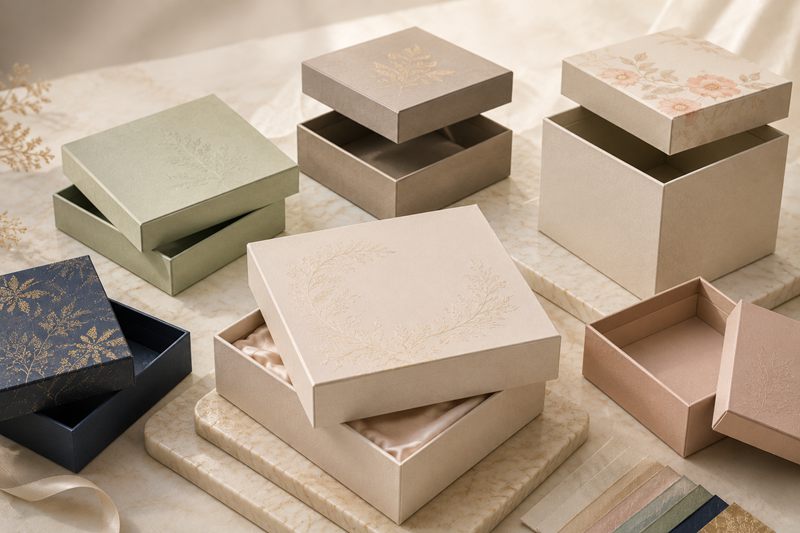
Lid Height
Lid height changes how much of the base is covered. A shallow lid feels lighter, while a deeper lid creates a more enclosed and premium appearance.
1. How Lid Height Changes the Opening Feel
The lid is often the first part customers touch. A smooth, balanced lid can make two piece rigid boxes feel more refined, while a lid that is too tight or too loose may reduce the premium effect.
Common lid height references include:
- Shallow lid: about 15–30 mm
- Medium lid: about 30–50 mm
- Deep lid: about 50–80 mm
- Full-cover style: close to the full base height
A shallow lid works well when the brand wants an easy-open gift box. A deeper lid suits luxury rigid boxes because the slower reveal can make the unboxing moment feel more valuable.
2. Better Fit by Product Type
Cosmetic sets, jewelry, and accessories often use medium lid height because the box needs to look neat without feeling too heavy. Rigid candle boxes may need a deeper lid when the product is taller or heavier.
Rigid gift boxes with lids can also use different lid depths to create different styles. A simple change in lid height can make the same box look more casual, classic, or premium.
Base Depth
Base depth controls how much inner space the box provides. It should match the product height, insert design, and expected opening experience.
1. Holding the Product Securely
A good base depth keeps the product stable without making the package look empty. Buyers often need to check the real product, not only the drawing, because bottles, jars, and accessories may need extra clearance.
Common clearance references include:
- Light paper insert: 2–4 mm
- EVA or foam insert: 3–6 mm
- Glass jar or candle: 4–8 mm
- Multi-product set: 5–10 mm, depending on layout
Too much base depth can make the product sit too low. Too little space may cause pressure on the lid or damage the surface during closing.
2. Product Display Inside the Box
The base is not only for holding the product. It also shapes the product presentation when opened.
Beauty sets may need a tidy row layout. Candles may need centered placement. Jewelry or fashion accessories may need a cleaner display area with soft lining or a shaped insert.
Board Thickness
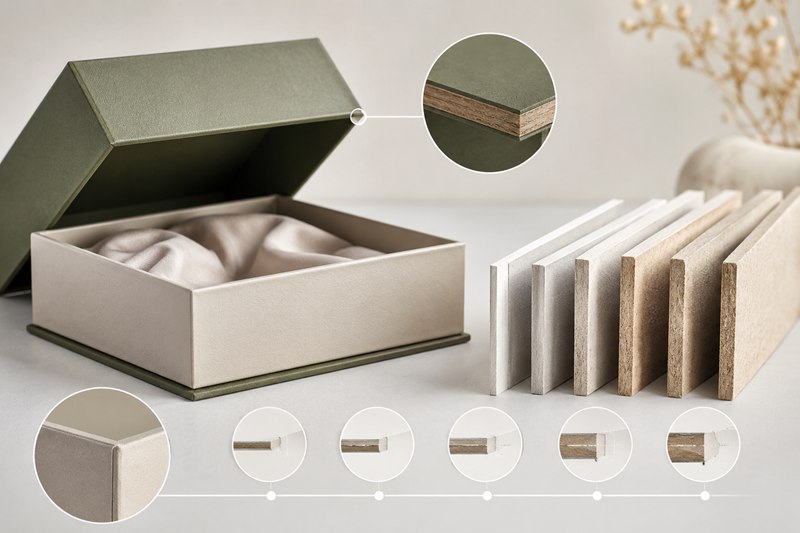
Board thickness affects box strength, edge feel, and overall quality. Most rigid box packaging uses greyboard inside and decorative paper outside.
1. Choosing the Right Greyboard Thickness
Thicker board often creates a firmer, more premium feel. The right option depends on product weight, box size, and shipping needs.
Common greyboard options include:
- 5 mm: small and lightweight gift boxes
- 0 mm: regular retail gift boxes
- 5 mm: candles, jars, and heavier gifts
- 0 mm: premium or large luxury packaging
Small cosmetic boxes may not need very thick board. Heavier candles, glass jars, and gift sets usually need stronger support to prevent deformation.
2. Strength Without Overbuilding
More thickness is not always better. A very thick board can increase cost, weight, and wrapping difficulty.
A reliable rigid box maker usually checks product weight, box size, shipping route, and surface paper before recommending board thickness. Good structure should feel firm without making the box unnecessarily bulky.
Wrapping Material
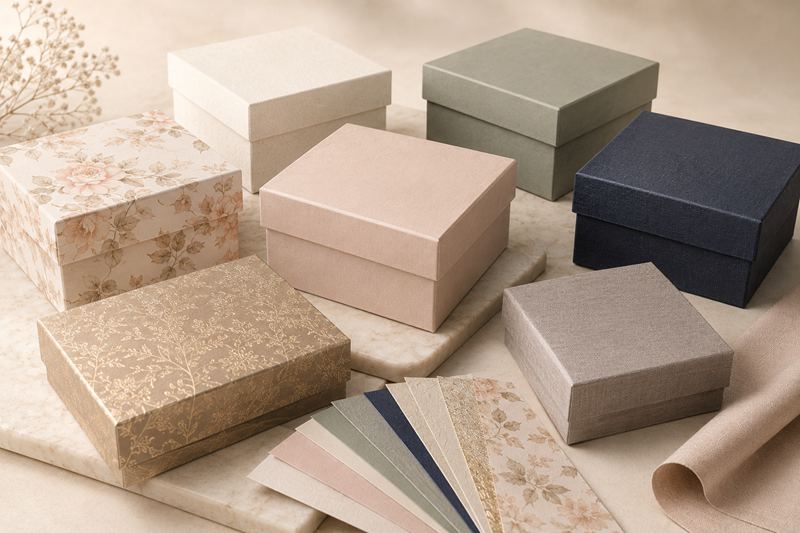
Wrapping material creates the visible surface of the box. It affects color, texture, printing quality, and how premium the box feels in the customer’s hand.
1. Surface Paper Shapes Brand Style
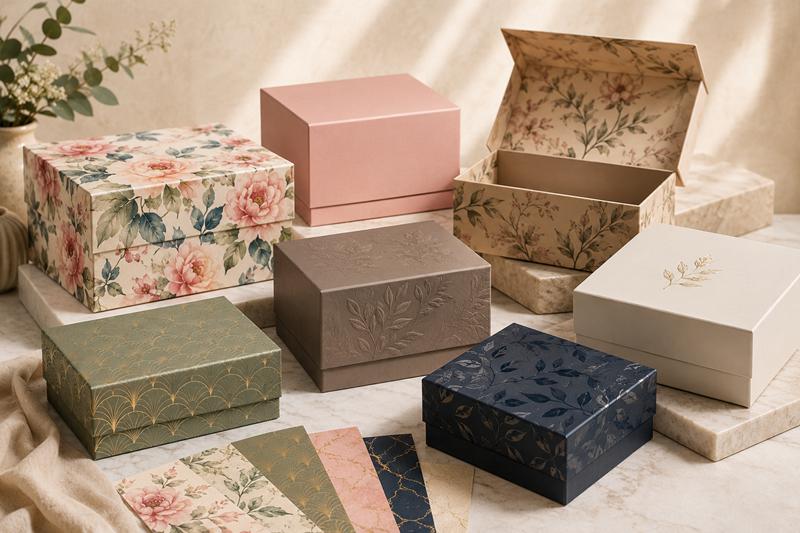
Different papers create different brand impressions. Minimal beauty brands may choose matte art paper, while premium gift brands may prefer textured or specialty paper.
Common wrapping material options include:
- Art paper
- Specialty paper
- Textured paper
- Kraft paper
- Pearlescent paper
- Metallic paper
- Soft-touch laminated paper
- Matte laminated paper
A luxury skincare box may need a smooth matte surface. A natural candle brand may prefer kraft or textured paper. Fashion gift packaging may use metallic paper or deep color paper to create stronger shelf presence.
2. Finish and Touch Experience
Surface feel matters in C-end packaging because customers often judge the product through touch. Soft-touch paper, textured paper, and matte finishes can make custom rigid boxes feel more refined.
Glossy finishes create a brighter look, but fingerprints may become easier to notice. Dark paper can look elegant, while poor wrapping quality may show white edges or rough corners.
Custom Box Dimensions
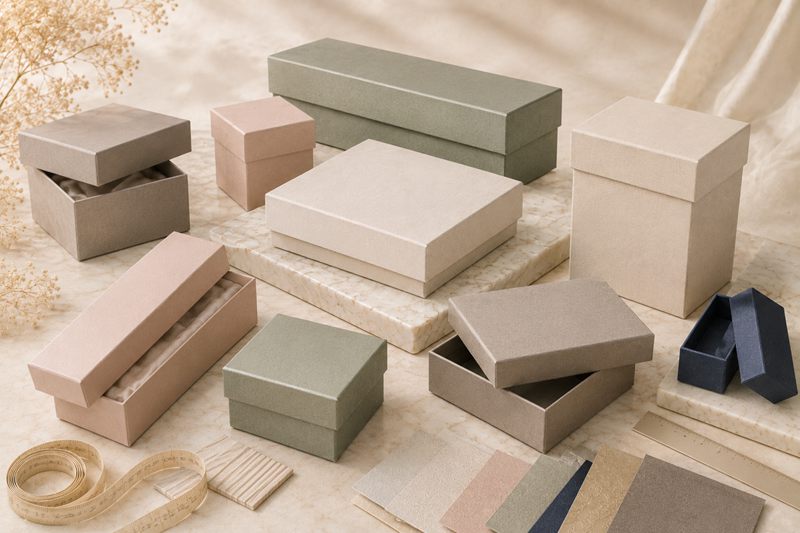
Custom box dimensions decide whether the product fits cleanly. Length, width, height, lid depth, and insert space should be planned together.
1. Size Should Follow the Real Product
A two piece rigid box should not be designed from product size alone. Buyers also need to consider inserts, surface paper thickness, lid fit, and shipping carton arrangement.
Common dimension references include:
- Small jewelry box: around 80 × 80 × 35 mm
- Candle box: around 90 × 90 × 110 mm
- Skincare set box: around 220 × 160 × 70 mm
- Apparel gift box: around 300 × 220 × 80 mm
- Premium gift set box: around 350 × 250 × 100 mm
These numbers are only common reference ranges. Final size should follow the real product sample, insert structure, and delivery method.
2. Better Size Planning Reduces Waste
Good dimensions help reduce empty space inside the box. They also improve carton loading, warehouse storage, and retail display.
Brands comparing a two piece rigid box, rigid drawer box, foldable rigid box, or rigid collapsible box should pay attention to storage volume. Fixed two piece boxes look premium, while foldable structures may save more space before packing.
Printing Options
Printing controls brand identity on the box surface. It can appear outside the box, inside the lid, or across both areas.
1. CMYK and Pantone Printing
CMYK printing suits images, gradients, and colorful artwork. Pantone color printing is better when the brand needs a more accurate solid color.
Common printing options include:
- CMYK printing
- Pantone color printing
- Inside printing
- Outside printing
- Full-surface printing
- Logo-only printing
- Pattern printing
Custom printed rigid boxes often combine printing with foil stamping, embossing, debossing, or spot UV. The final choice depends on brand style, paper type, and budget.
2. Inside and Outside Printing
Outside printing attracts attention first. Inside printing enhances the unboxing moment after opening.
A perfume brand may print a clean logo outside and a soft pattern inside. A jewelry brand may use a simple outer design with a message or brand story on the inner lid.
Special Add-ons
Special add-ons improve function, display, or brand detail. They should support the product instead of making the box too complicated.
1. Ribbon Pull
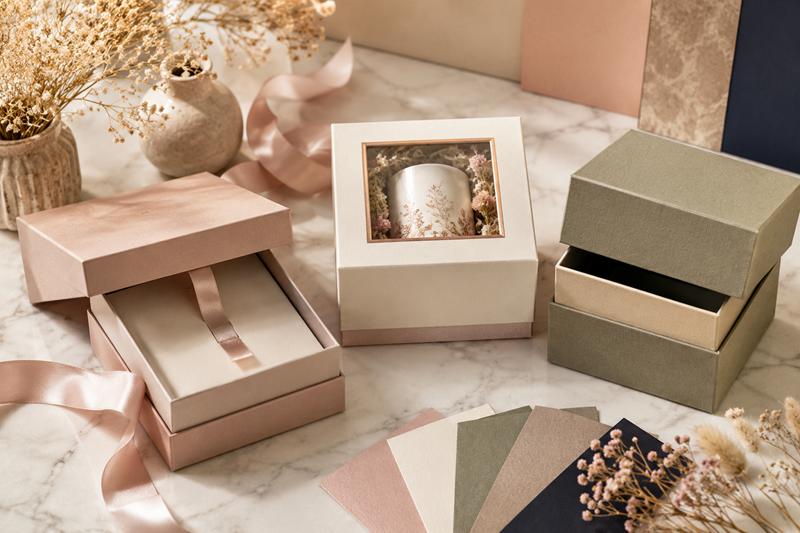
A ribbon pull helps customers open the box more easily. It is often used when the lid fits closely or when the brand wants a softer gift feeling.
Common uses include:
- Jewelry boxes
- Watch boxes
- Fashion accessories
- Premium gift sets
- Beauty packaging
Ribbon color should match the surface paper and printing style. A poorly matched ribbon can make even luxury rigid boxes look less refined.
2. Window Design
A window design shows part of the product before opening. It is useful when color, texture, or product shape helps drive purchase decisions.
Suitable products include:
- Candles
- Chocolates
- Small beauty items
- Accessories
- Seasonal gifts
Window size needs careful control. A large window may weaken the structure, while a small window may not show enough product detail.
3. Shoulder Neck Structure Adjustment
Shoulder neck adjustment creates a raised inner layer between the lid and base. It adds depth and makes the box look more structured.
A shoulder neck design can improve the opening effect of rigid gift boxes with lids. It also creates a color contrast opportunity when the neck uses a different paper color.
Magnetic rigid boxes and rigid magnetic boxes can also use shoulder neck details when the brand wants a cleaner, more premium closure experience.
Priorities for Different Packaging Projects
Different products need different customization priorities. Candles may need stronger board, deeper base space, and secure inserts. Beauty products may need accurate printing, clean lid fit, and a premium surface.
Gift sets usually need better inner layout because several items must look organized together. Apparel and accessories may focus more on surface paper, lid height, and add-ons such as ribbon pulls.
A good rigid box maker should connect structure, printing, material, and add-ons from the sample stage. When every option works together, custom rigid boxes can support both product protection and customer experience.