
Magnetic rigid boxes are widely used for their clean structure and controlled opening feel, but lid attachment determines how the box actually performs in use.
The two main structures are glued back lid and non-glued lid, and each creates a different opening behavior and stability level.
Choosing between them depends on product positioning, presentation needs, and how the unboxing experience is designed.
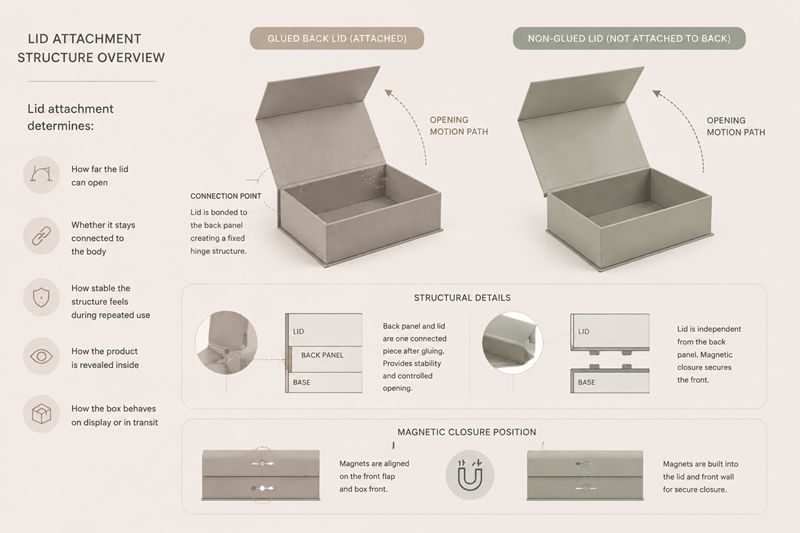
The Role of Lid Attachment
Lid attachment determines:
- How far the lid can open
- Whether it stays connected to the body
- How stable the structure feels during repeated use
- How the product is revealed inside
- How the box behaves on display or in transit
This is why many packaging designers consider lid structure before finishing, printing, or even insert design.
When exploring options such as Custom magnetic rigid boxes, lid attachment becomes one of the earliest structural decisionsbecause it influences both engineering and visual storytelling.
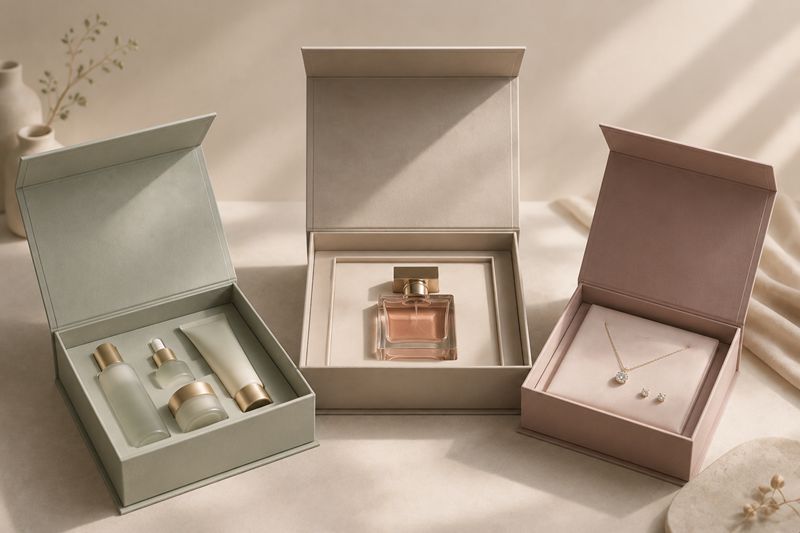
Glued Back Lid Magnetic Rigid Box
A glued back lid structure means the lid is physically attached to the back panel of the inner box. The connection is fixed, creating a continuous hinge-like movement.
1. Structural Characteristics
- Lid is bonded to the back wall of the rigid base
- Opens in a controlled arc rather than fully separating
- Maintains structural continuity between lid and base
- Works like a reinforced hinge system
- Often paired with magnetic closure at the front flap
2. Opening Experience
The opening motion of a glued back lid is smooth but slightly guided. The lid naturally follows a fixed path, preventing it from falling backward too far.
3. Visual & Functional Behavior
- The box holds its shape more consistently
- The lid can act as a “display frame” when open
- The product remains visually centered
- The structure feels more premium and engineered
4. Best Suited For
Glued back lid magnetic rigid boxes are widely used for fragrance, skincare, jewelry, gift, and electronics packaging.
They support stable presentation, structured inserts, and a focused unboxing experience, making them ideal when the product needs a clear visual centerpiece and controlled opening flow.
5. Practical Advantages
- Strong structural integrity
- Better alignment during repeated opening
- Stable lid positioning for display use
- Enhanced unboxing control
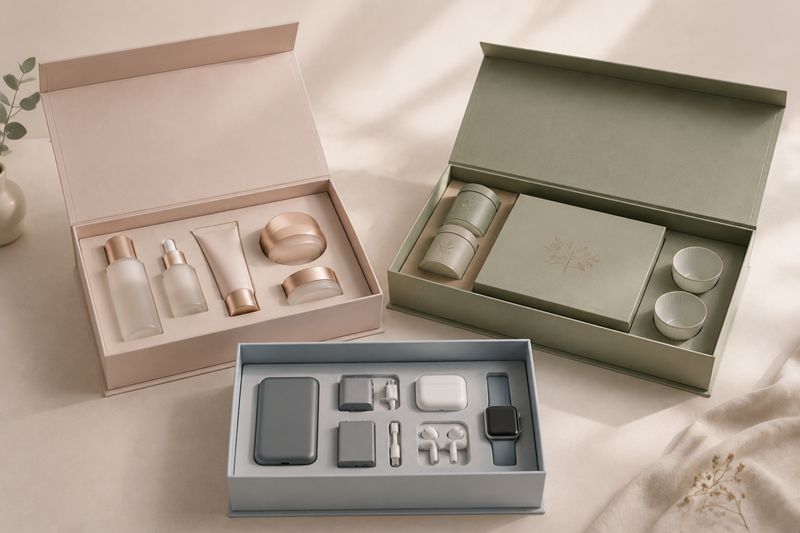
Non-Glued Lid Magnetic Rigid Box
Featuring an adhesive-free lid design, it is not fixed onto the back panel. The lid moves separately and achieves secure sealing relying on magnetic force.
1. Structural Characteristics
- Lid is fully separated from the box body
- Magnetic closure controls sealing position
- Lid can fold backward freely when opened
- Cleaner structural independence between components
2. Opening Experience
Non-glued lid magnetic rigid boxes open with a relaxed, flexible motion. The lid folds back freely without structural resistance, giving easier access to the full interior and wider viewing angles. The experience feels lighter and more casual, while still maintaining a premium material finish and refined presentation quality.
3. Visual & Functional Behavior
- The box opens more fully and freely
- Product visibility increases from multiple angles
- The structure feels less constrained
- Easier to display large or layered contents
4. Best Suited For
Non-glued lid magnetic rigid boxes are widely used for cosmetic bundles, stationery sets, tea and chocolate gifts, small electronics, and promotional kits.
They offer flexible opening, easy access, and wider product visibility, making them ideal when convenience and accessibility matter more than a highly controlled unboxing experience.
5. Practical Advantages
- Wider opening angle
- Easier product access
- Simpler structural construction
- Better adaptability for different insert layouts
Glued Back Lid vs Non-Glued Lid
| Feature | Glued Back Lid | Non-Glued Lid |
| Lid Connection | Fixed to back panel | Independent structure |
| Opening Motion | Controlled arc | Fully flexible |
| Display Effect | Structured, framed look | Open, spacious presentation |
| Product Focus | Single focal reveal | Multi-item visibility |
| Structural Feel | Strong and engineered | Light and modular |
| Best Use Scenario | Luxury gift presentation | Everyday premium packaging |
How to Choose the Right Lid Structure?
Selecting between glued and non-glued lid structures is less about complexity and more about product intent.
1. Product Type
| Category | Glued Lid | Non-Glued Lid | Focus |
| Cosmetics | Skincare sets | Makeup kits | Display |
| Perfume | Premium gift | — | Ceremony |
| Jewelry | Luxury display | Travel sets | Protection |
| Electronics | — | All types | Access |
| Tea & Chocolate | Gift editions | Assortments | Presentation |
| Stationery | — | Multi-kits | Convenience |
2. Unboxing Experience Goal
Glued back lid boxes create controlled, dramatic unboxing with a structured reveal, while non-glued lids allow faster access and more practical interaction, offering flexibility depending on whether presentation impact or ease of use is the priority.
3. Product Size & Weight
Heavier products suit glued back lid boxes for stability and reinforced alignment, while lighter kits benefit from non-glued lids, offering flexible handling, easier repacking, and a more adaptable structure for varied usage scenarios and product combinations.
4. Shelf & Retail Behavior
Retail environments favor non-glued lids for frequent access and easy handling, while gifting scenarios prefer glued back lids for a stronger, more impactful unboxing experience and a more structured presentation moment.
5. Brand Positioning
Brand tone influences lid choice: structured, high-end branding prefers glued back lids for controlled presentation, while modern, minimal brands favor non-glued lids for flexibility, simplicity, and a more relaxed unboxing experience.
Design Considerations Behind Lid Attachment
1. Magnetic Strength Alignment
- Glued lids require balanced magnet placement for controlled closure
- Non-glued lids need stronger retention due to freer movement
2. Board Thickness
- Thicker boards enhance stability in glued structures
- Medium density boards improve flexibility in non-glued designs
3. Insert Compatibility
- Glued lid boxes work best with fixed insert layouts
- Non-glued lid boxes support modular or removable inserts
4. Finishing Techniques
Both structures support:
- Foil stamping
- Embossing/Debossing
- Soft-touch lamination
- Textured specialty paper
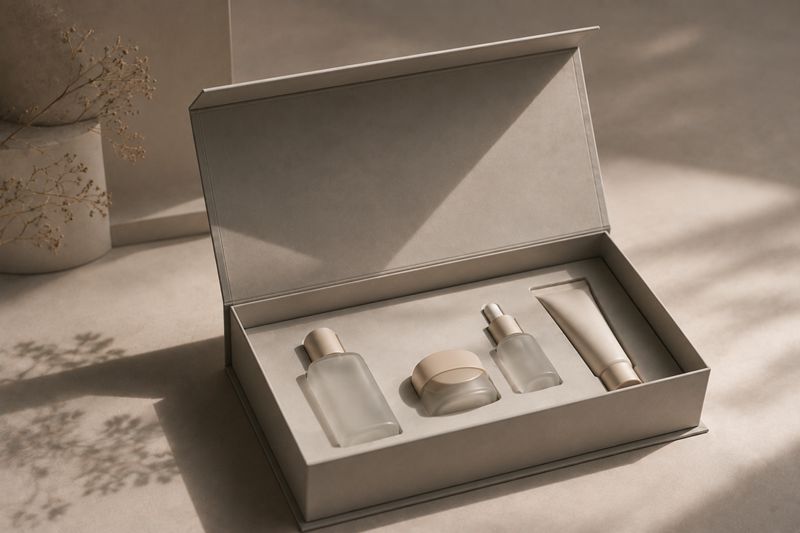
The Role of Custom Design
In real packaging development, lid structure is rarely a standalone decision. It is part of a broader system involving material, insert, closure strength, and brand expression. This is where Custom packaging solutions become essential.
Instead of selecting a box purely by structure, designers often align lid attachment with:
- Product story
- Market positioning
- User interaction flow
- Unboxing narrative
A well-designed lid system does more than close a box—it defines the rhythm of product discovery.
A cover fitting scheme consistent with the product’s unique temperament elevates the packaging beyond a simple container. As an integral part of the product, it influences consumers’ perception, touch experience and lasting impression.