
Magnetic rigid boxes are widely used in premium packaging for gifting and retail due to their clean structure and satisfying magnetic closure experience.
Two main types define the category: foldable and non-foldable magnetic rigid boxes.
Although similar in appearance, they differ significantly in shipping efficiency, storage method, and unboxing experience, influencing both cost and brand presentation choices.
Understanding Magnetic Rigid Boxes Beyond the Surface
Magnetic rigid boxes are constructed from thick paperboard reinforced with specialty paper wraps, with embedded magnets that create a secure closure. They are widely used for:
- Cosmetics and skincare sets
- Jewelry and accessories
- Luxury candles and fragrance gifts
- Tea, chocolate, and gourmet packaging
- Electronics and premium lifestyle products
Within this category, foldable and non-foldable designs represent two completely different engineering philosophies.
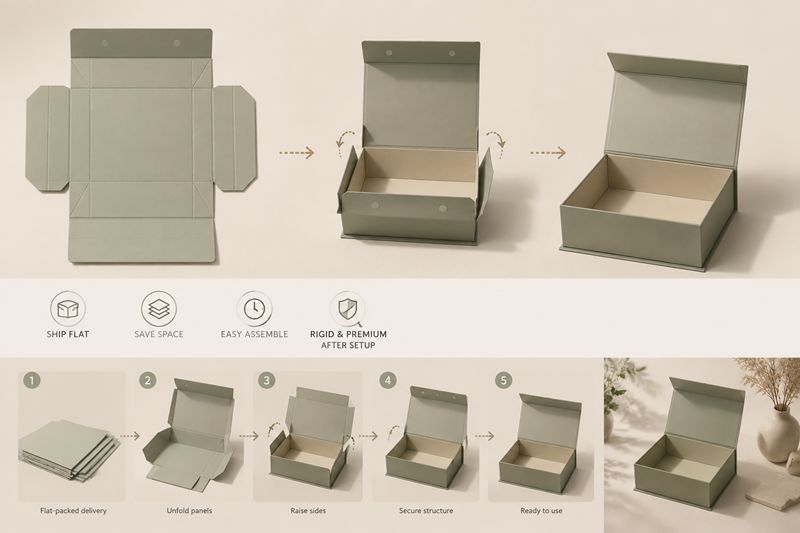
Foldable Magnetic Rigid Boxes: Designed for Efficiency
Looking at a foldable magnetic rigid box in its flat state, it almost feels like packaging origami—precisely die-cut panels that collapse into a flat sheet, yet transform into a structured box with defined edges and magnetic closure when assembled.
Structural Idea:
- Ship flat
- Save storage space
- Be assembled quickly at destination
- Maintain rigid box aesthetics after setup
It combines the strength of rigid board with the practicality of collapsible engineering.
1. The User Experience
Foldable magnetic rigid boxes are delivered flat with pre-scored panels, embedded magnets, and simple assembly structures. After unfolding, they quickly gain full volume, rigidity, and premium presence.
This transformation creates an engaging unboxing experience, where users participate in assembly while brands benefit from efficient global shipping and reduced storage costs.
2. Practical Advantages
- Reduced Shipping Volume
- Warehouse Efficiency
- E-commerce Adaptability
- Export-Friendly Design
3. Emotional Perception
Foldable magnetic rigid boxes still deliver a premium feel when assembled, despite their efficiency-driven structure. Clean edges, strong magnetic closure, stable shape, and refined lamination ensure a solid tactile experience.
Once formed, the foldable structure becomes visually seamless, maintaining a high-end presentation that matches non-foldable rigid box quality.
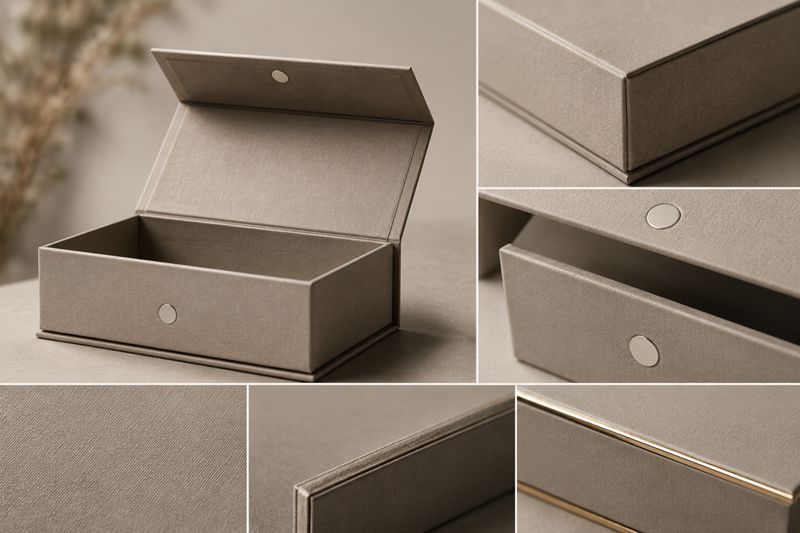
Non-Foldable Magnetic Rigid Boxes: Built for Instant Presence
In contrast, non-foldable magnetic rigid boxes arrive fully formed. They require no assembly, no unfolding, and no structural transformation.
There is no discrepancy between their look and reality—these sturdy permanent assemblies can be put to use right away.
If foldable boxes are about efficiency, non-foldable boxes are about presence.
1. The First Impression
The moment a non-foldable magnetic box is picked up, it communicates stability. The structure is:
- Fully rigid from the first touch
- Heavier and more grounded in feel
- Perfectly aligned without assembly variation
- Ready for immediate display or gifting
For luxury positioning, this immediacy matters. It removes any sense of “setup” and delivers a complete object from the beginning.
2. Strength in Structural Integrity
- Higher compression resistance
- Stronger corner stability
- Better long-term shape retention
- Enhanced protection for delicate items
3. Premium Retail and Gift Scenarios
Non-foldable magnetic rigid boxes are often chosen for:
- High-end jewelry presentations
- Luxury skincare gift sets
- Boutique perfume packaging
- Collector’s edition products
- In-store display packaging
In physical retail environments, they behave like part of the product display rather than secondary packaging.
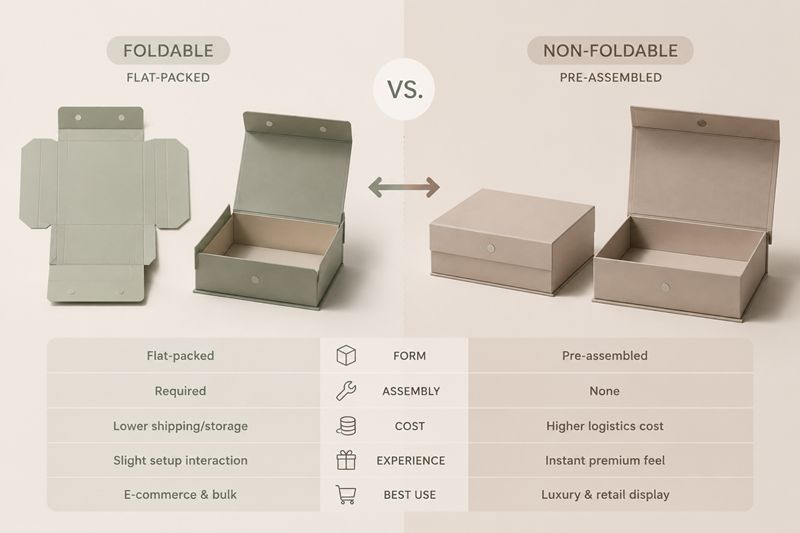
Side-by-Side Experience Comparison
| Aspect | Foldable | Non-Foldable |
| Form | Flat-packed | Pre-assembled |
| Assembly | Required | None |
| Cost | Lower shipping/storage | Higher logistics cost |
| Experience | Slight setup interaction | Instant premium feel |
| Best Use | E-commerce & bulk | Luxury & retail display |
While both structures share the same magnetic closure mechanism, their user journey differs significantly. The decision is not about “better or worse”—it is about which moment matters more: transportation efficiency or immediate presentation.
Material Behavior and Finishing Differences
Although both box types use similar materials—paperboard, specialty wrapping paper, magnetic components—the structural form influences finishing performance.
1. Foldable Box Considerations
- Must withstand repeated folding stress
- Requires precise scoring lines
- Lamination must remain flexible
- Alignment tolerances are critical
2. Non-Foldable Box Considerations
- Focus on corner reinforcement
- Allows heavier decorative finishes
- Supports deeper embossing and foil stamping
- Better for multi-layer inserts
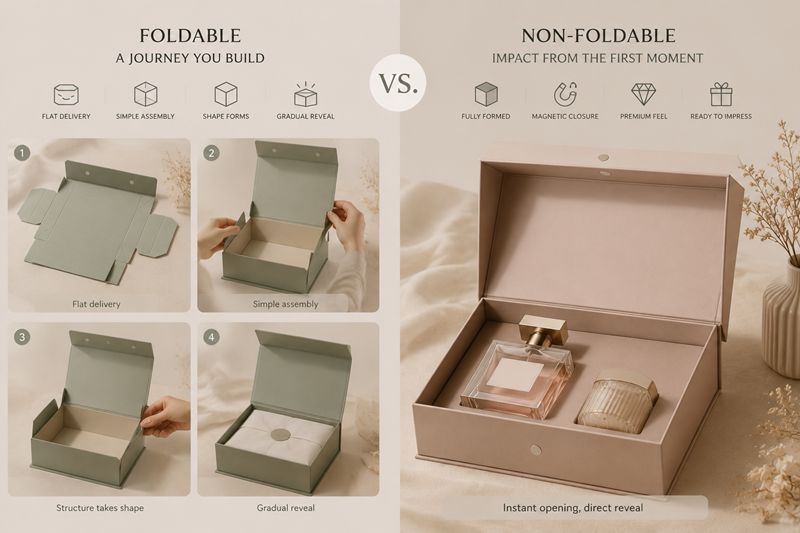
Unboxing Experience
Unboxing experiences differ between foldable and non-foldable magnetic rigid boxes.
Foldable versions involve receiving a flat package, simple assembly, and a gradual reveal, creating a participatory journey.
Non-foldable boxes arrive fully formed, offering an immediate magnetic opening and direct product reveal. One builds anticipation, the other delivers instant premium impact.
The Strategic Trade-Off
| Aspect | Foldable | Non-Foldable |
| Focus | Efficiency | Experience |
| Cost | Lower logistics cost | Higher shipping cost |
| Storage | Flat-packed | Fully formed |
| Use Case | Mass e-commerce | Premium gifting |
| Impact | Practical & scalable | Strong luxury presence |
Brands rarely operate at only one end of this spectrum. Many use both depending on product tiers or seasonal campaigns.
Customization
Modern packaging is rarely standardized. Even within foldable and non-foldable categories, customization defines the final outcome.
Through Custom magnetic rigid box development, brands can adjust:
- Box dimensions and proportions
- Magnetic strength and placement
- Paper texture and coating
- Interior inserts (foam, cardboard, velvet)
- Printing techniques and foil accents
- Opening direction and flap behavior
A foldable box can feel luxurious. A non-foldable box can feel modern and minimal. The structure sets the foundation, but customization defines personality.
Practical Perspective
Rather than treating this as a binary choice, it is more accurate to see it as a matching process between product needs and customer expectations.
Foldable magnetic rigid boxes are typically best when:
- Shipping cost is a priority
- Large-scale distribution is needed
- Storage space is limited
- Assembly flexibility is acceptable
Non-foldable magnetic rigid boxes are typically best when:
- First impression is critical
- Product value is high
- Retail presentation matters
- Immediate use is expected
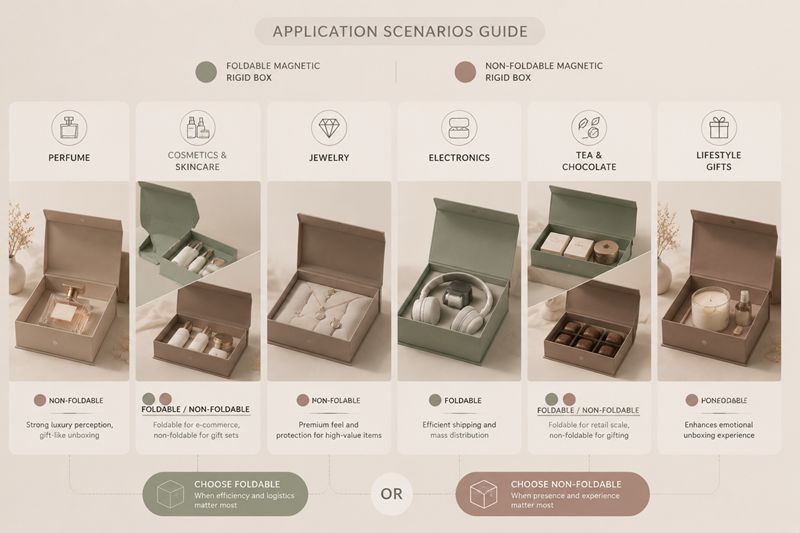
Application Scenarios Guide
| Product Category | Recommended Type | Reason |
| Perfume | Non-Foldable | Strong luxury perception, gift-like unboxing |
| Cosmetics & Skincare | Foldable / Non-Foldable | Foldable for e-commerce, non-foldable for gift sets |
| Jewelry | Non-Foldable | Premium feel and protection for high-value items |
| Electronics | Foldable | Efficient shipping and mass distribution |
| Tea & Chocolate | Foldable / Non-Foldable | Foldable for retail scale, non-foldable for gifting |
| Lifestyle Gifts | Non-Foldable | Enhances emotional unboxing experience |
Foldable and non-foldable magnetic rigid boxes are not competing solutions—they are parallel design philosophies shaped by different priorities.
One is built around movement, logistics, and efficiency. The other is built around presence, stability, and immediate emotional impact.
For brands exploring Custom magnetic packaging systems, understanding this distinction is often the first step toward building packaging that does more than protect a product. It shapes how the product is remembered.