
A magnetic rigid box may lose its magnetic force due to magnet displacement, structural changes, or improper closure conditions. Before replacing the box, check the magnetic components, lid alignment, and internal structure.
Practical improvement measures for magnetic box closure and durability are outlined here. Refitting custom design structures restores closing performance and enhances service life.
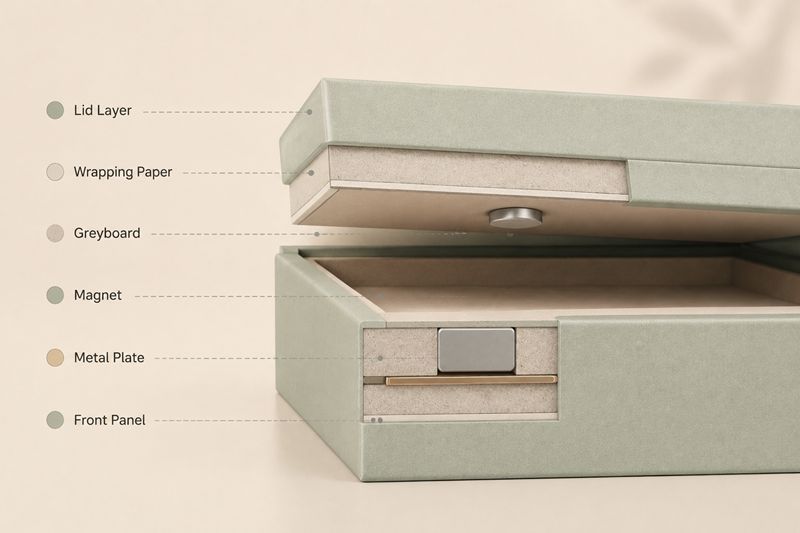
Check the Magnetic Closure Before Trying to Repair It
A magnetic closure system includes magnets, metal plates, rigid structure, and positioning design. Checking each component helps identify whether the issue comes from the magnet or the box structure.
1. Check the Lid Alignment
Magnetic closures require accurate alignment between the magnetic parts. If the lid shifts slightly, the attraction area between the two sides becomes smaller, reducing the closing force.
Common signs of alignment problems include:
- The lid closes only when pressed from a specific angle
- The magnetic force feels stronger on one side
- The lid moves after closing
- The box opens when lifted or tilted
Such issues tend to emerge with frequent use. Constant opening and shifting of the cover will slowly displace its structural components.
For example, a hinged lid magnetic rigid box used for perfume or jewelry packaging relies heavily on precise lid positioning. Minor adjustments to the structure can alter how users perceive and interact with the box.
2. Check Whether the Magnet Has Moved
Magnets inside rigid boxes are usually hidden between layers of greyboard and decorative paper. Because they are not visible, internal movement can sometimes go unnoticed.
Possible reasons for magnet movement include:
- Weak adhesive fixation
- Strong impact during transportation
- Excessive pressure on the lid
- Incorrect assembly
- Long-term repeated use
If the magnet moves away from its original position, it may still have magnetic force, but the attraction area will become smaller.
For a quick check, close the box and apply light pressure near the magnetic parts. Uneven magnetic attraction across pressing spots means the magnet placement has to be adjusted.
3. Inspect the Metal Plate or Counter Magnet
Not all magnetic rigid boxes use two magnets. Many designs use a magnet paired with a metal plate. If the metal plate becomes loose or shifts, the magnetic closure may stop working properly.
Possible problems include:
- Metal plate separation
- Incorrect installation position
- Decorative paper lifting around the plate
- Internal component movement
This issue is commonly seen in packaging that is opened frequently, including:
- Cosmetic gift boxes
- Jewelry boxes
- Electronic accessory packaging
- Premium stationery boxes
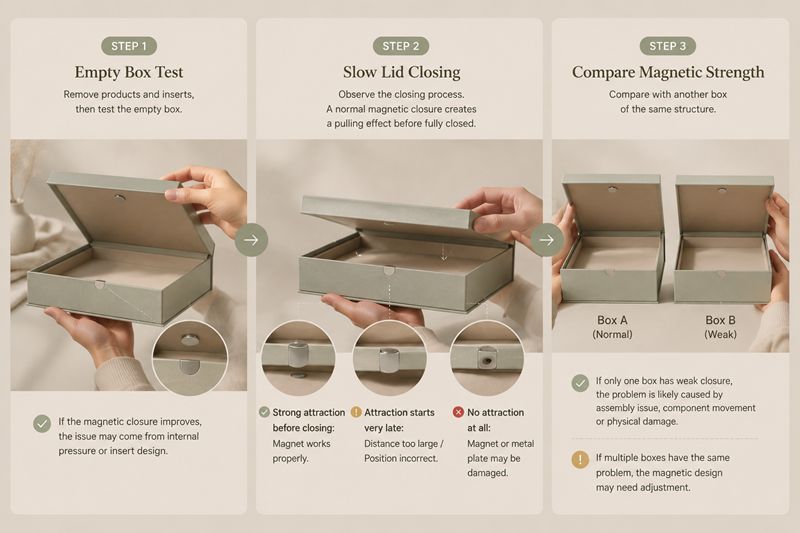
Test Whether the Magnet Really Lost Its Magnetic Force
A weak magnetic closure does not always mean the magnet has lost its power. Sometimes the magnet works normally, but the structure around it prevents proper contact. A simple test can help identify the actual problem.
1. Close the Empty Box
Remove products and inserts, then test the empty box. If the magnetic closure improves, the issue may come from internal pressure or insert design rather than the magnet itself.
2. Slowly Close the Lid
Observe the closing process. A normal magnetic closure usually creates a pulling effect before the lid is fully closed.
Possible situations:
Possible situations:
- Strong attraction before closing:Magnet works properly
- Attraction starts very late:Distance between magnets may be too large/ Magnet position may be incorrect
- No attraction at all:Magnet or metal plate may be damaged
3. Compare With Another Box
If you have several boxes with the same structure, compare their magnetic performance.
If only one box has weak closure, the problem is likely caused by:
- Individual assembly issue
- Internal component movement
- Physical damage
If multiple boxes have the same problem, the magnetic design may need adjustment.
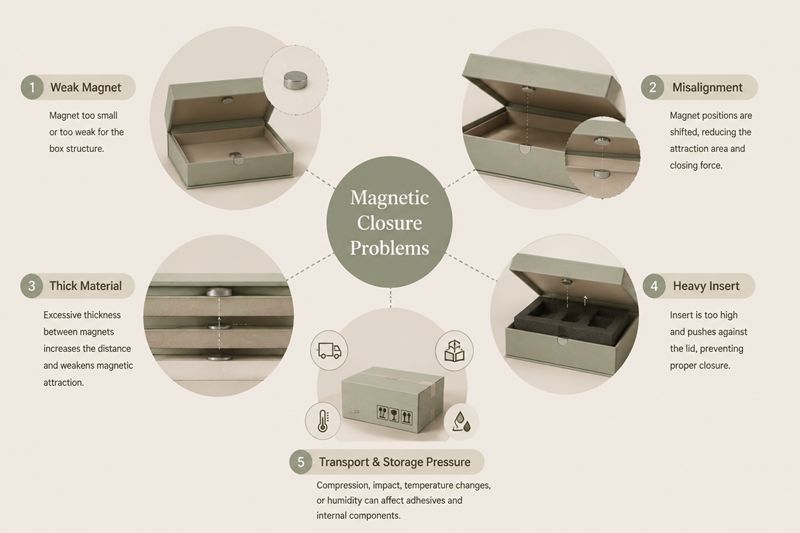
Common Causes of Magnetic Closure Problems
Magnetic closure performance depends on design, materials, manufacturing accuracy, and daily handling.
1. Incorrect Magnet Strength Selection
The magnet size and strength directly influence how securely a box closes. A small magnetic component may work well for a small jewelry box but may not provide enough holding force for a larger rigid box with a heavy lid.
Factors affecting magnet selection include:
- Box dimensions
- Lid weight
- Paperboard thickness
- Decorative materials
- Product weight
- Opening frequency
During Custom Magnetic Rigid Box development, manufacturers usually evaluate the complete packaging structure instead of selecting magnets separately.
We aim to develop a closing structure with these qualities:
- Secure enough to protect the product
- Easy enough to open
- Smooth enough to create a premium experience
2. Excessive Material Thickness Between Magnets
Excessive material thickness can weaken magnetic attraction by increasing the distance between components. Proper Custom design balances board thickness, magnet depth, and materials to maintain reliable closure performance.
3. Heavy Inserts Affecting Lid Closure
Internal inserts improve product protection and presentation, but they can sometimes affect magnetic closure.
Examples include:
- Velvet trays
- Foam inserts
- EVA holders
- Paper dividers
- Plastic trays
If the insert is too high, it may push against the lid and prevent complete closing.
This creates a situation where:
- The magnet is working
- The lid is not reaching the correct position
Before changing the magnet, check whether the internal structure is causing resistance.
4. Frequent Improper Opening Methods
Improper opening habits can weaken magnetic box structures over time. Avoid pulling sideways, pressing heavily, or forcing closure. Gentle handling helps maintain alignment and extend the box’s service life.
5. Transportation and Storage Pressure
Before reaching customers, magnetic boxes may experience:
- Long-distance transportation
- Compression during storage
- Temperature changes
- Humidity exposure
These conditions may affect adhesives and internal components. For example, high humidity may weaken some adhesive materials, while heavy pressure during transportation may slightly deform the box structure.
What to Do When a Magnetic Box Has Weak Magnetic Force?
| Problem | Solution | Key Actions |
| Lid Misalignment | Adjust Lid Position | Check lid angle, folding lines, front panel, and hinge condition |
| Internal Pressure | Reduce Box Pressure | Adjust insert height, remove excess padding, improve product placement |
| Loose Magnetic Parts | Fix Internal Components | Reposition magnets, strengthen adhesive, adjust metal plates |
| Damaged Magnet | Replace Magnetic Components | Replace broken magnets, damaged plates, or unusable closure parts |
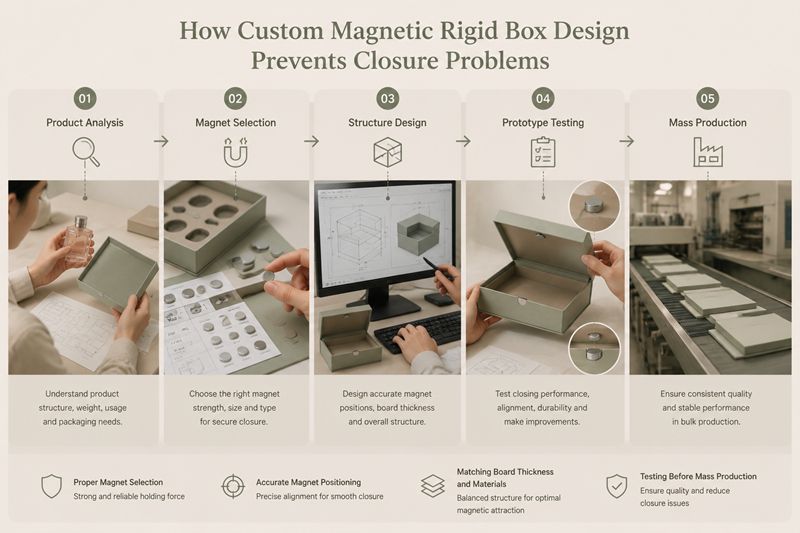
How Custom Magnetic Rigid Box Design Prevents Closure Problems?
- Proper Magnet Selection
- Accurate Magnet Positioning
- Matching Board Thickness and Materials
- Testing Before Mass Production
Maintenance Tips to Extend Magnetic Box Life
1. Keep the Box Away From Extreme Conditions
Avoid long-term exposure to:
- High humidity
- Excessive heat
- Direct sunlight
2. Avoid Overfilling the Box
A magnetic box should close naturally.
Do not force products that exceed the designed capacity.
Overfilling can:
- Push against the lid
- Change the structure
- Reduce magnetic contact
3. Open and Close Gently
Avoid pulling from one side.
Hold the lid evenly and allow the magnets to guide the closing movement.
4. Keep Magnetic Areas Clean
Dust or debris around the closure area may prevent complete contact.
A dry soft cloth is all you require for cleaning the box.
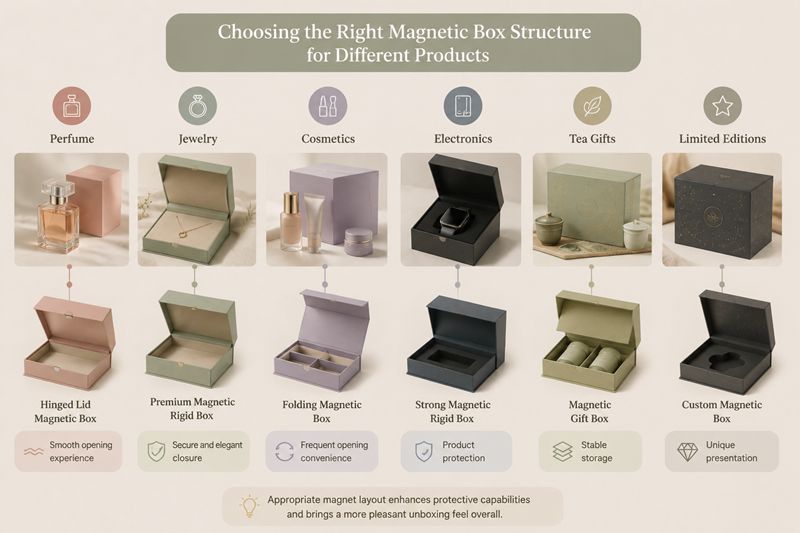
Choosing the Right Magnetic Box Structure for Different Products
| Product Type | Recommended Magnetic Box Structure | Closure Focus |
| Perfume | Hinged Lid Magnetic Box | Smooth opening experience |
| Jewelry | Premium Magnetic Rigid Box | Secure and elegant closure |
| Cosmetics | Folding Magnetic Box | Frequent opening convenience |
| Electronics | Strong Magnetic Rigid Box | Product protection |
| Tea Gifts | Magnetic Gift Box | Stable storage |
| Limited Editions | Custom Magnetic Box | Unique presentation |
Appropriate magnet layout enhances protective capabilities and brings a more pleasant unboxing feel overall.
FAQ
1. Can magnets inside rigid boxes lose their magnetic force?
Yes, but it is uncommon. Most closure problems come from misalignment, movement, or structural changes rather than complete magnet failure.
2. Can a weak magnetic closure be repaired?
In many cases, yes. If the magnet is still functional, adjusting the position or fixing structural issues may restore performance.
3. How long does a magnetic closure usually last?
Service life is determined by magnet grade, box structural design, usage frequency and storage environment.Properly designed magnetic boxes can maintain reliable performance through repeated opening and closing.
4. Can stronger magnets be added to improve closure?
Sometimes, but stronger is not always better. Excessive magnetic force may make the box difficult to open and affect the user experience.
5. Why does my magnetic box open automatically?
Possible reasons include weak magnetic force, incorrect alignment, overloaded contents, or deformation of the box structure.
6. Does box size affect magnetic strength requirements?
Yes. Larger boxes usually require stronger magnetic support because they have heavier lids and larger structures.
7. Can thick inserts affect magnetic closure?
Yes. If an insert pushes against the lid, the magnetic components may not connect properly.
8. Can custom packaging solve magnetic closure problems?
Yes. Custom design allows manufacturers to adjust magnet specifications, structure, materials, and inserts according to product requirements.