
Collapsible rigid boxes and traditional rigid boxes both belong to premium rigid box packaging, but they serve different business needs. The right choice depends on your product weight, order quantity, sales channel, warehouse space, and packing workflow.
A Simple Guide to Collapsible Rigid Boxes
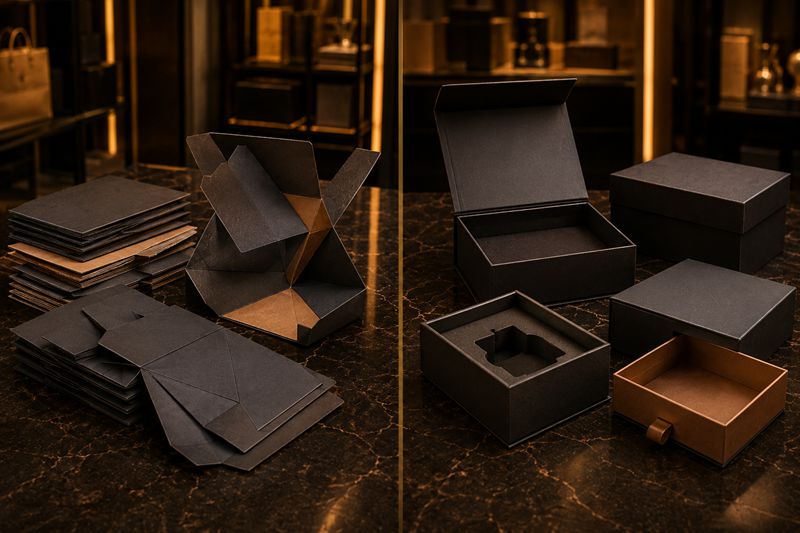
Collapsible rigid boxes are sturdy paperboard boxes designed to be folded flat before they are assembled for use. Once assembled, they still present a solid and premium look, much like traditional rigid gift boxes.
A rigid collapsible box usually combines thick greyboard, wrapped paper, folding panels, magnets, adhesive tape, or locking corners. This structure helps brands reduce storage volume before product packing begins.
For online sellers and seasonal gift brands, a foldable rigid box brings a useful balance. It keeps the package elegant while making stock management easier.
A Basic Overview of Traditional Rigid Boxes
Traditional rigid boxes come fully assembled from the factory. The box keeps its fixed shape during storage, delivery, and final product packing.
Common styles include rigid gift boxes with lids, magnetic rigid boxes, rigid magnetic boxes, and rigid drawer box packaging. These boxes appear frequently in luxury retail, premium gifts, and high-value product packaging.
Their key benefit is the solid and premium touch they provide after assembly. Customers usually connect this kind of rigid box packaging with quality, stability, and stronger product value.
Core Comparison
| Comparison Point | Collapsible Rigid Boxes | Traditional Rigid Boxes |
| Storage Space | Flat-packed, saves warehouse space | Fixed shape, needs more storage |
| Shipping Cost | Lower volume, better for bulk orders | Larger volume, higher freight pressure |
| Packing Speed | Needs folding before use | Ready to pack directly |
| Structure Strength | Depends on design and assembly quality | Naturally firm and stable |
| Unboxing Experience | Premium if edges and folding are clean | Stronger luxury hand feel |
| Product Protection | Works well with proper inserts | Better for heavy or fragile products |
| Magnetic Closure | Needs alignment testing after assembly | Closing feel is more stable |
| Cost Control | Saves freight and storage cost | Saves labor and packing time |
Key Difference 1:Storage Space
Since collapsible rigid boxes stay flat before setup, they help reduce warehouse storage volume.
- Flat packing makes warehouse stacking easier.
- Small studios and online shops can keep more packaging stock in limited space.
- Large orders of custom rigid boxes become easier to manage before the sales season.
- Gift sets, subscription boxes, and promotional packaging benefit from lower storage pressure.
Traditional rigid boxes need more room because they arrive in their final shape.
- The box cannot be flattened after production.
- More cartons may be needed for the same order quantity.
- Brands with limited storage may face higher warehouse pressure.
- This structure works better when storage space is not a major concern.
Key Difference 2:Shipping Cost
Freight cost is a major factor that leads many buyers to compare collapsible rigid boxes with traditional rigid boxes. Collapsible rigid boxes usually reduce freight pressure because they take up less space.
- Flat-packed cartons use shipping space more efficiently.
- Lower volume helps control freight cost for overseas orders.
- Bulk packaging projects gain more value from this structure.
- Brands ordering from an overseas rigid box maker may save on volume-based shipping.
Traditional rigid boxes occupy more carton space during transportation.
- Fixed box shape increases shipping volume.
- Large-volume orders may need more export cartons.
- International freight cost may rise when the order quantity grows.
- Local supply or small-batch orders may reduce this disadvantage.
Key Difference 3:Packing Speed
Traditional rigid boxes support faster packing because they arrive ready to use. The packing team can place the product inside without extra setup.
- Daily packing becomes simpler.
- Fulfillment teams spend less time preparing each box.
- Staff training becomes easier.
- Fast-moving retail orders benefit from this ready-made structure.
Collapsible rigid boxes require setup before use. The team may need to fold panels, press corners, align magnets, or fix the base.
- Assembly time needs testing before mass production.
- Simple folding structures improve packing efficiency.
- Complicated designs may slow down high-volume fulfillment.
- A clear assembly guide helps reduce mistakes.
Key Difference 4:Structure Strength
Traditional rigid boxes usually provide stronger structural stability from the start. The box shape is fixed, so the corners, walls, and base stay more consistent.
- Heavy products gain better outer support.
- Fragile items such as perfume, glass candles, and watches get stronger protection.
- The firm structure creates a stronger luxury hand feel.
- High-end retail display benefits from a stable box shape.
Collapsible rigid boxes depend more on design accuracy and assembly quality.
- Board thickness must match the product weight.
- Folding lines need enough strength for repeated opening and closing.
- Corner support affects the final box shape.
- Inserts help protect jewelry, cosmetics, belts, and gift sets.
Key Difference 5:Unboxing Experience
Both structures can create a premium unboxing experience, but the touch and feel are different.
Traditional rigid boxes give customers a stronger sense of solidity.
- The fixed structure creates an immediate premium impression.
- The box feels stable when held by hand.
- Luxury rigid gift boxes gain more perceived value from this structure.
- Boutique products benefit from a clean and firm presentation.
Collapsible rigid boxes also deliver a refined look when production quality is controlled well.
- Clean edges make the finished box look elegant.
- Strong magnets improve the opening and closing feel.
- Smooth wrapping paper gives the surface a premium touch.
- Custom printed rigid boxes can be enhanced with foil stamping, embossing, debossing, matte film, spot UV, and other finishing options.
Key Difference 6:Product Protection
Product protection depends on the outer box, product weight, insert structure, and shipping method.
Traditional rigid boxes provide stronger fixed support for products that need more stability.
- Fragile or heavy products receive better structural protection.
- The box keeps its shape more easily during storage.
- Luxury gifts and retail products gain a stronger protective shell.
- Products that require firm outer packaging benefit from this structure.
Collapsible rigid boxes protect products well when the structure is properly designed.
- Paperboard, EVA, velvet, or molded pulp inserts improve safety.
- Lighter products such as jewelry, belts, scarves, and skincare sets fit this structure well.
- Sample testing with the real product helps avoid movement inside the box.
- E-commerce sellers should test the box together with the outer shipping carton.
Key Difference 7:Magnetic Closure
Magnetic closure appears in both collapsible and traditional rigid boxes. The main point is whether the closing feel stays stable after assembly and repeated use.
Traditional rigid magnetic boxes usually have better magnet alignment.
- The box shape stays fixed during production.
- The opening and closing movement feels smoother.
- The front flap closes more evenly.
- Premium cosmetics, jewelry, and gift sets benefit from this stable closing feel.
Collapsible magnetic rigid boxes need more careful structure testing.
- Magnet position must match after assembly.
- The front flap needs to close flat.
- Folding panels should not affect magnetic alignment.
- Buyers should check several samples before confirming bulk production.
Key Difference 8:Cost Control
The real packaging cost includes more than the unit price. Buyers also need to calculate shipping, storage, labor, damage risk, and packing speed.
Collapsible rigid boxes may reduce total cost in large orders.
- Lower shipping volume helps control freight.
- Flat storage reduces warehouse pressure.
- Seasonal packaging stock becomes easier to manage.
- Brands with simple packing workflows gain more cost value from this option.
Traditional rigid boxes may reduce labor cost during final packing.
- The box arrives ready for use.
- Assembly mistakes become less likely.
- Packing speed improves when labor cost is high.
- Brands that value speed and stable presentation may prefer this option.

Which Box Works Better for E-Commerce?
Collapsible rigid boxes make more sense for many e-commerce sellers because they reduce storage space and shipping volume.
Online gift shops, beauty brands, handmade product sellers, and subscription box businesses can prepare packaging stock before campaigns without filling too much warehouse space. This helps small brands stay flexible during busy seasons.
The box still needs real delivery testing. Buyers should test the product, insert, collapsible box, and outer carton together before confirming mass production.
Traditional rigid boxes also work for e-commerce when the product is expensive, fragile, or heavy. The main trade-off is higher storage and shipping volume.

Which Box Works Better for Retail Brands?
Traditional rigid boxes perform well for retail display because they arrive fully formed. Their stable shape helps products keep a clean and premium shelf image.
Boutiques, gift stores, jewelry counters, and luxury product displays usually need packaging that looks perfect when customers touch it. A fixed structure reduces the risk of uneven folding or weak corners.
Collapsible rigid boxes can work in retail when the assembly process is simple and consistent. If the finished box looks uneven, the premium image may become weaker.
What Buyers Should Check Before Ordering?
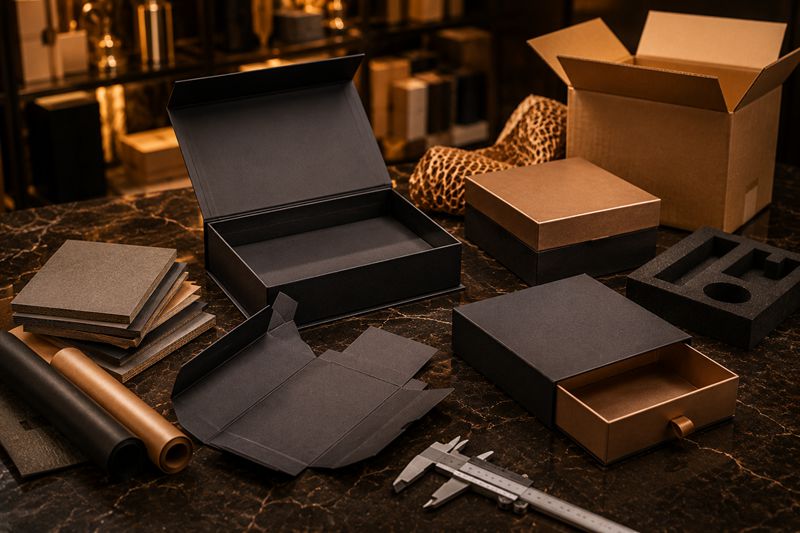
Before choosing the box type, buyers need to confirm product size, product weight, order quantity, sales channel, storage space, and packing process.
For collapsible rigid boxes, check:
- Assembly speed
- Folding strength
- Corner stability
- Magnet alignment
- Surface paper durability
- Finished box shape after assembly
For traditional rigid boxes, check:
- Board thickness
- Lid fit
- Drawer movement
- Edge wrapping
- Surface finish
- Carton protection during shipping
A reliable rigid box maker should provide samples before mass production. Testing the box with the real product is the safest way to choose the right custom rigid boxes.