
For brands buying custom rigid boxes, the final price is no longer decided only by paperboard, printing, finishing, and labor. Tariffs, customs rules, origin requirements, sustainability regulations, freight policies, and currency movement can all affect the quotation.

Trade Policy Factors That Affect Rigid Box Maker Pricing
| Trade Policy Factor | Impact on Rigid Box Maker | Pricing Result for Buyers |
| Tariffs | Raise material or export cost | Higher unit or landed cost |
| Customs rules | Require clearer classification | More documentation work |
| Origin rules | Increase sourcing records | Longer approval process |
| Sustainability regulations | Require recyclable materials | Higher compliant material cost |
| Freight policy changes | Make shipping volume critical | More demand for foldable designs |
| Currency movement | Affects export margins | Possible price buffer |
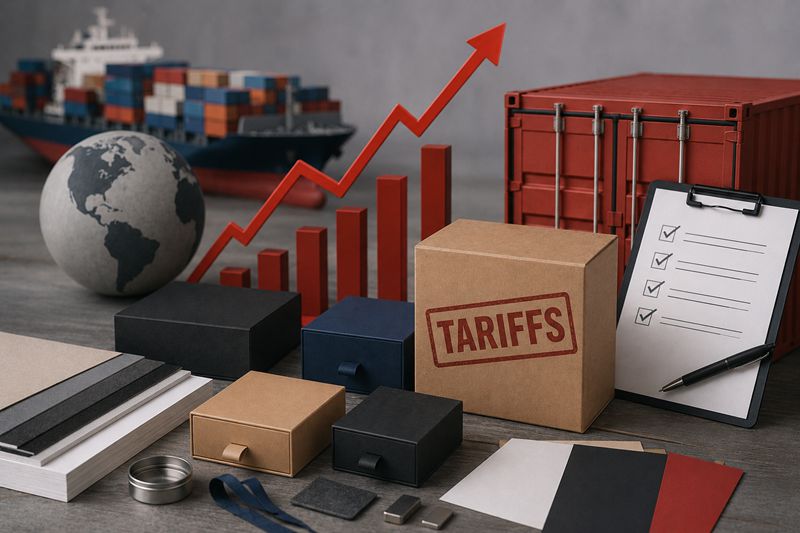
Tariffs Push Up Material and Export Costs
1. Finished Box Costs Rise With Tariff Changes
Tariffs are one of the most direct policy factors behind rigid box pricing.
If the destination country increases import duties on paper packaging or related products, the buyer may pay more after import. Even when the supplier keeps the same factory price, the buyer’s final cost can still rise.
This is why buyers of luxury rigid boxes should calculate landed cost before confirming large orders. Factory price, duty, freight, insurance, customs clearance, and warehouse handling should all be included.
2. Key Components May Face Extra Cost Pressure
A rigid box is not made from paperboard alone.
Magnetic rigid boxes may use magnets, greyboard, printed paper, lamination film, ribbon, glue, and paper inserts. Rigid magnetic boxes may become more expensive if magnets or imported finishing materials face higher duties or supply restrictions.
The same logic applies to a rigid drawer box or a two piece rigid box with specialty paper. If one key component becomes more expensive, the rigid box maker may need to adjust the quotation.

Customs Rules Make Documentation More Important
1. Classification Affects Import Cost
Customs classification can influence duties, clearance speed, and buyer risk.
Rigid gift boxes with lids, a two piece rigid box, a rigid drawer box, and a foldable rigid box may all be paper packaging. However, customs treatment may still depend on material, use, structure, and local import rules.
A professional rigid box maker should provide clear information about material, size, structure, weight, and packing method. This helps the buyer work with a customs broker and avoid clearance delays.
2. Incomplete Documents Create Hidden Costs
Trade policy often increases documentation work.
Preparing commercial invoices, packing lists, certificates of origin, material declarations, export records, and other compliance files often requires extra time and coordination.For large rigid box packaging orders, this work becomes part of the supplier’s operating cost.
If the buyer needs FSC paper, recycled board, plastic-free inserts, or special compliance documents, the supplier must spend more time on material control and paperwork. This can affect both sample cost and mass production price.

Origin Rules Influence Supplier Sourcing
1. Country of Origin Can Change Buyer Decisions
In global sourcing, the origin of goods now plays a bigger role in supplier selection and cost planning.Some buyers may prefer suppliers from certain regions to reduce tariff exposure, meet retail requirements, or support supply chain diversification. In response, a rigid box maker may need to adjust its sourcing channels, material records, and export documents.
For brands buying custom rigid boxes, this means supplier selection is not only about price and quality. Origin, documentation ability, and export experience also matter.
2. Material Traceability Adds Work
Origin rules can also affect material traceability.
If a buyer needs proof of paper source, recycled content, or responsible sourcing, the supplier must collect and manage more records. This is common for premium beauty, skincare, fragrance, and gift packaging projects.
For luxury rigid boxes, traceable materials can support brand trust. But they may also increase purchasing cost and production management work.

Sustainability Regulations Change Box Design
1. Packaging Rules Are Becoming Stricter
Sustainability requirements have become a key long-term factor influencing how rigid box makers set their prices.
The EU’s Packaging and Packaging Waste Regulation aims to reduce packaging waste and improve recyclability, and it will generally apply from August 12, 2026. For packaging suppliers serving European brands, this means recyclable design, material reduction, and documentation will become more important.
This affects rigid box packaging because many premium boxes use lamination, magnets, foam inserts, plastic trays, ribbons, or mixed materials. These details can improve the unboxing experience, but they may also make recycling more complex.
2. Eco-Friendly Choices May Cost More
Many buyers now ask for recyclable paper, recycled greyboard, soy-based ink, FSC-certified paper, and plastic-free inserts.
These materials are useful for consumer brands that want a more responsible image. However, they may cost more than standard options, especially when certificates or material records are required.
A rigid collapsible box made with recycled paperboard can reduce shipping volume and support sustainability goals. At the same time, the supplier must still maintain stable material quality, folding durability, surface appearance, and assembly consistency.
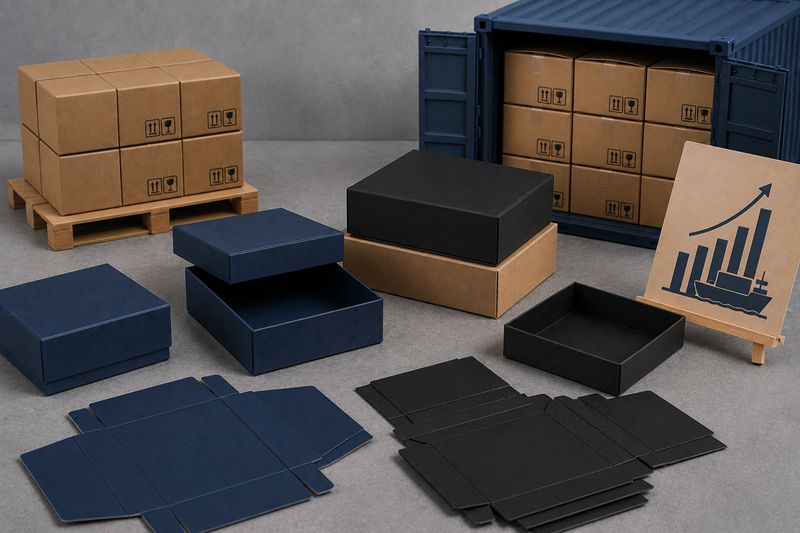
Freight Policy Changes Affect Box Structure
1. Shipping Volume Changes the Real Price
Rigid boxes offer strong protection and a premium feel, but certain structures may increase shipping space.
A traditional two piece rigid box is usually shipped as a finished box. This design looks refined and is convenient for packing, yet it usually occupies more carton space.
Using a foldable rigid box or rigid collapsible box can help lower shipping volume and improve logistics efficiency. When freight rates, port fees, fuel rules, or shipping routes become unstable, collapsible structures can help buyers control total cost.
2. Flat Shipping Can Reduce Risk
For high-volume orders, shipping volume has a major impact on landed cost.
A buyer ordering 30,000 rigid gift boxes may save significant space by choosing a collapsible structure. This also reduces warehouse pressure before product packing.
For brands selling seasonal gifts, cosmetics kits, and promotional sets, a foldable rigid box can offer a good balance between premium appearance and freight efficiency.

Currency Movement Changes Export Pricing
1. Exchange Rates Affect Quotations
Currency movement is another trade-related factor behind rigid box pricing.
Most international packaging orders involve different currencies. A buyer may pay in USD or EUR, while the rigid box maker pays local suppliers and workers in another currency.
If exchange rates move sharply, the supplier’s profit margin may shrink. To reduce this risk, manufacturers may shorten quotation validity or add a small price buffer.
2. Long-Term Projects Need Stable Pricing
Some packaging orders may take months to move from design approval to final delivery.
This is common for custom printed rigid boxes with color proofing, sampling, finishing tests, insert adjustment, and pre-shipment inspection. When exchange rates fluctuate during a long production cycle, the total project cost may change.
Buyers should confirm quote validity, payment terms, and price adjustment conditions before approving mass production.

Different Box Types Face Different Policy Pressure
1. Magnetic Boxes Are More Cost Sensitive
Magnetic rigid boxes are widely used for cosmetics, perfume, jewelry, electronics accessories, and influencer kits.
They create a smooth opening experience and a premium feel. However, they also require magnets, stronger board, accurate wrapping, and more manual assembly.
If trade policy affects magnets, adhesives, board, or export costs, rigid magnetic boxes may see stronger price movement than simpler paper-only structures.
2. Smooth Drawer Sliding Depends on Material Stability
A rigid drawer box gives a smooth sliding experience.
It is often used for watches, jewelry, fragrance sets, and small electronics. This structure needs accurate sizing because the sleeve and drawer must fit well.
If material thickness changes due to sourcing adjustments, the drawer may become too tight or too loose. This means trade policy can indirectly increase sampling and quality control costs.
3. Protection Comes Before Cost Cutting for Candle Boxes
Rigid candle boxes must protect products that are often heavy, fragile, or packed in glass jars.
When tariffs or material costs rise, some buyers may want to reduce board thickness or insert quality. This can be risky.
For candle brands, damaged products can cost more than better packaging. A reliable rigid box maker should help buyers reduce cost without weakening protection.
4. Gift Packaging Must Balance Appearance and Budget
Rigid gift boxes are often used for holidays, retail promotions, limited editions, and premium product sets.
The packaging must look attractive while still meeting the buyer’s target cost range.If global trade policy increases cost, buyers may simplify finishing, adjust inserts, or choose a more efficient structure.
Rigid gift boxes with lids can be a practical option when buyers want a premium look without the added cost of magnets.

How Rigid Box Makers Respond to Trade Policy Changes
1. Quotation Validity Becomes More Limited
When trade policy is unstable, suppliers may not hold prices for a long time.
A quotation that was valid for 60 days may now only be valid for 15 to 30 days. This is common when paperboard, specialty paper, freight, or exchange rates are moving.
For buyers, this means slow decisions can lead to revised pricing. Early confirmation helps protect budget.
2. Material Changes Help Control Cost
A professional rigid box maker will not simply raise prices.
It may suggest alternative paper, different board thickness, simpler finishing, paper inserts, or a foldable structure. These changes can help control cost while keeping the box attractive.
For example, a brand may keep the same luxury rigid boxes design but replace full-surface foil stamping with a smaller logo foil area.
3. Smarter Structures Reduce Cost Pressure
Structure is one of the best ways to manage policy-related cost pressure.
A buyer may switch from rigid magnetic boxes to rigid gift boxes with lids. Another buyer may choose a rigid collapsible box instead of a pre-assembled two piece rigid box.
These changes can reduce material cost, assembly cost, or freight volume. When designed well, they can still deliver a premium customer experience.