
A two piece gift box is a classic packaging style made with a separate lid and base. It includes 9 main structural parts: top lid, bottom base, inner space, greyboard structure, wrapping paper, lid fit structure, optional insert, optional magnetic structure and surface finishing.
Basic Definition of a Two Piece Gift Box
1. Common Names in Packaging
In rigid box packaging, two piece gift box may also be called:
- Lid and base box
- Top and bottom box
- Two piece rigid box
- Rigid gift box with lid
- Set-up gift box
For custom rigid boxes, suppliers usually confirm whether the buyer needs a full-cover lid, half-cover lid, or shallow lid before production.
2. Two Piece Gift Box Structure
| Structure Part | Main Role | Buyer Should Check |
| Top Lid | Covers the box and protects the product | Lid depth, tightness, opening feel |
| Bottom Base | Holds the product and supports the box shape | Base depth, strength, flatness |
| Inner Space | Controls how the product sits inside | Product fit, insert room, display effect |
| Greyboard Structure | Builds the rigid shape and hand feel | Thickness, stiffness, corner strength |
| Wrapping Paper | Creates the surface color and texture | Paper type, printing quality, inner finish |
| Lid Fit Structure | Affects closing and opening experience | Air gap, smooth sliding, no looseness |
| Insert Structure | Fixes and protects the product | Material, fit, easy removal |
| Surface Finishing Structure | Improves visual value and touch | Lamination, foil, embossing accuracy |
| Optional Magnetic Structure | Adds a stronger closing feel | Magnet strength, alignment, safety |
Top Lid
The lid is the upper part of the box. The lid wraps over the base, helping shield the product from dust, surface scratches, and minor external pressure.
A deeper lid gives a stronger covered look. A shallow lid makes the box easier to open and can reduce material use.
For luxury rigid boxes, the lid fit must be smooth but not loose. An overly tight lid may make the box difficult for customers to open smoothly.
Bottom Base
The base holds the product and supports the whole box shape. It needs enough strength to carry the product weight during storage, display, and delivery.
The base depth depends on the product height, insert thickness, and desired display effect. For candles, cups, skincare bottles, and gift sets, the base usually needs extra depth.
Rigid candle boxes often use a strong bottom base because glass jars are heavier than many other retail products.
Inner Space
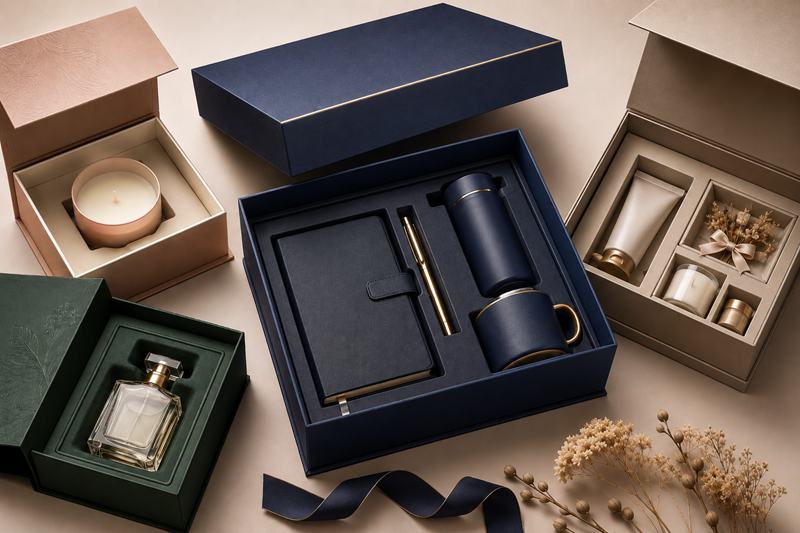
The inner space decides how the product sits inside the box. The internal space needs to be balanced, leaving neither excessive room nor too much pressure on the product.
A good inner structure makes the product look stable and premium when opened. This is important for C-end customers because the first opening moment affects product value perception.
In e-commerce gift packaging, inserts are often used to keep products stable during transport.
Greyboard Structure
1. Board Thickness
Greyboard is the main material inside most custom rigid boxes. It gives the box its hard shape and premium hand feel.
Common board thickness includes:
- 1.5 mm: small lightweight boxes
- 2 mm: standard gift boxes
- 2.5 mm: medium retail boxes
- 3 mm: heavier product boxes
For two piece rigid box production, thicker board is not always better. The suitable option is usually decided by product weight, box dimensions, shipping conditions, and cost requirements.
2. Box Wall Strength
The box wall affects how stable the lid and base feel. Thin walls may deform during bulk packing, while strong walls keep the box shape clean.
For rigid gift boxes with lids, buyers should check the corners, edges, and base flatness. These details affect the final retail presentation.
A reliable rigid box maker usually tests box compression, lid fit, and corner strength before mass production.
Wrapping Paper
1. Outer Wrapping Paper
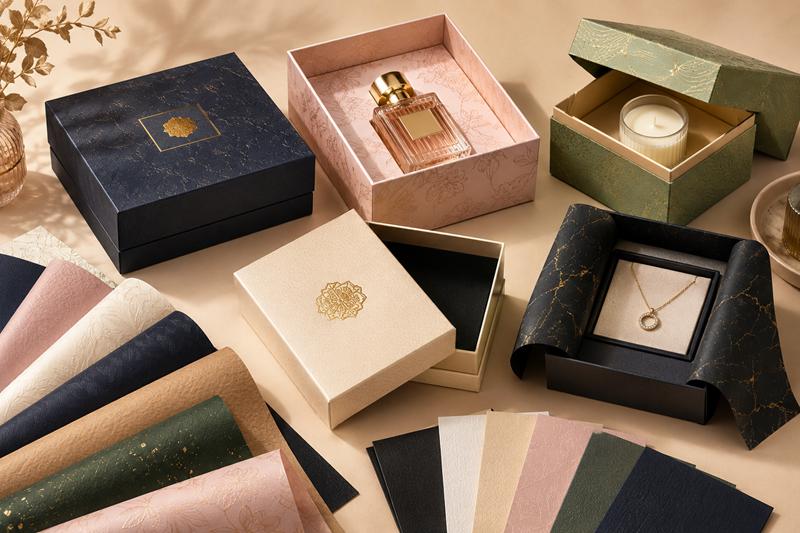
The outer wrapping paper affects the first impression of the two piece gift box. It also carries the main visual elements, such as color, texture, printing, and logo finishing.
Common outer paper options include:
- Art paper
- Specialty paper
- Kraft paper
- Coated paper
- Textured paper
- Matte laminated paper
- Soft-touch paper
Custom printed rigid boxes usually need outer paper that matches the brand style and product level. Beauty products, jewelry, and luxury gifts often look cleaner with matte paper, soft-touch paper, or subtle textured paper.
2. Inner Wrapping Paper
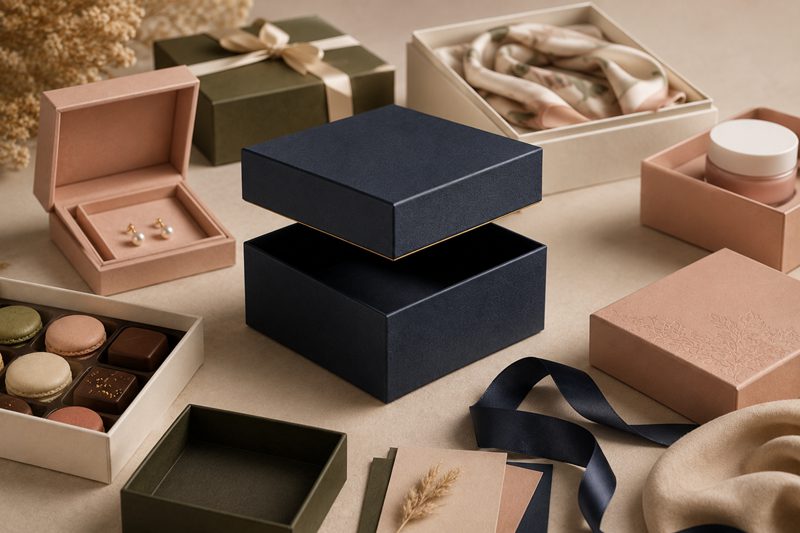
The inner wrapping paper covers the inside surface of the box. It makes the opening experience feel more complete and helps the product look better when presented.
Common inner paper choices include:
- Same-color inner paper
- Contrast-color design
- Black inner paper
- White inner paper
- Beige inner paper
- Brand-color inner paper
- Printed inner paper
C-end gift packaging needs a clean inner finish because customers see the inside as soon as they open the box. A well-matched inner color can make the whole rigid gift box feel more refined and gift-ready.
Lid Fit Structure
1. Lid Tightness
Lid fitting plays a key role in the overall structure and user experience of a two piece gift box. A good lid should close securely and open smoothly.
A loose lid can make the packaging feel less refined, while a tight lid may create an unpleasant opening experience.
Before placing bulk orders, buyers can arrange sample testing, especially for premium rigid gift boxes and retail gift sets.
2. Air Gap Design
Some two piece boxes need a small air gap between the lid and base. This helps the lid slide down smoothly.
The air gap depends on box size, paper thickness, board thickness, and surface finishing. Soft-touch lamination or thick specialty paper may need more space.
This detail is small, but it strongly affects the final user experience.
Insert Structure
1. Common Insert Types
Inserts help hold the product in place and improve the unboxing effect. They are useful for fragile, valuable, or multi-piece products.
Common insert materials include:
- Paperboard insert
- EVA foam insert
- Sponge insert
- Molded pulp insert
- Velvet insert
- Satin lining
- PET tray
- Cardboard divider
Rigid candle boxes may use EVA or paperboard inserts to protect glass jars. Gift sets may use dividers to keep multiple products separated.
2. Insert Fit
The insert design should follow the actual product shape instead of relying only on the box dimensions.A loose insert may allow movement during delivery.
If the insert is too tight, customers may find it difficult to take out the product, which can weaken the consumer experience.
For custom rigid boxes, buyers should provide product dimensions, weight, and photos before insert design.
Surface Finishing Structure
1. Common Finish Options
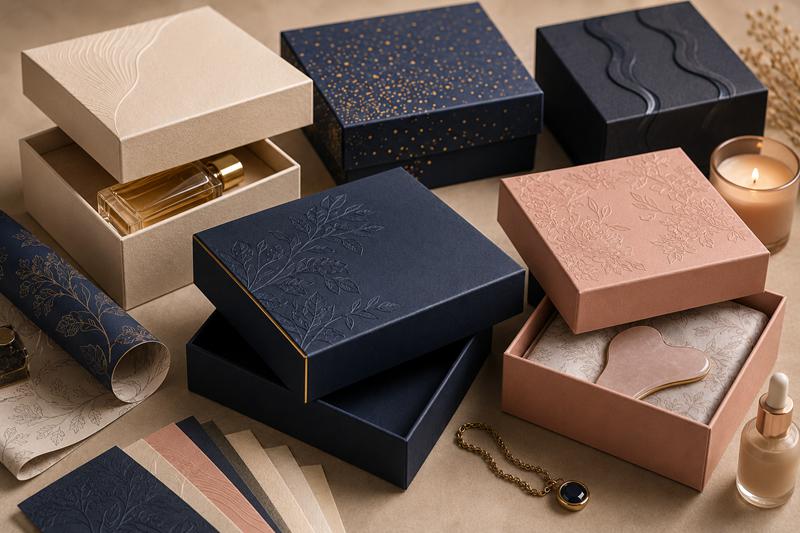
Surface finishing improves the look and touch of the box. It also helps protect the printed surface.
Common options include:
- Matte lamination
- Gloss lamination
- Soft-touch lamination
- Anti-scratch film
- Foil stamping
- Embossing
- Debossing
- Spot UV
For luxury rigid boxes, foil stamping and embossing are often used on the lid. They help the logo stand out without making the design too busy.
2. Printing Position
The logo is usually placed on the top lid because it is the most visible area. Side printing can also be added for shelf display.
Custom printed rigid boxes need accurate printing alignment. A small shift on the lid may look obvious, especially on simple designs.
Buyers should confirm artwork size, logo position, color code, and finishing area before sampling.
Optional Magnetic Structure
1. Magnetic Closure
A standard two piece gift box does not need magnets. However, some brands add magnets to improve the closing feel.
Magnetic rigid boxes and rigid magnetic boxes are more common in book-style structures, but magnets can also be used in some special lid-and-base designs.
This option may increase cost, so it is more suitable for premium retail packaging, gift sets, or reusable boxes.
2. When Magnets Are Useful
Magnets are useful when the brand wants a stronger closing experience. Inserts can also improve the sense of stability and protection inside the package.
For lightweight gifts, magnets may not be necessary. For luxury products, they can improve the perceived value.
Buyers should check magnet strength, alignment, and safety during sample approval.
What Buyers Should Confirm Before Ordering
1. Product Details
Before designing a two piece gift box, buyers should confirm:
- Product size
- Product weight
- Product quantity
- Insert requirement
- Sales channel
- Shipping method
- Display method
- Budget range
These details help the rigid box maker recommend the right structure. Clear structural planning also helps reduce repeated sample revisions during the development stage.
2. Pre-Production Sample Inspection
Before moving into mass production, buyers need to review the following details:
- Lid fit
- Base strength
- Edge wrapping
- Surface scratches
- Printing color
- Logo position
- Insert fit
- Opening feel
- Packing protection
A sample may look good in photos, but the hand feel and lid movement still need physical checking.
Best Uses for Two Piece Gift Boxes
1. Retail Gift Packaging
Two piece gift boxes are suitable for perfumes, cosmetics, candles, jewelry, cups, scarves, and small electronics. They create a strong shelf image and a clear gift feeling.
For consumer-facing packaging, the box often affects how customers judge the product’s value. A clean structure helps the product look more premium.
2. Brand Gift Sets
This box style also works well for holiday sets, corporate gifts, wedding gifts, and promotional collections. The separate lid and base make the product easy to display after opening.
For multi-product sets, inserts and dividers can keep everything organized. This improves both protection and presentation.