
The best solution balances paperboard strength, wrapping paper, insert design, printing, surface treatment, glue control, and final packing. Collapsible rigid box packaging helps brands balance sustainability targets with practical business value.
Eco-Friendly Design Choices
| Article Section | Matching Design Choice | Eco-Friendly Value | Purchasing Checkpoint |
| Paperboard Base | Recycled greyboard, whiteboard, FSC-certified board | Reduces virgin fiber use while keeping box strength | Thickness, stiffness, certification documents |
| Wrapping Paper | Yellow kraft, white kraft, black kraft, recycled paper | Builds a natural visual identity with less plastic feeling | Paper source, color stability, print result |
| Insert Materials | Paperboard, corrugated paper, molded pulp | Reduces foam and plastic tray use | Product fit, cushioning, removal experience |
| Cutting and Material Layout | Optimized cutting and folding lines | Reduces offcuts and improves material use | Layout efficiency, board direction, waste rate |
| Printing | Soy-based ink, water-based ink, low-VOC ink | Lowers environmental pressure during printing | Ink coverage, color accuracy, rub resistance |
| Surface Treatment | Water-based coating, embossing, small-area foil | Keeps a premium effect with less plastic lamination | Scratch resistance, recyclability, visual quality |
| Wrapping and Forming | Water-based glue, low-odor glue, controlled application | Supports cleaner production and better appearance | Odor, drying stability, edge quality |
| Quality Control and Final Packing | Paper dividers, recyclable cartons, smart stacking | Reduces plastic bags and extra export packing | Carton volume, box protection, packing method |
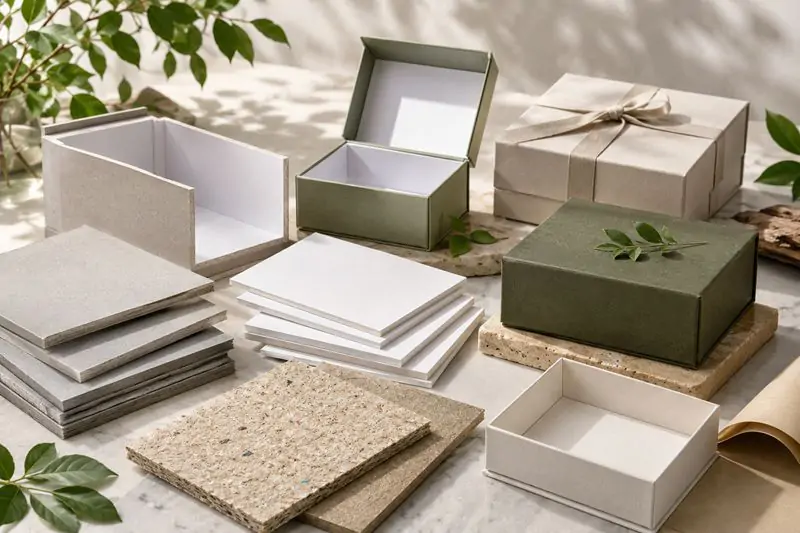
Paperboard Base
Greyboard Builds the Box Strength
Eco-friendly rigid boxes usually begin with a strong paperboard base. Greyboard is commonly used inside rigid box structures because it has stable thickness, good stiffness, and a firm hand feel.
Strong paperboard helps custom rigid boxes stay in shape during packing, display, shipping, and home unboxing. Sustainable packaging still needs protection, because damaged products create more waste.
When environmental requirements are higher, recycled greyboard or certified fiber board can be selected. This reduces dependence on virgin wood pulp while keeping the box strong enough for retail and e-commerce use.
Whiteboard Creates a Cleaner Look
Whiteboard is often selected when the package needs a brighter and cleaner inner appearance. It suits skincare, perfume, jewelry, and premium gift packaging.
Visible edges and inner areas can look more refined with whiteboard. This is useful when the design uses light wrapping paper or a minimalist visual style.
European and North American buyers often ask for FSC-certified whiteboard or recycled-content documents. These records help support sustainability claims during internal approval and retailer review.
Recycled and FSC-Certified Board Supports Responsible Sourcing
Recycled paperboard and FSC-certified paperboard are common choices in eco-friendly rigid box packaging. They make material sourcing easier to explain to retailers and end customers.
A responsible rigid box maker should provide paperboard specifications, FSC documents, or recycled content statements when required. These details are especially important when brands sell in markets with stricter environmental claim rules.
The board still needs enough strength. If the material is too weak, the final package may fail during delivery and create extra waste.
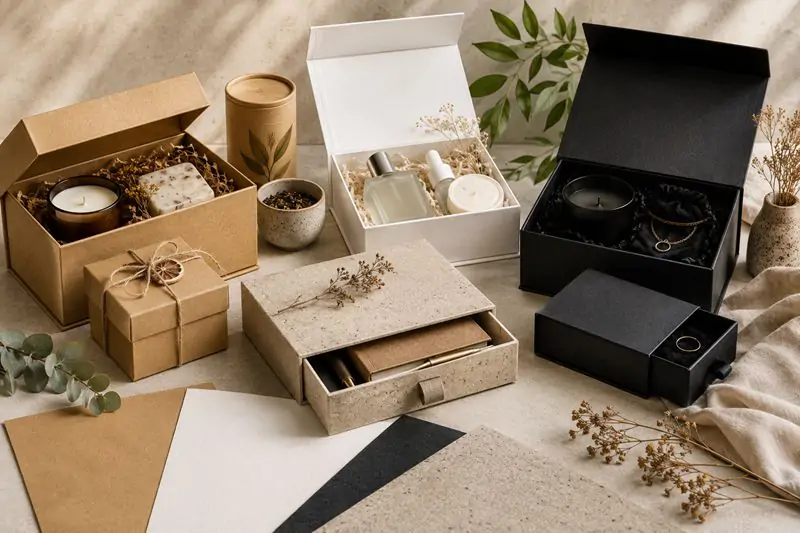
Wrapping Paper
Yellow Kraft Paper Fits Natural Products
Yellow kraft paper has a natural brown tone that immediately suggests simplicity and responsibility. It works well for organic products, handmade gifts, tea sets, soap, candles, and wellness items.
Rigid candle boxes made with yellow kraft paper often feel warm, honest, and craft-focused. Even a slight manufacturing issue can make the whole package look less refined.
This material also works well for rigid gift boxes with lids when the product needs a rustic or handmade look. Color consistency should be checked carefully because kraft paper may vary between batches.
White Kraft Paper Fits Clean Minimalist Brands
White kraft paper gives eco-friendly packaging a softer and more modern appearance. Skincare sets, perfume boxes, wellness gifts, and custom printed rigid boxes often use this material.
Compared with yellow kraft, white kraft gives more flexibility for light colors, simple logos, and elegant layouts. It allows the package to look sustainable without appearing rough.
Before mass production, buyers need to check whiteness stability, print performance, and certification. This helps avoid visible differences between samples and bulk orders.
Black Kraft Paper Fits Low-Key Premium Packaging
Black kraft paper is often used for understated premium packaging. Jewelry, fragrance, fashion accessories, luxury candles, and high-end gift sets can all benefit from this style.
Luxury rigid boxes with black kraft paper can look refined without heavy plastic lamination. A small embossed logo or light foil detail is often enough to create a premium effect.
The black surface may come from dyed paper, printed paper, or coated paper. Each option affects rub resistance, color depth, and recyclability.
Recycled and Uncoated Paper Add Natural Texture
Recycled wrapping paper and uncoated specialty paper add texture without a plastic-like surface. Beauty, wellness, stationery, and lifestyle brands often use these materials to strengthen their eco-conscious image.
Rigid magnetic boxes, drawer styles, and premium gift packaging can also use recycled or uncoated paper. The surface feels more natural and supports a cleaner brand message.
Printing clarity, folding performance, glue absorption, and surface durability still need testing. A sustainable paper must also perform well during production, assembly, and shipping.
Insert Materials
Paperboard Inserts Reduce Foam Use
Paperboard inserts are one of the most practical eco-friendly choices. They can be cut, folded, printed, and matched with the same paper-based system as the outer box.
Candles, skincare bottles, small accessories, and gift sets can often be held securely with paperboard inserts instead of EVA foam. This helps the whole package feel more recyclable and consistent.
Product movement should be tested before approval. A loose insert can damage the product and reduce the unboxing experience.
Corrugated Paper Inserts Add Cushioning
Corrugated paper inserts provide better cushioning than flat paperboard. They are useful for e-commerce gift sets, glass containers, fragile jars, and heavier products.
In rigid candle boxes, corrugated paper can reduce movement during delivery and help protect the candle vessel. It also keeps the package close to a paper-based structure.
Online brands need this balance between protection and sustainability. Good cushioning can reduce product breakage, replacement shipments, and customer complaints.
Molded Pulp Inserts Support a Natural Inside Look
Molded pulp inserts are made from paper-based fibers and are often used instead of plastic trays. Bottles, jars, tools, and multi-product gift sets can be fixed neatly with this material.
Eco-friendly rigid gift boxes feel more complete when the inside structure also looks natural. Molded pulp helps the outer box and inner support tell the same sustainability story.
Surface texture, mold cost, color, and product fit should be reviewed during sampling. Molded pulp can look premium when the structure is designed carefully.
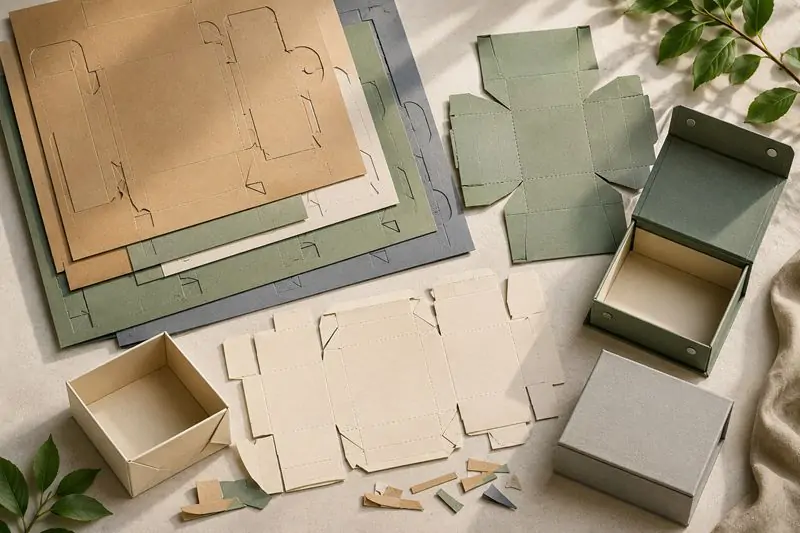
Cutting and Material Layout
Optimized Cutting Reduces Paper Waste
Production starts by cutting paperboard and wrapping paper according to the box structure. Eco-friendly production pays close attention to layout planning so offcuts can be reduced.
Large orders can save a meaningful amount of paper through small layout improvements. Seasonal gift programs and repeated retail projects benefit most from this step.
A skilled rigid box maker will review box size, board direction, and structure before mass production. Better planning helps control material waste and purchasing cost at the same time.
Fold Lines and Connection Points Improve Efficiency
A rigid collapsible box needs accurate folding lines, connection points, and assembly areas. Poor structural planning may use more material or make the box unstable after assembly.
A well-designed foldable structure reduces shipping volume while keeping the premium feel of rigid gift boxes. For export orders, reduced storage and shipping volume is a major benefit of collapsible packaging.
Magnetic rigid boxes also need careful magnet placement. Unnecessary magnets add materials and may make the package harder to recycle.
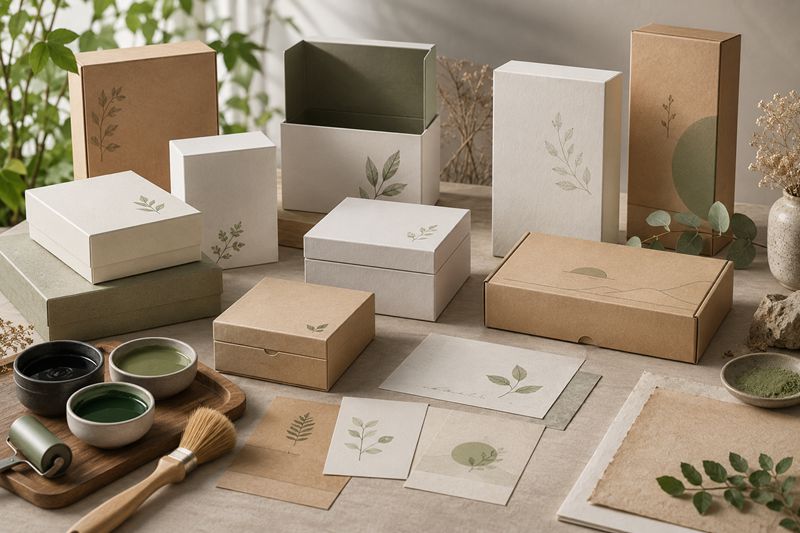
Printing
Soy-Based Ink Supports Cleaner Printing
Soy-based ink is often used in eco-friendly rigid box production. It uses plant-based oil and is a better fit for paper packaging than traditional petroleum-based ink.
Custom printed rigid boxes can still show clear logos, patterns, and brand colors with soy-based ink. Kraft paper, white paper, and many uncoated papers can all support this printing option.
Buyers should confirm ink availability before sampling. Color consistency also needs approval before bulk production.
Water-Based Ink Fits Simple Branding
Water-based ink works well for simple logos, line graphics, natural patterns, and minimalist layouts. It helps the box look softer and less industrial.
Organic candles, skincare products, wellness gifts, and handmade-style packaging often use this printing style. The result can feel clean, calm, and closer to the material itself.
Rub resistance and drying quality still need to be tested. Retail packaging should stay clean after handling, packing, and delivery.
Lower Ink Coverage Makes the Design Cleaner
Printing less can be a smart sustainable choice. A small logo, single-color pattern, or simple brand mark can reduce ink use while keeping brand recognition clear.
Natural kraft paper and textured paper already have visual value. Heavy ink coverage is not always necessary.
Consumer-facing rigid box packaging often looks more premium when the design is simple. A cleaner surface can also make the sustainability message easier to understand.
Surface Treatment
Reduce Plastic Lamination
Traditional rigid boxes often use plastic lamination for gloss, matte, or soft-touch effects. Heavy lamination can make recycling more difficult.
Eco-friendly packaging usually reduces plastic film and uses lighter surface treatments. Water-based coating can provide basic protection while keeping a more paper-like touch.
Even a slight manufacturing issue can make the whole package look less refined.Scratch resistance should still be tested during sampling.
Use Embossing and Debossing
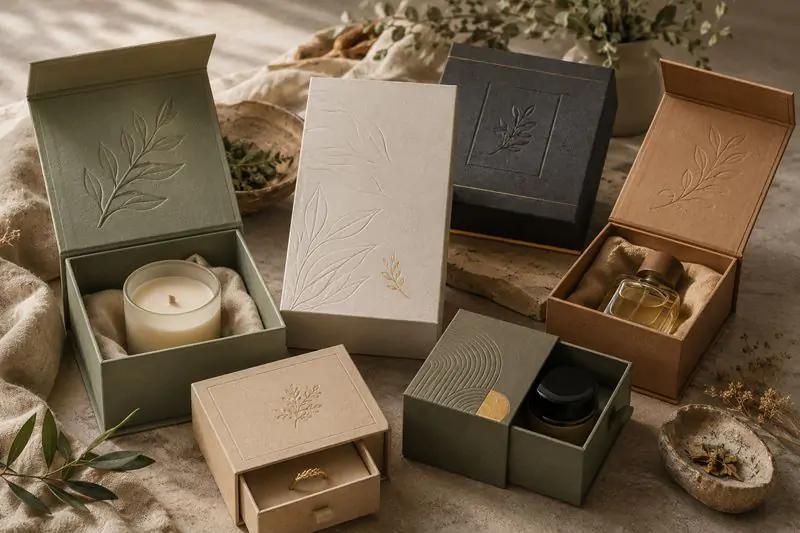
Embossing and debossing add texture without large ink coverage. Logos, borders, patterns, and simple brand symbols can all use this method.
This technique gives the box a refined touch while keeping the surface clean. It is useful when the brand wants a premium effect without relying on plastic film.
Jewelry, fragrance, fashion accessories, and high-end wellness products often use embossing. The package feels more valuable, but the design remains simple.
Apply Foil in Small Areas
Foil stamping can still be used, but the area should be controlled. A small logo or fine detail is usually better than full-surface foil.
Small-area foil stamping can give luxury rigid boxes a refined look without making the design feel overdone. Gift sets that need stronger shelf impact may also use this method.
Brand positioning should guide the choice. Organic skincare may prefer embossing only, while a luxury candle brand may use a small metallic logo.
Wrapping and Forming
Water-Based Glue Supports Cleaner Production
During production, wrapping paper is mounted onto the paperboard structure. Water-based glue or low-odor glue is often selected for cleaner production.
This is important for candles, cosmetics, and fragrance products because packaging odor can affect customer perception.Even a slight manufacturing issue can make the whole package look less refined.Glue type, odor control, and drying performance should be confirmed with the supplier. Stable glue performance also improves the final box appearance.
Controlled Glue Use Improves Quality
Glue application needs careful control. Too much glue can cause surface marks, edge overflow, slow drying, and possible recycling concerns.
Clean glue control keeps the box flat, neat, and stable. It also reduces visible defects around corners and wrapped edges.
Premium custom rigid boxes depend on this detail. Even a slight manufacturing issue can make the whole package look less refined.
Quality Control and Final Packing
Quality Checks Reduce Hidden Waste
Eco-friendly packaging still needs strict quality control. Boxes that arrive scratched, warped, damaged, or badly assembled can create replacement waste.
Factories usually check size accuracy, folding strength, wrapping quality, surface defects, color, insert fit, and opening experience. Magnetic closure strength also needs inspection when the design uses magnets.
A rigid drawer box requires smooth sliding movement. If the drawer feels too tight or too loose, the customer experience becomes weaker.
Final Packing Should Use Less Plastic
Final packing can reduce waste further. Instead of using a separate plastic bag for every box, factories can use paper dividers, recyclable cartons, or better stacking methods.
Bulk export orders benefit from careful carton planning. Less empty space means lower shipping volume and fewer unnecessary protective materials.
A cleaner shipping carton also improves the final customer impression. Customers are more likely to trust eco-friendly packaging when the whole delivery experience feels consistent.