
Choose a two piece rigid box size based on product shape, protection needs, insert design, and display effect, so the packaging fits securely, opens easily, supports the brand image, and improves the unboxing experience.
Why Product Type Affects Box Size?
Different products require different internal space.
Some products need more height protection, such as perfume bottles and candles. Some need flat display space, such as jewelry, watches, and stationery sets. Some need separated compartments, such as skincare sets or electronic accessories.
This is why two piece rigid boxes should be designed around the actual product, not just a standard box size.
For consumer packaging, the size should make the product feel valuable, secure, and easy to present as a gift.
Basic Sizing Principles for Two Piece Rigid Boxes
Before choosing the box size, measure the product length, width, height, and weight.Then add space for the insert, wrapping material, and easy product removal.
For most consumer products, a practical clearance range is:
2–5 mm around hard products
5–10 mm for soft or flexible products
3–8 mm extra height for lids, caps, pumps, or accessories
This clearance helps prevent pressure, shaking, and difficult opening.
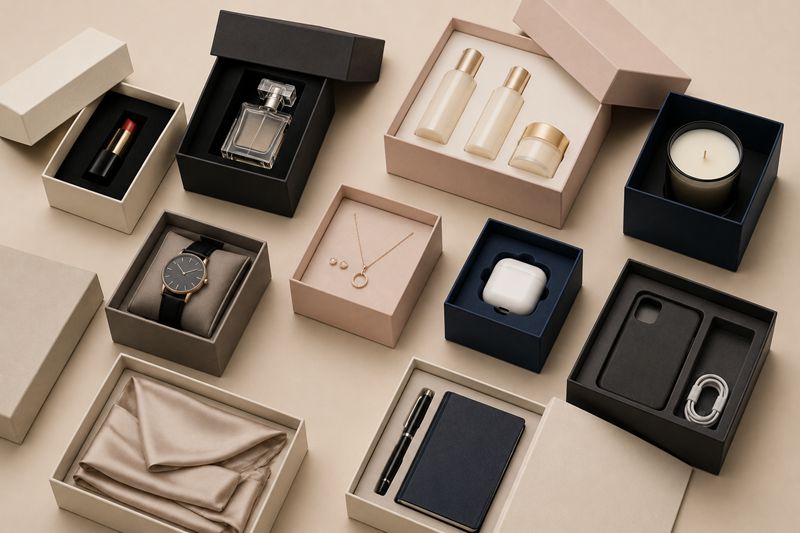
Common Product Size References for Two Piece Rigid Boxes
| Product Type | Common Product Size | Suggested Box Size Range | Key Size Focus |
| Lipstick | 20 × 20 × 80 mm | 35 × 35 × 100 mm | Height and easy removal |
| Perfume bottle | 50 × 35 × 100 mm | 80 × 65 × 130 mm | Cap protection |
| Skincare bottle set | 160 × 80 × 120 mm | 190 × 110 × 145 mm | Insert and spacing |
| Candle jar | 75 × 75 × 90 mm | 100 × 100 × 115 mm | Side and bottom support |
| Watch | 45 × 45 × 12 mm | 100 × 100 × 70 mm | Display and cushion |
| Jewelry set | 80 × 60 × 20 mm | 120 × 90 × 40 mm | Flat presentation |
| Earbuds | 60 × 45 × 25 mm | 100 × 80 × 45 mm | Cable or accessory space |
| Phone accessories | 150 × 80 × 20 mm | 180 × 110 × 50 mm | Compartments |
| Scarf | 180 × 120 × 30 mm | 220 × 160 × 50 mm | Folded thickness |
| Stationery set | 200 × 120 × 25 mm | 230 × 150 × 45 mm | Flat layout |
Cosmetic Products: Focus on Height and Insert Fit
Cosmetic products are among the most widely used applications for two piece rigid boxes.Lipsticks, creams, facial oils, perfume bottles, and skincare sets often need elegant presentation and stable protection.
For a single lipstick, the product may only be around 20 × 20 × 80 mm, but the box usually needs more space to make the item easy to take out. A common lipstick gift box may be around 35 × 35 × 100 mm, depending on the insert and brand style.
For skincare bottles, the size is usually larger because the box may hold several products together. A set with three bottles may need a box around 190 × 110 × 145 mm or larger.
The main goal is to keep the product firmly positioned inside the box and prevent unwanted movement. Bottles should sit firmly in the insert without being squeezed.
Perfume Boxes: Protect the Cap and Bottle Shape
Perfume bottles often have irregular shapes, heavy glass bodies, and decorative caps.
When choosing a 2 piece rigid box for perfume, the height should include the full bottle, cap, and safe top clearance.
For example, if a perfume bottle is 50 × 35 × 100 mm, the box may need to be around 80 × 65 × 130 mm. This extra space allows room for the insert, bottom support, and lid closing clearance.
When the box height is too low, the product cap may touch or press against the lid. If the box is too wide, the bottle may move during shipping.
For premium perfume packaging, EVA foam, paperboard inserts, or velvet inserts are often used to improve both protection and appearance.
Candle Boxes: Focus on Weight and Side Protection
Candles are usually heavier than they look, especially glass jar candles.
A candle jar around 75 × 75 × 90 mm may need a two piece rigid box around 100 × 100 × 115 mm.The extra size provides space for side protection, bottom support, and easy removal.
For candle packaging, the box should not be too loose. If the candle shakes inside, the glass may crack or scratch the inner surface.The base of the box should also be strong enough to carry the candle weight.For heavier candles, buyers should consider thicker greyboard and a stronger insert structure.
Jewelry Boxes: Focus on Display, Not Only Fit
Jewelry products are usually small, but the box size should not be too small. A necklace, bracelet, or ring needs enough space for display. The packaging should make customers feel that the product is thoughtfully displayed, rather than simply placed inside.
For example, a small jewelry set measuring 80 × 60 × 20 mm may use a box around 120 × 90 × 40 mm. This gives enough space for lining, card placement, and a clean visual layout.
For rings and earrings, the box may be compact, but the insert must hold the product at the right angle.
For necklaces, the box may need more length to avoid chain tangling.
Watch Boxes: Focus on Cushion Space
Watches need a different sizing method because the product is not placed flat.Most watches require a cushion, pillow, or molded insert to keep the strap in shape.
A watch face may be around 45 × 45 mm, but the final rigid box may be around 100 × 100 × 70 mm.The extra height allows room for the cushion and creates a premium display effect.
If the box is too shallow, the watch may be pressed by the lid.If the box is oversized, the watch may appear smaller and lose some of its premium value.
For watches, the opening feel and internal presentation are just as important as the product fit.
Electronic Products: Focus on Accessories and Compartments
Electronic products often come with cables, chargers, manuals, and small accessories. This means the box size should be planned by layout, not only by the main device size.
For example, earbuds may be around 60 × 45 × 25 mm, but the box may need to be around 100 × 80 × 45 mm to include a cable and instruction booklet.
For phone accessories, a product around 150 × 80 × 20 mm may require a box around 180 × 110 × 50 mm. The extra space allows each item to have its own position.
For consumer electronics, a clean and organized internal layout can help improve the customer’s first impression.
Gift Sets: Focus on Product Combination
Gift sets often include several products with different sizes.
A beauty gift set may include bottles, jars, masks, and tools. A holiday gift set may include candles, cards, ribbons, and small accessories.For this type of packaging, the box size should be based on the full product arrangement.
A compact layout saves space, but it may feel crowded. A larger box layout can look more luxurious, but it may also raise packaging costs and shipping volume.
For most gift sets, the box should leave at least 5 mm between different product positions.
This makes the layout cleaner and helps reduce product collision.
Apparel and Soft Goods: Focus on Folded Thickness
Scarves, socks, ties, and small apparel items are soft products.Their size depends on the folding method, not only the product’s original dimensions.
For example, a scarf may be folded to around 180 × 120 × 30 mm, but the box may need to be around 220 × 160 × 50 mm.
Soft products can expand after folding, so the box should not be too tight.
A slightly larger two piece rigid box can make the product look neat and gift-ready.
For apparel gift boxes, height is especially important because fabric needs breathing space.
Stationery and Flat Products: Focus on Edge Protection
Stationery sets, notebooks, cards, pens, and art supplies usually need flat and clean packaging.
For a stationery set around 200 × 120 × 25 mm, a suitable box may be around 230 × 150 × 45 mm.
The extra length and width protect the product edges and leave space for a paper insert or ribbon pull tab.
Flat products should not move inside the box because corners can easily bend or scratch.
For premium stationery packaging, the inner space should feel organized and simple.How to Choose the Final Box Size
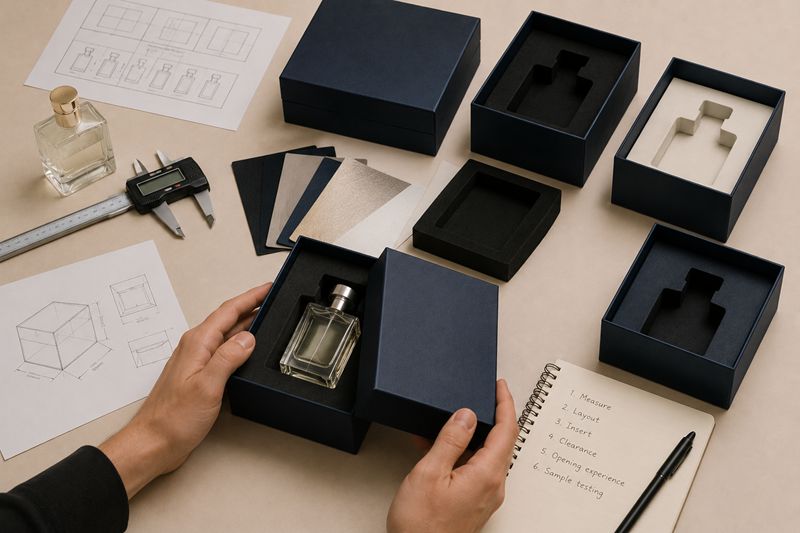
How to Choose the Final Box Size
STEP1: Measure the Real Product
Measure the product after it is fully assembled.
Include caps, labels, handles, cables, folded thickness, or any parts that affect the final packing size.
STEP2: Confirm the Product Layout
Decide whether the product will be placed flat, upright, side by side, or in separate compartments.
The same product can need different box sizes depending on the layout.
STEP3: Choose the Insert Type
The insert may add several millimeters to the inner size.
Foam inserts, molded pulp, paperboard inserts, and velvet linings all require different space.
STEP4: Add Clearance
Add practical clearance around the product.
For hard products, 2–5 mm is usually a good starting point. For soft products, 5–10 mm may be safer.
STEP 5: Evaluate the Opening Experience
The lid should lift easily while still closing firmly and securely.
A good two piece rigid box should feel stable, not too tight or too loose.
STEP 6: Confirm with a Physical Sample
Before starting bulk production, it is important to test a real sample with the actual product.
Check product fit, lid movement, insert stability, and overall visual effect.
Common Size Mistakes to Avoid
A common mistake is selecting the box size only according to the product dimensions. The box also needs space for inserts, lining, clearance, and easy removal.
The second mistake is making the box too large for a luxury look. A large empty space may make the product look less valuable.
The third mistake is ignoring product weight. Heavy candles, glass bottles, and electronics need stronger support than lightweight paper or fabric goods.
The fourth mistake is confirming the size without testing the real product. Even small differences in product shape can affect the final fit.