
The cost of collapsible rigid boxes is affected by many factors, including size, board thickness, paper material, structure, printing, finishing, window design, inserts, magnets, order quantity, labor, shipping, and quality requirements.
A simple collapsible rigid box with standard materials and minimal finishing will be more affordable. A luxury box with specialty paper, magnetic closure, transparent window, custom insert, foil stamping, embossing, and strict quality control will cost more.
Box Size and Dimensions
Box size greatly influences the final packaging cost. Larger boxes require more greyboard, paper, glue, magnets, fabric, ribbon, or other materials. They also take up more space during production, packing, storage, and shipping.
A small jewelry box may use limited material and can be produced efficiently. A large collapsible gift box, apparel box, or electronics box requires more board area and stronger support. This increases both material cost and labor cost.
| Box Size | Material Usage | Cost Level |
| Small box | Low | Lower |
| Medium box | Medium | Medium |
| Large box | High | Higher |
| Oversized box | Very high | Highest |
The box dimensions also affect shipping efficiency. Even though collapsible rigid boxes can be folded flat, oversized packaging may still increase carton size, pallet space, and freight cost.
Greyboard Thickness
Collapsible rigid boxes are usually made with thick greyboard as the main structure. Greyboard thickness influences box strength, weight, and overall cost.
Common greyboard thickness options include:
| Greyboard Thickness | Common Use | Cost Impact |
| 1.5 mm | Small lightweight boxes | Lower cost |
| 2.0 mm | General gift boxes | Standard cost |
| 2.5 mm | Premium boxes | Higher cost |
| 3.0 mm or above | Heavy-duty packaging | Highest cost |
Thicker greyboard gives the box a stronger and more luxurious feel. However, it also increases raw material cost and may require more precise production. For lightweight products, using overly thick board may not be necessary. For heavy products, thin board may cause deformation or poor support.
The best choice should balance product weight, brand positioning, and budget.
Outer Paper Material
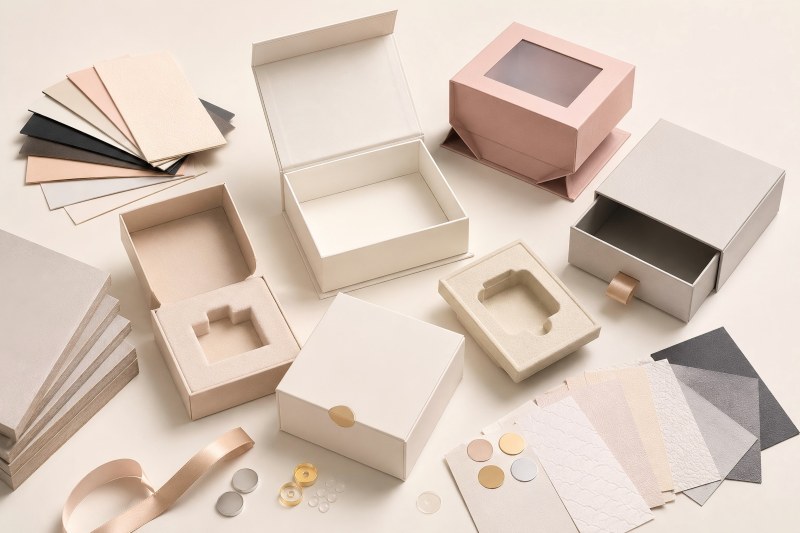
The outer wrapping paper has a direct impact on the appearance and cost of the box. Different paper types have different textures, printability, durability, and prices.
Common outer paper options include:
| Paper Type | Features | Cost Level |
| White art paper | Smooth, good for printing | Standard |
| Specialty paper | Textured, premium appearance | Higher |
| Kraft paper | Natural, eco-friendly style | Medium |
| Black card paper | Elegant, luxury look | Medium to high |
| Coated paper | Good color performance | Standard |
| Leather-texture paper | Premium tactile feel | Higher |
Specialty paper is often used for luxury gifts, cosmetics, wine packaging, and jewelry boxes. It improves visual value but increases cost. If the design already uses rich printing or finishing, standard coated paper may be more cost-effective.
Box Structure Complexity
Not all collapsible rigid boxes have the same structure. Some are simple foldable boxes with magnetic closure, while others include windows, drawers, inserts, handles, ribbons, or special opening systems.
A simple collapsible rigid box is easier to produce. A complex structure requires more die-cutting, folding, gluing, assembly, and quality inspection. More complex structures usually increase production costs.
Common structures include:
| Box Structure | Production Difficulty | Cost Level |
| Standard collapsible box | Low | Lower |
| Magnetic collapsible box | Medium | Medium |
| Collapsible box with window | Medium | Medium to high |
| Drawer-style collapsible box | High | Higher |
| Shoulder-neck collapsible box | High | Higher |
| Collapsible box with insert | Medium to high | Higher |
For example, a collapsible rigid box with a transparent window needs extra cutting and window patching. A drawer-style box needs accurate alignment between the sleeve and drawer. A shoulder-neck box requires additional internal structure. These details improve presentation but add cost.
Magnetic Closure
Many collapsible rigid boxes use magnets to keep the box closed after assembly. Magnetic closure gives the box a premium feel and improves user experience. However, magnets increase material cost and assembly cost.
The cost depends on:
The number of magnets
Magnet size and strength
Placement accuracy
Manual assembly requirements
Whether hidden magnets are needed
A small gift box may only need two magnets. A large box may require four or more magnets to ensure secure closure. Stronger magnets are more expensive but may be necessary for larger or heavier boxes.
Printing Method
Printing is another major cost factor. Single-color printing is more affordable than full-color printing. Special color matching, brand color control, and high-resolution artwork may increase production complexity.
Common printing options include:
| Printing Method | Best For | Cost Level |
| No printing | Minimal luxury style | Lower |
| One-color printing | Logo or simple design | Low to medium |
| CMYK printing | Full-color graphics | Medium |
| Pantone color printing | Accurate brand colors | Higher |
| UV printing | High-end visual effect | Higher |
For luxury packaging, many brands choose simple printing with premium finishing instead of full-surface graphics. This can create a clean, high-end appearance while controlling cost.
Surface Finishing
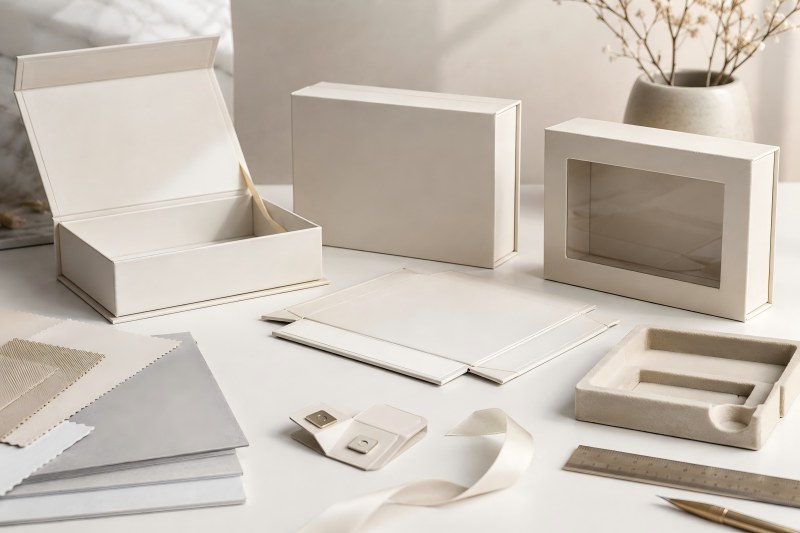
Surface finishing enhances box appearance but adds to the overall production cost. These processes are often used to make packaging look more premium.
Common finishing options include:
| Finishing Process | Effect | Cost Impact |
| Matte lamination | Smooth, elegant surface | Medium |
| Gloss lamination | Bright and shiny surface | Medium |
| Spot UV | Highlights logo or pattern | Higher |
| Hot foil stamping | Metallic luxury effect | Higher |
| Embossing | Raised texture | Higher |
| Debossing | Pressed-in texture | Higher |
| Soft-touch coating | Premium hand feel | Higher |
| Anti-scratch film | Better durability | Higher |
Using multiple finishes together will increase cost. For example, matte lamination plus gold foil plus embossing costs more than matte lamination alone. Buyers should choose finishes based on brand positioning, not only appearance.
Window Design
A collapsible rigid box with a window usually costs more than a standard box. The window requires die-cutting and transparent film patching. The film material also affects price and quality.
Common window materials include PET, PVC, and biodegradable film. PET is widely used for its clear appearance and strong durability. Eco-friendly window films may cost more but can support sustainable packaging goals.
Window cost depends on:
Window size
Window shape
Film thickness
Film material
Patching method
Edge accuracy
Anti-scratch requirement
A large window uses more film and requires stronger support around the opening. A special-shaped window is more difficult to cut than a simple rectangular window.
Inserts and Inner Trays
Many collapsible rigid boxes include inserts to hold products in place. Inserts improve product protection and presentation, but they add extra cost.
Common insert materials include:
| Insert Type | Common Use | Cost Level |
| Paperboard insert | Lightweight products | Lower |
| EVA foam insert | Jewelry, electronics, cosmetics | Medium to high |
| Sponge insert | Fragile items | Medium |
| Velvet-covered insert | Luxury gifts and jewelry | Higher |
| Molded pulp insert | Eco-friendly packaging | Medium |
| Plastic tray | Food, cosmetics, electronics | Medium |
A custom insert requires mold design, cutting, shaping, or covering. The more precise the insert shape, the higher the cost. For fragile or high-value products, inserts are often necessary because they reduce damage risk and improve the unboxing experience.
Order Quantity
Order quantity has a major effect on unit price. Larger orders usually have a lower unit cost because fixed costs are spread across more boxes.
Fixed costs may include:
Sampling
Design adjustment
Die-cutting mold
Printing setup
Machine setup
Color matching
Quality inspection preparation
| Order Quantity | Unit Cost |
| Small order | Higher |
| Medium order | Medium |
| Large order | Lower |
| Bulk order | Lowest |
For example, producing 500 boxes may have a high unit price because setup costs are shared by fewer pieces. Producing 5,000 or 10,000 boxes can reduce the unit cost significantly.
However, buyers should not order too many boxes only to reduce price. Storage space, product updates, seasonal designs, and cash flow should also be considered.
Customization Level
Customization makes packaging more unique, but it usually increases cost. A standard size and structure is easier to produce. A fully customized box requires more design, engineering, sampling, and testing.
Customization may include:
- Custom size
- Custom structure
- Custom window shape
- Custom color
- Custom insert
- Custom paper material
- Custom printing
- Custom surface finishing
- Custom ribbon or handle
- Custom magnetic closure
The more customized the box is, the more time and cost are needed before mass production. For premium brands, customization is often worthwhile because packaging directly affects brand image. For budget-sensitive projects, using an existing structure with light customization may be more economical.
Sampling and Prototyping
Before mass production, many buyers request samples. Sampling helps confirm box size, structure, color, material, insert fit, and overall appearance. However, samples cost more per piece than mass-produced boxes.
Sample cost may include manual cutting, digital printing, material testing, and structure adjustment. If several rounds of changes are needed, the total sampling cost increases.
A clear design brief can reduce sampling cost. Buyers should provide accurate product dimensions, product weight, artwork files, material preferences, and packaging goals before sampling.
Labor and Assembly
Although machines can complete many production steps, collapsible rigid boxes still require manual work, especially for folding, gluing, magnet placement, window patching, insert assembly, and quality checking.
Labor cost increases when the box has:
Complex folding structure
Multiple magnets
Special inserts
Ribbon handles
Window film
Detailed finishing
Strict quality standards
Premium packaging requires careful manual inspection to avoid glue marks, scratches, misalignment, color difference, and weak corners. Higher quality standards usually mean higher labor cost.
Packaging and Shipping
Collapsible rigid boxes save shipping space compared with non-collapsible rigid boxes. This is one of their biggest advantagesThey fold flat, allowing more boxes to be packed into each carton.
However, shipping cost is still affected by:
Box size
Box weight
Carton quantity
Destination country
Shipping method
Packing protection
Pallet requirements
Import duties and taxes
Air freight is faster but more expensive. Sea freight offers lower costs for bulk orders, though delivery usually takes longer. For international buyers, logistics planning can have a major impact on the final landed cost.
Quality Requirements
Different brands have different quality standards. Luxury brands usually require stricter control over color, surface texture, corner alignment, window clarity, magnet strength, and packaging cleanliness.
Higher quality control may involve:
Material inspection
Color checking
Size tolerance control
Magnet strength testing
Window film inspection
Drop testing
Assembly testing
Final appearance inspection
Strict quality control helps reduce defects but also increases production time and cost. For high-end products, this cost is often necessary because packaging defects can damage brand reputation.
How to Control the Cost of Collapsible Rigid Boxes
Buyers can reduce unnecessary costs by making practical choices during the design stage.
Useful cost-control tips include:
- Choose the right board thickness instead of the thickest option.
- Use standard box structures when possible.
- Limit unnecessary finishing processes.
- Choose a simple window shape.
- Increase order quantity when demand is stable.
- Prepare accurate artwork and product dimensions.
- Use inserts only when they are needed for protection or presentation.
- Compare shipping methods before placing bulk orders.
- Confirm samples carefully before mass production.
Cost control does not mean choosing the cheapest option. The goal is to balance appearance, function, durability, and budget.