
Rigid box materials can be divided into structural board materials, wrapping materials, inner lining materials, and surface finishing materials. Among them, the base board is the key factor that determines the strength, thickness, and hand feel of the box.
Grey chipboard is the most common and reliable material for custom rigid boxes. It is strong, stable, and suitable for premium packaging. Its common thickness ranges from 1.0 mm to 3.0 mm, with 1.5 mm to 2.5 mm being widely used for many gift and retail boxes.
Duplex chipboard is lighter and more economical. It is more suitable for lightweight packaging, inner support, sleeves, partitions, or cost-sensitive projects. It is usually not as rigid as grey chipboard, but it can be useful when the packaging does not require a very heavy structure.
Main Material Structure of a Rigid Box
A typical rigid box is made of the following parts:
| Material Layer | Main Function | Common Options |
| Base board | Provides thickness, shape, and strength | Grey chipboard, duplex chipboard, MDF, specialty board |
| Wrapping paper | Provides surface design and branding | Art paper, coated paper, kraft paper, textured paper |
| Surface finishing | Enhances appearance and surface durability | Matte/gloss finishes, foil accents, raised details |
| Inner lining | Improves appearance and product protection | Paper lining, velvet, satin, EVA, foam |
| Accessories | Adds function and luxury feeling | Magnets, ribbons, handles, windows, hinges |
For most rigid boxes, the base board is the most important structural material. Thin board may reduce the box’s structural strength. If it is too thick, the box may become expensive, heavy, and harder to process.
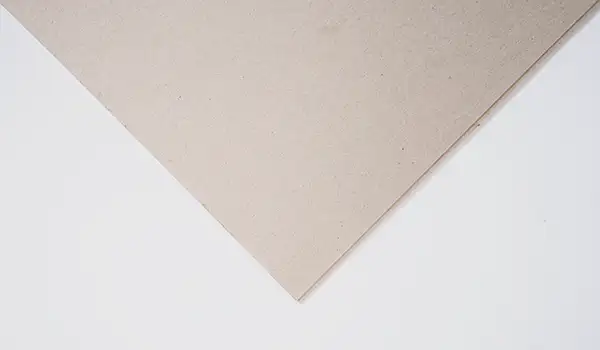
Grey Chipboard
Grey chipboard, also called grey board or grey cardboard, is one of the most widely used materials for rigid boxes. Grey chipboard is a recycled paper-based board with grey surfaces, usually wrapped with printed, specialty, or laminated paper instead of direct printing.
Grey chipboard is popular because it offers a good balance of strength, thickness, processability, and cost. It is especially suitable for premium gift boxes, cosmetic boxes, jewelry boxes, magnetic boxes, book-style boxes, drawer boxes, and collapsible rigid boxes.
Advantages of Grey Chipboard
Grey chipboard has strong rigidity and good structural support. It can keep the box shape stable and gives the packaging a solid hand feel. This is one of the main reasons why luxury brands often choose grey chipboard for rigid boxes.
Another advantage is flexibility in thickness. Manufacturers can choose different board thicknesses according to the box size, product weight, and packaging positioning.
Common Thickness of Grey Chipboard
| Grey Chipboard Thickness | Suitable Applications | Packaging Feel |
| 1.0 mm | Small lightweight boxes, jewelry boxes, sample boxes | Light and economical |
| 1.2–1.5 mm | Small to medium gift boxes, cosmetic boxes | Good balance of cost and strength |
| 1.8–2.0 mm | Medium rigid boxes, magnetic boxes, premium retail boxes | Strong and premium |
| 2.5 mm | Larger gift boxes, electronics packaging, luxury sets | Heavy-duty and high-end |
| 3.0 mm or above | Large rigid boxes, heavy products, premium gift sets | Very strong but more costly |
In most packaging projects, 1.5 mm to 2.0 mm grey chipboard is a common choice. It provides enough strength for many retail products while keeping the cost reasonable. For luxury gift boxes or large packaging, 2.0 mm to 2.5 mm is often preferred. For very large boxes, 3.0 mm may be used, but it increases material cost, shipping weight, and production difficulty.
Thickness Insight for Grey Chipboard
Thicker does not always mean better. A small jewelry box made with 3.0 mm grey chipboard may look bulky and may not fold or wrap neatly. On the other hand, a large gift box made with 1.0 mm board may deform easily.
A good rule is:
For small boxes, use thinner board for a clean and delicate look.
For medium boxes, use medium-thick board to balance cost and strength.
For large or heavy products, use thicker board to improve support and durability.
The product weight, box structure, opening method, and shipping method should all be considered before choosing the board thickness.
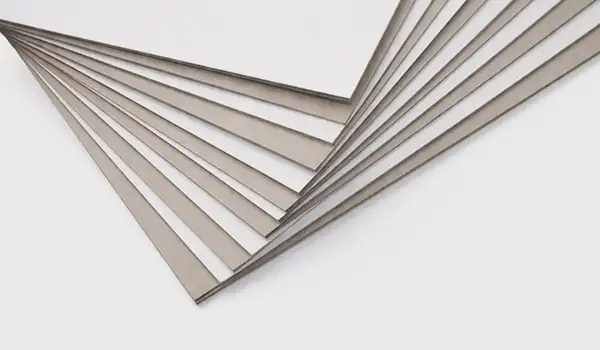
Duplex Chipboard
Duplex chipboard, also called duplex board or duplex cardboard, is another material used in packaging. It usually has one smoother and whiter surface, while the back side may be grey. Duplex board is commonly used for folding cartons, but it can also be used in some rigid box applications, especially when brands need a more economical packaging solution.
Compared with grey chipboard, duplex chipboard is often thinner and lighter. It may not provide the same level of rigidity as thick grey chipboard, but it can still be useful for lightweight rigid packaging or inner structures.
Advantages of Duplex Chipboard
Duplex chipboard has a cleaner surface than grey chipboard, especially on the white side. This can be useful when the material needs to be printed or laminated. It is affordable and ideal for packaging projects with strict budget requirements.
For some packaging designs, duplex chipboard can be used for internal partitions, backing cards, sleeves, lightweight covers, or supporting layers.
Common Thickness of Duplex Chipboard
| Duplex Chipboard Thickness | Suitable Applications | Packaging Feel |
| 0.5–0.8 mm | Inner cards, sleeves, light partitions | Thin and flexible |
| 0.8–1.2 mm | Lightweight boxes, support panels, small packaging | Economical |
| 1.2–1.5 mm | Small rigid-style boxes or reinforced components | Moderate strength |
| Above 1.5 mm | Special customized use | Stronger but less common |
Duplex chipboard is not always the first choice for high-end rigid boxes because it may not offer the same solid feeling as grey chipboard. However, for cost-sensitive packaging, promotional gift boxes, lightweight product boxes, or inner support structures, it can be a practical option.
Thickness Insight for Duplex Chipboard
Duplex chipboard is usually better for lighter packaging needs. If a box needs a strong luxury feel, grey chipboard is usually more suitable. If the box is small, lightweight, or only needs moderate support, duplex chipboard can help reduce cost.
For example, a light cosmetic sample box may use duplex chipboard to control budget. But a premium perfume gift box would usually need grey chipboard with a thicker structure to create a stronger and more luxurious feel.
Grey Chipboard vs Duplex Chipboard
| Item | Grey Chipboard | Duplex Chipboard |
| Main use | Rigid boxes, luxury boxes, gift boxes | Folding cartons, inner structures, economical packaging |
| Appearance | Grey on both sides | White or smoother front, grey back |
| Strength | Stronger and more rigid | Lighter, less rigid |
| Thickness range | Commonly 1.0–3.0 mm | Commonly 0.5–1.5 mm |
| Cost | Moderate | Usually more economical |
| Printing | Usually needs wrapping paper | Can be printed more easily on white side |
| Best for | Premium rigid boxes | Lightweight or budget packaging |
In simple terms, grey chipboard is better for strength and premium rigid box structure, while duplex chipboard is better for lightweight, economical, or supporting packaging parts.
These thicknesses are only general references. The final choice should be adjusted according to the actual box size, product weight, shipping distance, and structure design.