
The main round rigid box structures include lid and base, shoulder neck, hinged, and double layer designs. Each structure creates a different opening method, display effect, and packing function.
| Round Rigid Box Structure | Opening Style | Main Feature | Suitable Products | Key Purchase Focus |
| Lid and Base Round Rigid Box | Separate lift-off lid | Classic and flexible | Candles, tea, cookies, skincare jars | Lid depth, fit tolerance, board thickness |
| Shoulder Neck Round Rigid Box | Lid with inner neck support | Stable closure and layered look | Perfume, jewelry, premium gifts | Neck height, lid gap, inner color |
| Hinged Round Rigid Box | Connected lid and base | Refined one-piece opening | Cosmetics, gift sets, keepsakes | Hinge strength, opening angle, lining |
| Double Layer Round Rigid Box | Stacked lift-off layers | Organized product separation | Beauty sets, tea sets, gift packs | Layer height, tray fit, stacking stability |
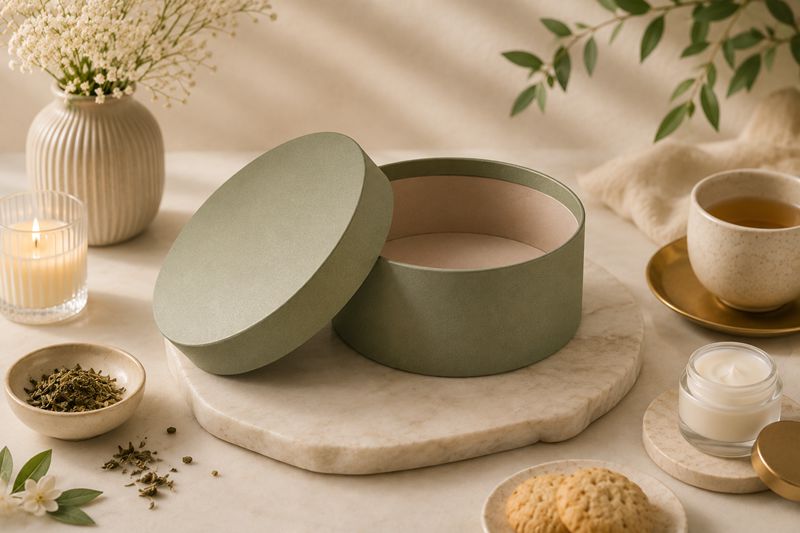
Lid and Base Round Rigid Box
1. Classic Lift-Off Structure
A lid and base round rigid box is made with two separate parts: a top cover and a bottom base. Customers open it by lifting the lid upward, creating a simple and familiar unboxing action.
The design works like a round version of a two piece rigid box. It is easy to produce, easy to pack, and suitable for many rigid gift boxes with lids.
Common structure details include:
- Separate round lid
- Round bottom base
- Flexible lid height
- Optional paper insert
- Optional printed inner wall
2. Flexible Use for Daily Gift Packaging
Brands often use this style for rigid candle boxes, tea packaging, chocolate boxes, skincare jars, and small retail gifts. The clean round shape gives the product a polished look without adding too much structural cost.
This structure also works well for custom printed rigid boxes because the outer surface offers clear space for branding. Logos, patterns, foil stamping, embossing, matte lamination, and soft-touch finishes can all be applied to support different brand styles.
This option suits buyers who need flexible rigid box packaging for seasonal sales, online shops, boutique stores, or promotional gift sets. A simple structure can still look premium when the material, printing, and lid fit are well controlled.
3. Fit Points Before Sampling
The lid should open smoothly without feeling stuck or loose. A poor fit may make the box feel cheap, even when the surface design looks attractive.
Before sampling, buyers can confirm:
- Product diameter and height
- Lid coverage depth
- Board thickness
- Wrapping paper type
- Insert requirement
- Carton packing method
A professional rigid box maker can adjust the lid depth and tolerance according to product weight and shipping method. Candles, glass jars, and fragile items usually need stronger inserts and better base support.
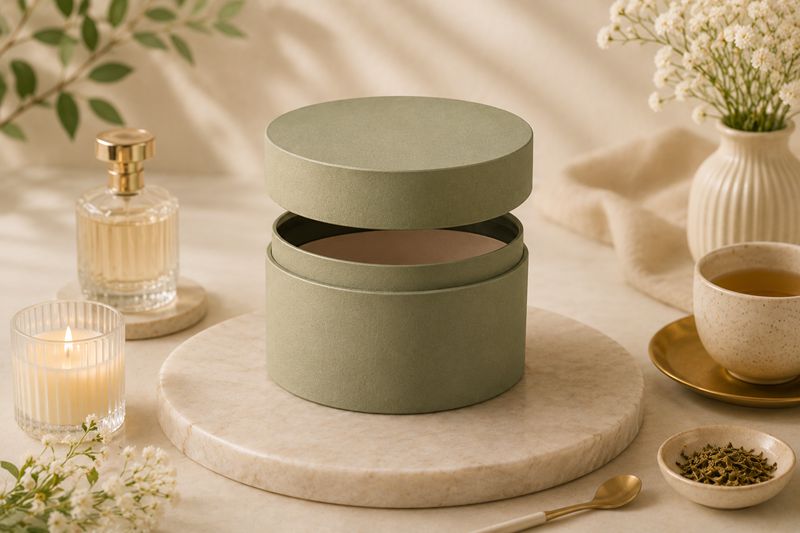
Shoulder Neck Round Rigid Box
1. Inner Neck Design
A shoulder neck round rigid box includes an inner neck between the lid and the base. The lid sits around this neck, so the closure feels more stable and better positioned.
The layered edge creates a more refined visual effect after opening. Many luxury rigid boxes use this structure because the product presentation looks more complete and premium.
Key structure features include:
- Outer lid
- Bottom base
- Inner shoulder neck
- Stable lid positioning
- Layered opening appearance
2. Premium Display for High-Value Products
Perfume, jewelry, watches, skincare sets, luxury candles, and premium tea products often match this structure well. The inner neck adds depth to the box and makes the product area feel more carefully arranged.
Compared with a basic lid and base box, the shoulder neck design gives stronger visual hierarchy. It helps the package feel more like a gift box instead of a simple container.
Buyers often choose it for luxury rigid boxes used in influencer kits, retail counters, holiday gift collections, and brand launch sets. The opening process feels slower and more ceremonial.
3. Neck Fit and Opening Feel
The height and thickness of the neck directly affect the final hand feel. A taller neck improves lid positioning, while a lower neck creates a more subtle layered look.
Important details include:
- Neck height
- Lid and neck gap
- Inner paper color
- Surface finishing
- Product insert fit
- Opening resistance
If the lid friction is too strong, customers may struggle to open the box. If the gap is too wide, the package may lose its premium feel, so sampling is important before mass production.
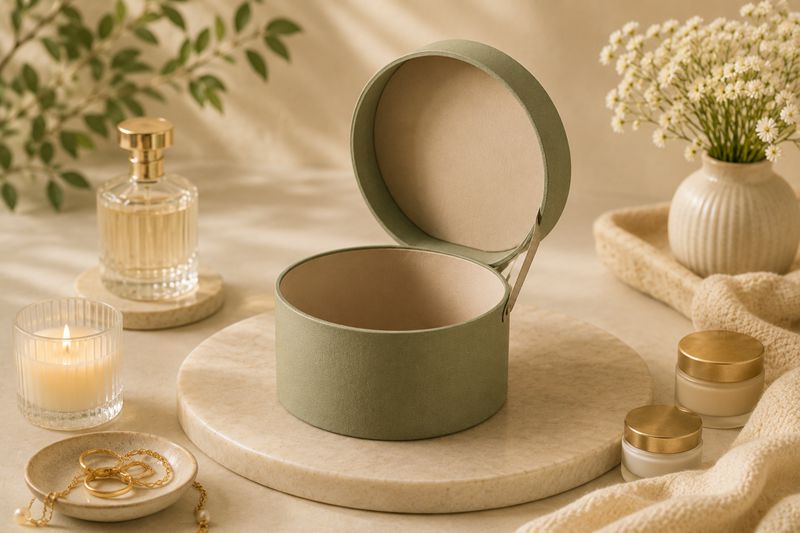
Hinged Round Rigid Box
1. Connected Lid and Base Design
A hinged round rigid box connects the lid and base into one complete unit. Customers open the lid without removing it from the box body.
This opening style creates a more controlled and refined unboxing experience. It also prevents the lid from being misplaced after the product is opened.
Common hinge options include:
- Paper hinge
- Fabric hinge
- Ribbon-assisted opening
- Hidden hinge design
- Decorative hinge detail
2. Better Unboxing for Gift Products
Cosmetics, jewelry, keepsakes, holiday gifts, and special edition rigid gift boxes often use hinged round packaging. The connected structure gives the box a stronger sense of completion.
Some buyers compare this style with magnetic rigid boxes when they want a more secure closing feel. In certain designs, magnets can be added to create rigid magnetic boxes with a round hinged opening.
The box can also be kept for storage after purchase. This helps brands deliver packaging with longer-lasting use, rather than a box that customers discard right after unboxing.
3. Hinge Durability in Real Use
The hinge area needs enough strength for repeated opening and closing. Weak hinge material may crease, loosen, or deform after several uses.
Buyers should check:
- Opening angle
- Hinge material
- Lid alignment
- Closing stability
- Inner lining
- Reuse requirement
A hinged round box usually costs more than a standard lift-off box. The added cost may be reasonable when the product is sold as a premium gift, limited-edition item, or collectible package.
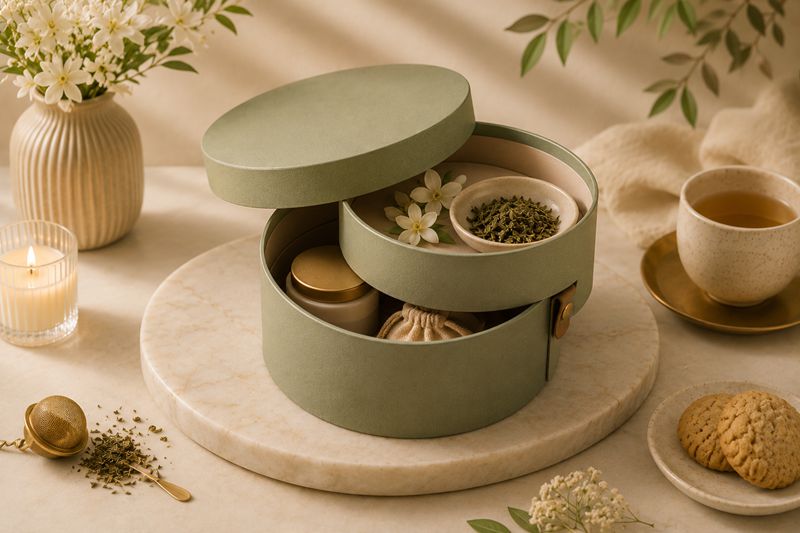
Double Layer Round Rigid Box
1. Two Stacked Layers Structure
A double layer round rigid box uses two stacked layers inside one round packaging structure. Customers lift the upper layer to reveal another storage space below.
The layout helps separate different products in a clean order. It also creates a layered unboxing process that feels more interesting than a single-compartment box.
Typical structure elements include:
- Top lid
- Upper tray layer
- Lower base layer
- Optional inserts
- Lift-off stacked design
2. Organized Packaging for Multi-Item Sets
Beauty sets, tea sets, confectionery assortments, jewelry combinations, candle accessories, and holiday gift packs often need separated product spaces. A double layer structure keeps each item in its own position.
Compared with a rigid drawer box, this design opens upward instead of sliding outward. It keeps the soft round appearance while still offering organized storage.
Its structure is different from a foldable rigid box or rigid collapsible box, which focuses more on saving storage and shipping space. Foldable packaging focuses more on saving shipping volume, while a double layer round rigid box focuses on display, organization, and layered presentation.
3. Layer Stability Before Bulk Production
The upper tray should sit firmly inside the box. If it moves too much, the package may feel unstable during transport or opening.
Buyers should confirm:
- Layer height
- Tray strength
- Insert position
- Product weight per layer
- Opening sequence
- Outer carton protection
Accurate sampling matters for this structure. Product size, insert depth, tray thickness, and stacking pressure all influence the final result.
Structure Match by Product Use
Different round rigid box structures serve different packaging goals. A simple lid and base box is suitable for flexible daily gift packaging, while a shoulder neck box creates a more premium visual level.
A hinged round rigid box improves the opening experience and supports reuse. A double layer round rigid box works better when several products need to be arranged in separate spaces.
When choosing a structure, buyers can start with these questions:
- Is the product single-item or multi-item?
- Does the box need a luxury unboxing feel?
- Will customers reuse the packaging?
- Does the product need an insert?
- Is the box mainly for retail, gifting, or e-commerce delivery?
- Is the budget focused on structure, printing, or finishing?
A more complex structure is not always the better option; the right choice depends on product use, budget, and customer experience. A simple round box with good fit, clean printing, and proper board thickness can still look premium.