
Foil shade approval needs four decisions: choose an identifiable physical reference, apply the candidate to the actual paper and finish, compare it under agreed lighting and viewing angles, then retain a signed sample with the production details. “Gold,” “silver,” “rose gold” and “holographic” are starting descriptions. They are not precise enough to authorize a rigid-box order.
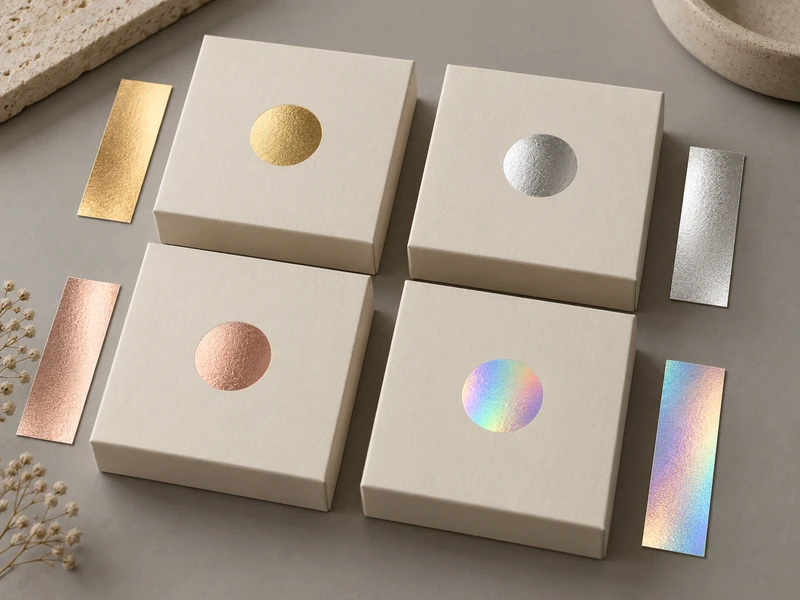
In this process, “exact shade” means a defined match to an agreed reference under stated conditions. It does not mean a metallic surface will look identical from every angle or under every lamp. For SevenRainbowpack, the useful approval is one that another person can repeat with the same samples in front of them.
Step 1: Which Physical Foil Reference Are You Approving?
Select a physical swatch and record its identity, rather than approving a screen rendering or a color name alone. Keep the original reference available to both the buyer and production team. If the source offers a material code, record that code together with the finish description.
Gold can lean toward a pale champagne, a strong yellow or a deeper bronze-like tone. Silver may look bright and mirror-like or softer and more satin. Rose gold can sit closer to pink or copper, which changes how it relates to an ivory, blush or dark paper.
For holographic foil, identify the pattern and its behavior as well as the underlying appearance. A fine overall spectral effect and a distinct repeating pattern are different design choices, even when both are casually called silver holographic foil.
What Belongs in the Reference Record?
- The physical swatch identity and material code, where available.
- The intended metallic tone and degree of shine.
- The holographic pattern and application direction, if relevant.
- The paper and surrounding printed colors the foil must work beside.
- The person authorized to accept the appearance.
A previous box can be a useful reference if it is in suitable condition, but label what you are matching. Its foil tone, its gloss and its paper texture may all contribute to the overall impression. A worn or scratched area is an uncertain master.
SevenRainbowpack’s two-piece rigid box range offers a clear setting for a foil lid detail. Identify whether the approval covers the lid alone or a coordinated treatment across lid and base.
Step 2: Does the Foil Work on the Actual Paper and Surface Finish?
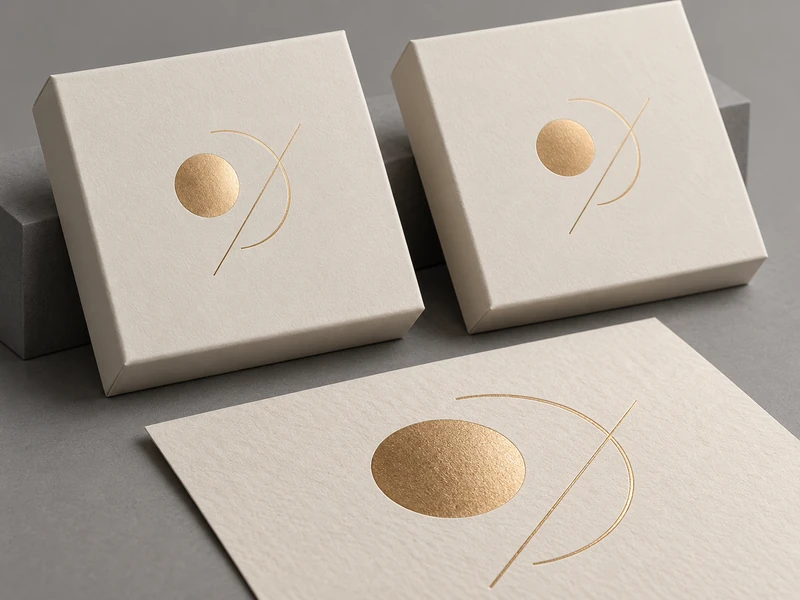
Request a stamped sample on the proposed wrapping paper with the relevant coating or lamination sequence represented. A foil swatch viewed on its carrier does not show the transfer edge, coverage or interaction with the finished paper texture.
Use the real artwork at actual size. Include the smallest lettering, narrow gaps, fine rules and a representative solid area if the design contains one. A large plain sample can help compare shade, but it does not prove that the production logo will reproduce cleanly.
On a deeply grained wrap, inspect the foil where a thin stroke crosses the paper’s valleys. Beside a glossy coating, judge the mark again as the surrounding highlight moves. Ask the sampling team to establish workable detail and settings for this particular construction before those details become order requirements.
Why Separate Shade From Transfer Quality?
A foil can have the desired tone while showing incomplete coverage or an untidy edge. Another candidate can transfer neatly yet look too pink beside the chosen paper. Record these as separate findings so a process adjustment is not mistaken for a color change.
Our prepress checklist for rigid-box artwork is the relevant companion at this stage. Keep the foil artwork and its alignment with print or embossing explicit before the sample is made.
For a custom book-style rigid box, place the stamped sample on the actual cover position. The hinge and normal opening angle can change the reflection the recipient sees, even though the material itself has not changed.
Step 3: Does the Match Hold Under Agreed Viewing Conditions?
Compare the candidate and reference side by side under the same light, against a neutral background. Keep their surfaces at equivalent angles, then tilt and rotate both together. Comparing a flat reference with an upright box can make a reflection difference look like a shade problem.
The International Color Consortium’s color-management introduction describes defined reference viewing conditions for graphic arts. Use that principle to make the comparison repeatable, then add the intended retail or gifting light as a separate practical check.
If the two samples agree in one environment and separate in another, document where that happens. Do not approve a photograph taken under one lamp while leaving the physical viewing conditions unstated.
| Foil Family | Look Beyond the Name | Compare on the Box |
| Gold | Pale, yellow or deeper warm tone; gloss level | Whether it looks too yellow beside the wrap |
| Silver | Brightness, neutrality and reflected surroundings | Whether the logo disappears in glare |
| Rose gold | Pink-to-copper balance and degree of shine | How it relates to blush, cream or dark stock |
| Holographic | Pattern, direction and changing spectral appearance | The effect over the whole stamped artwork |
Can a Color-Difference Number Settle the Decision?
Before accepting a numerical result, ask how the specimen was positioned, which instrument geometry and light were used, and what backing sat beneath it. Keep that information with the reading. If a second laboratory uses a different setup, establish whether its result can be compared with the original before treating the difference as a failed shade match.
Do not apply a printed-ink tolerance to every metallic or holographic effect by default. The ICC’s guidance on measurement conditions explains why the condition used must be identified and related to viewing. It is not a dedicated acceptance method for holographic foil.
For a direction-dependent finish, visual review through agreed movements remains essential unless a suitable instrument method has been specifically established. A single reading cannot describe every aspect of changing shine or pattern.
Step 4: What Exactly Does the Signed Sample Authorize?
Put the accepted box and its production description together in the approval file. An inspector receiving that file should be able to identify the paper-and-foil combination without asking the original designer to reconstruct the decision. If a reorder proposes a substitute material, compare it with this retained combination before authorizing the substitution.
Note the accepted material identity, foil location, artwork revision, paper stock, surface finish and application direction where relevant. Include the viewing conditions and any agreed visual limits. Keep one reference for the buyer and one protected reference for the producer.
Our explanation of white, printed and pre-production samples helps distinguish an early appearance discussion from approval of a production-relevant sample. A convincing mock-up still needs its unrepresented features listed.
Which Changes Should Reopen Approval?
A different wrap, coating, foil stock, artwork scale or process sequence can change the result enough to need review. So can moving the foil from a flat lid to a narrow wrapped edge. Agree the relevant triggers while the approved combination is still clear to everyone.
Inspect later production against the retained reference under the agreed conditions. Keep appearance, transfer quality and registration as distinct checks, with the acceptance criteria appropriate to the project. A casual “same gold as last time” instruction leaves too much of that decision unstated.
For seasonal variations, keep track of which parts change. Our article on seasonal gift-box design is useful when one structure carries several colorways; a foil accepted on ivory paper should not automatically be treated as approved on every darker version.
Send SevenRainbowpack the physical reference, final artwork and intended wrap together. Request the four decisions as one documented approval sequence. That makes the chosen foil shade specific enough to manufacture, inspect and reorder with a shared point of reference.