
Designing luxury rigid boxes for premium products requires a complete approach. You need to consider product positioning, box structure, board thickness, wrapping materials, colors, surface finishes, inserts, branding, unboxing experience, and production quality.
When structure, material, finishing, and presentation work together, rigid box packaging becomes more than a container. It becomes part of the product value.
Key Elements of Luxury Rigid Box Design
| Design Element | What to Consider | Luxury Effect |
| Box Structure | Lid and base, magnetic, drawer, shoulder neck, hinged lid | Creates a premium opening experience |
| Greyboard Thickness | Usually 1.5mm–3mm depending on product weight | Gives the box a strong, solid feel |
| Wrapping Paper | Coated paper, textured paper, kraft paper, specialty paper, leatherette | Defines the visual and tactile style |
| Surface Finish | Foil stamping, embossing, debossing, spot UV, soft-touch lamination | Adds brand detail and premium texture |
| Insert Design | EVA, paperboard, molded pulp, sponge, velvet, satin | Protects the product and improves presentation |
| Color System | Brand colors, neutral tones, metallic accents | Builds emotional and visual identity |
| Sustainability | FSC paper, recyclable materials, paper inserts | Supports eco-conscious premium branding |
What Makes a Rigid Box Look Luxury?
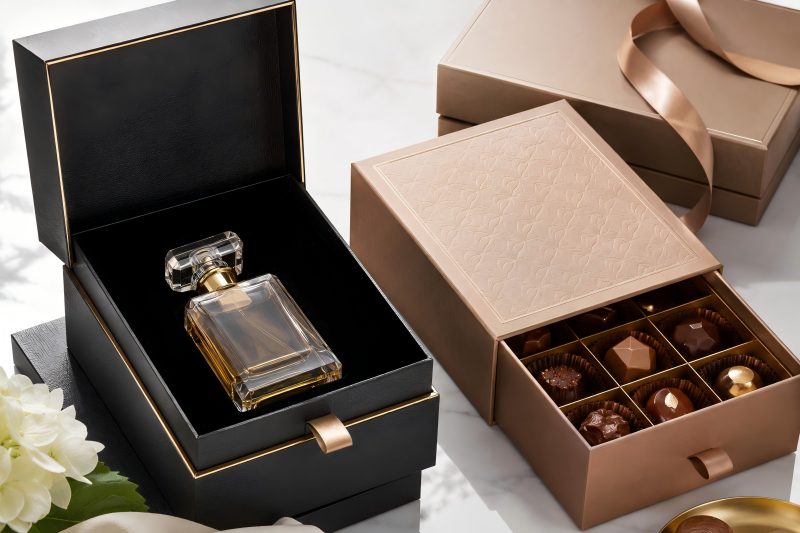
A rigid box looks luxury when every detail feels intentional. It should have a clean structure, accurate dimensions, smooth edges, strong materials, elegant colors, and refined finishing. Luxury packaging does not always need to be complex. In many cases, simple design with high-quality materials creates a stronger premium effect than overdecorated packaging.
The key is consistency. The box structure, color, logo placement, insert, and finishing should all communicate the same brand message. For example, a high-end perfume box may use a shoulder neck structure, black textured paper, gold foil stamping, and a velvet insert. A luxury chocolate box may use a drawer structure, warm color tones, paper dividers, and delicate embossing.
Luxury packaging should make customers feel that the product is valuable, carefully made, and worth keeping.
Start with the Product Positioning
Before designing a luxury rigid box, you need to understand the product’s market position. A premium product requires packaging that matches its price, audience, and sales channel.
Ask these questions first:
- Is the product modern, classic, artistic, natural, or high-end?
- Is it sold online, in retail stores, at exhibitions, or as a gift?
- Does the customer expect elegance, sustainability, bold branding, or a collectible unboxing experience?
- Does the product need strong protection during shipping?
- Should the box be reusable after purchase?
For example, a luxury candle brand may need a warm and soft design that reflects relaxation and lifestyle. A premium electronic product may need a clean, precise, and minimal structure. A jewelry box may need a compact but refined design with strong insert support.
Good packaging starts from brand strategy, not just appearance.
Choose the Right Rigid Box Structure
The box structure controls how customers interact with the product. Different rigid box styles create different opening experiences.
| Rigid Box Type | Best For | Luxury Advantage |
| Lid and Base Rigid Box | Perfume, candles, chocolate, cosmetics | Classic, stable, and cost-effective |
| Shoulder Neck Rigid Box | Perfume, jewelry, gift sets, watches | Layered structure with strong premium feel |
| Magnetic Closure Box | Cosmetics, electronics, gift boxes | Smooth opening and secure closing |
| Drawer Rigid Box | Chocolate, skincare sets, accessories | Creates a slow reveal experience |
| Hinged Lid Rigid Box | Luxury gifts, jewelry, limited editions | Easy opening and strong display value |
| Foldable Rigid Box | E-commerce gift packaging | Saves shipping space while keeping a premium look |
For luxury products, shoulder neck boxes and magnetic boxes are especially popular because they offer a strong unboxing experience. Shoulder-neck boxes create a raised inner platform, making the product look more valuable. Magnetic boxes offer smooth opening, secure closure, and reusable appeal.
Match the structure to product size, weight, and branding. A heavy perfume bottle needs stronger support than a lightweight cosmetic jar. A chocolate gift set needs accurate divider spacing. A watch or jewelry box needs a secure insert to prevent movement.
Select the Right Greyboard Thickness
Greyboard is the core material of a rigid box. It gives the box strength, shape, and hand feel. For luxury rigid boxes, the thickness of the greyboard directly affects perceived quality.
Common greyboard thickness options include:
- 5mm–2.0mm: Suitable for small cosmetics, light gift boxes, and compact packaging.
- 0mm–2.5mm: Suitable for perfume, candles, skincare sets, chocolate boxes, and general luxury packaging.
- 5mm–3.0mm: Suitable for heavier products, premium gift sets, electronics, and high-end rigid boxes.
Thicker board can improve the premium feel, but the right choice should balance product weight, box size, shipping needs, cost, and brand positioning. For most premium products, a rigid box should feel firm when held. It should not bend easily, collapse at the corners, or feel hollow.
Use Premium Wrapping Materials
The outer wrapping material has a major impact on the look and touch of a rigid box. Luxury packaging often uses paper or specialty materials that create a refined surface. Common options include:
Coated art paper
This is suitable for high-quality printing, rich colors, and clear patterns. It works well for cosmetics, perfume, chocolate, and retail packaging.
Textured paper
Textured paper creates a tactile surface and gives the box a more premium feel. Linen texture, leather texture, and embossed paper are common choices.
Specialty paper
Metallic paper, pearlescent paper, soft-touch paper, and colored paper can create a distinctive brand style.
Kraft paper
Kraft paper is suitable for natural, eco-friendly, handmade, or organic premium products.
Leatherette or fabric wrapping
These materials are often used for jewelry, watches, luxury gifts, and collectible packaging.
When choosing wrapping materials, consider printing quality, touch, durability, color stability, and whether the surface can support foil stamping, embossing, or lamination.
Create a Strong Color System
Luxury rigid box design often uses a controlled color palette. Too many colors can make packaging look busy or low-end. Premium packaging looks strongest with a primary shade, secondary tone, and accent.
Common luxury color combinations include:
- Black + gold
- White + silver
- Ivory + champagne gold
- Deep green + gold
- Navy blue + silver
- Burgundy + rose gold
- Beige + brown
- Soft pink + matte gold
Color should match the product category. Perfume packaging may use black, ivory, gold, or soft pastel colors. Candle boxes often use warm neutral tones. Chocolate boxes may use brown, cream, red, gold, or seasonal colors. Skincare boxes may use white, beige, green, or soft-touch pastel tones.
A premium color system should also work across the logo, box exterior, box interior, insert, ribbon, and product label.
Add Luxury Surface Finishing
Surface finishing is one of the most important parts of luxury rigid box design. It adds detail, shine, texture, and brand recognition.
| Finish | Visual Effect | Best Use |
| Foil Stamping | Metallic shine in gold, silver, rose gold, holographic, etc. | Logos, borders, patterns, brand symbols |
| Embossing | Raised design effect | Logos, icons, texture patterns |
| Debossing | Pressed-in design effect | Minimal luxury branding |
| Spot UV | Glossy highlight on selected areas | Patterns, logos, product details |
| Matte Lamination | Smooth, non-gloss surface | Modern luxury packaging |
| Soft-Touch Finish | Velvet-like hand feel | Premium cosmetics, perfume, gift boxes |
| Full UV Coating | High-gloss surface | Bold retail packaging |
For luxury rigid boxes, finishing should be used carefully. A small gold foil logo on textured paper can look more expensive than a large shiny design covering the whole box. Minimal details often create stronger elegance.
For example, a perfume rigid box may use black soft-touch paper with a gold foil logo and embossed brand pattern. A chocolate box may use matte lamination with spot UV on the product pattern. A jewelry box may use leatherette wrapping with debossed branding.
Design the Insert for Protection and Presentation
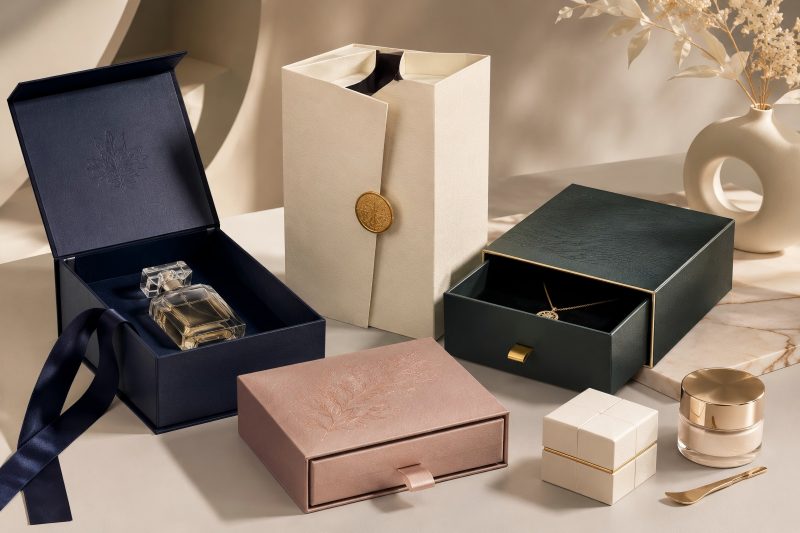
The insert is not only for product protection. It also controls how the product is displayed when the box is opened. A luxury rigid box should make the product sit neatly, securely, and beautifully.
Common insert materials include:
EVA foam insert
Good for perfume bottles, electronics, watches, and fragile products. It provides strong support and precise cavities.
Paperboard insert
Suitable for cosmetics, chocolate, candles, and eco-friendly packaging. It is recyclable and cost-effective.
Molded pulp insert
A sustainable option for natural, organic, or eco-conscious brands.
Sponge foam insert
Soft and protective, often used for delicate products.
Velvet or satin lining
Creates a high-end display effect for jewelry, watches, perfume, and gift sets.
A well-designed insert secures items firmly while allowing easy and smooth removal. It should match the product shape, weight, and surface material. For glass bottles, the insert should support the bottom, body, neck, or cap area to reduce movement. For chocolates, dividers should prevent pieces from touching or breaking.
Control the Unboxing Experience
Luxury rigid boxes are often designed for emotional impact. The opening process should feel smooth, deliberate, and memorable.
You can improve the unboxing experience through:
- Magnetic closure with a soft closing feel
- Ribbon pull tabs for drawer boxes
- Shoulder neck structure for a layered reveal
- Inner printing or brand message inside the lid
- Satin lining or velvet insert
- Slow-opening hinged lid structure
- Clean product placement with enough spacing
The customer should not feel confused when opening the box. The product should be easy to access, but still feel secure. The first moment after opening should show the product clearly and beautifully.
Keep Branding Elegant and Consistent
Luxury branding does not always mean large logos. Many premium brands use small, refined logo placement to create a high-end feeling.
Common branding positions include:
- Center of the top lid
- Lower center of the front panel
- Inside lid
- Drawer pull tab
- Insert surface
- Side panel
- Ribbon or closure detail
Logo finishing can include foil stamping, embossing, debossing, spot UV, or screen printing. The logo should be clear but not overwhelming.
For luxury rigid boxes, consistency matters. The same logo style, color, font, and spacing should be used across packaging, labels, cards, bags, and product displays.
Consider Retail, E-Commerce, and Gift Use
Different sales channels require different packaging design priorities.
For retail display, the rigid box should stand out on shelves and clearly communicate brand value. The color, shape, logo, and finish should be attractive under store lighting.
For e-commerce, the box should be strong enough for shipping. You may need an outer mailer box, protective inserts, or reinforced corners.
For gift packaging, the box should feel complete without extra wrapping. Magnetic, shoulder neck, and drawer boxes create elegant gift-ready product presentation.
For limited editions, the box can include special colors, seasonal patterns, custom inserts, certificates, ribbons, or collectible details.
Balance Luxury Design with Cost
Luxury rigid boxes can vary widely in cost depending on structure, size, materials, finishes, inserts, and order quantity. To control cost without losing premium value, focus on the most visible and important details.
For example:
- Use a standard box structure but upgrade the surface paper.
- Use a simple logo with foil stamping instead of full-surface special printing.
- Choose paperboard inserts instead of EVA if the product does not need heavy protection.
- Use one premium finish instead of combining too many effects.
- Reduce unnecessary oversized packaging.
The best luxury packaging is not always the most expensive. It is the design that matches the product value, protects the item, and creates a memorable customer experience.
Common Mistakes to Avoid
Many brands make luxury rigid boxes look less premium because of small design mistakes.
Avoid these problems:
- Using thin board for heavy products
- Choosing colors that do not match the brand identity
- Adding too many finishes at once
- Making the logo too large
- Ignoring the inside of the box
- Using inserts that do not hold the product securely
- Leaving too much empty space inside the box
- Choosing materials that scratch or stain easily
- Forgetting shipping protection for e-commerce orders
- Designing a beautiful box that is hard to open
A luxury rigid box should be beautiful, practical, and reliable.
Work with an Experienced Rigid Box Manufacturer
To design a successful luxury rigid box, you need more than a visual design. You also need packaging engineering, material selection, sampling, printing control, surface finishing, and quality inspection.
An experienced rigid box manufacturer can help you choose the right board thickness, structure, wrapping paper, finish, insert, and production method. They can also provide samples to test the opening feel, product fit, color accuracy, and overall quality before mass production.
This is especially important for premium products because customers can easily notice poor corners, uneven wrapping, weak magnets, loose inserts, color differences, or rough edges.