
“We need a premium gift box” is a useful starting conversation, but it leaves a manufacturer to invent much of the project. Premium can mean a restrained paper finish, a dramatic opening sequence, a heavy construction or simply a package that arrives without visible damage. The quotation will depend on which meaning the buyer actually intends.
A packaging design brief converts those intentions into information that a designer and factory can use. It does not need to prescribe every construction detail. Its purpose is to explain the product, commercial goal, constraints and approval process well enough for the supplier to propose a relevant solution.
Name The Decision The Project Must Support
Begin with the reason for developing the box. A new retail launch, a corporate gift, a fragrance discovery set and a replacement for damaged packaging have different priorities. State the business situation in a few factual sentences.
For example, an illustrative brief might say that a brand is preparing a three-piece skincare gift set for seasonal retail sale and needs a box that can be packed by its existing fulfilment team. That statement is more actionable than asking for an “innovative luxury experience.” It identifies both presentation and operational requirements.
Define what a successful proposal should demonstrate. It may need to fit the products, show a particular brand identity, meet an agreed cost range and arrive before a receiving deadline. Rank those outcomes so the supplier knows which trade-offs deserve discussion.
Describe The Product As A Physical Object
Supply dimensions, weight and photographs of each item. Include the cap, label, sleeve or other feature that changes the maximum envelope. Identify delicate surfaces, irregular shapes and parts that must not carry load. If dimensions are provisional, mark them as provisional and state when the final data will be available.
For a set, explain whether every order contains the same combination. A single bottle and a bottle-plus-accessory set may need different inserts even if the outer box looks similar. Do not force the supplier to infer the assortment from a marketing photograph.
Send physical samples where their shape or handling behavior matters. A custom perfume rigid box should be developed around the complete bottle and cap arrangement. If the product is not yet available, explain the limitations of the dummy or drawing being supplied.
Explain Where The Package Will Be Used
Describe the route from packing to the final user. Will the box sit on a shelf, travel individually inside an outer carton, be handed over at an event or be shipped in bulk to distributors? The same product can need different packaging details in each channel.
Include storage and handling conditions that the supplier genuinely needs to consider. State whether boxes arrive assembled or whether the receiving team will assemble them. Explain any limits on warehouse space, packing equipment or the time available for manual operations.
If the project uses custom collapsible rigid boxes, describe who will erect them and when. A flat delivery format can be attractive, but the brief should also account for the work required at the packing site. Ask for the proposed packing method to be demonstrated during sampling.
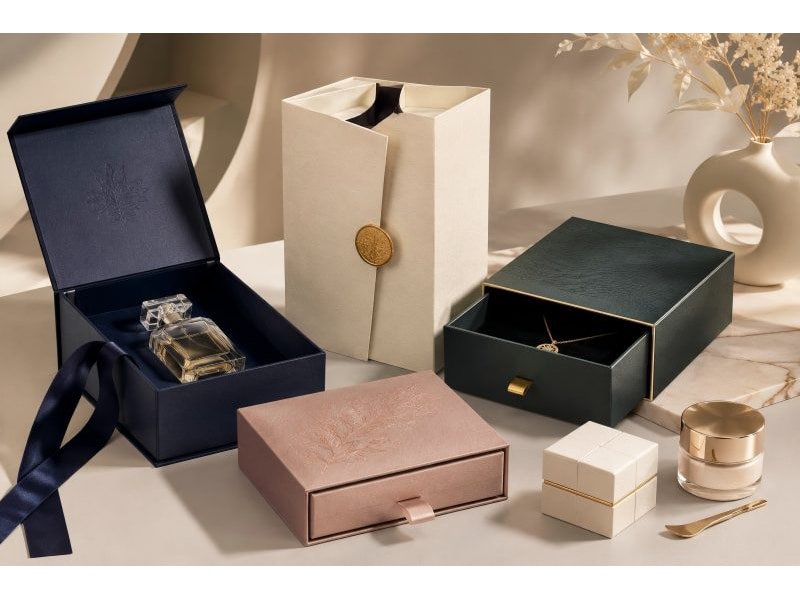
Translate Brand Language Into Visible Choices
Attach current brand assets and identify the version that applies. Include the vector logo, approved wording, color references and any rules for logo clearance or typography. If the brand guide was written mainly for screens, flag the need to develop appropriate print references.
Use reference images selectively. Explain what you like about each: a lid proportion, a quiet surface, a product arrangement or an opening sequence. Also explain what should not be copied. References are a communication aid, not permission to reproduce another company’s distinctive design.
List a few specific visual priorities. “A small logo on the lid, no photography, a restrained textured paper and easy access to all three products” provides direction without prematurely fixing every technical choice. It gives the supplier room to propose a workable construction.
Tell The Factory Where Alternatives Are Welcome
Add a decision label beside every specification: essential to the launch, desirable if feasible, or awaiting the factory’s proposal. Fixed requirements may include product quantity, an approved logo, a maximum external dimension or mandatory wording. Preferences may include a particular closure style or decorative effect that can change if it conflicts with cost or performance.
Explain the reason behind a constraint. A maximum height imposed by a retail shelf should be treated differently from a dimension chosen only because it looked attractive in a mock-up. Knowing the reason helps the supplier suggest alternatives that preserve the actual purpose.
Avoid specifying incompatible features without a priority. A large, heavy box, very low freight volume and no assembly at destination may not all be achievable together. A ranked brief turns that conflict into a decision instead of allowing it to appear as an unexpected disappointment later.
Give A Budget That Can Be Interpreted
State the currency, quantity assumptions and what the budget includes. A target for the empty box is different from a target covering inserts, printed cards, outer cartons and delivery. Ask the supplier to show any exclusions clearly.
If the budget is still being developed, provide a range and request options with the main trade-offs explained. For example, compare a simpler construction with a more elaborate opening format while keeping the product arrangement constant. This is more useful than receiving unrelated concepts at incomparable prices.
Do not present an illustrative planning figure as a firm purchasing commitment. Similarly, a factory’s early estimate based on incomplete dimensions should not be treated as the final quotation. The brief should identify the information that must be confirmed before pricing becomes reliable.
Specify The Quantities And Variants
List the initial order by SKU or artwork version. A total of 5,000 boxes can mean one repeated design or many small versions, with different implications for setup, inventory and quality control. Give the split even if it is an estimate.
Explain likely repeat orders separately from the first order. Suppliers can discuss shared components or more efficient production planning when the forecast is clear. However, identify which volumes are confirmed and which depend on future sales.
For mixed sets, create a simple contents matrix. Record the product combination, market, language and any version-specific printed component. This prevents a supplier from assuming that identical outer dimensions mean identical packaging requirements.
Use A Brief Template That Fits On A Few Pages
| Brief Section | Information To Supply |
| Project purpose | Launch, replacement, seasonal gift or campaign |
| Products | Item names, dimensions, weight, photographs and sample availability |
| User journey | Packing, storage, distribution, opening and possible reuse |
| Brand assets | Logo version, wording, color references and design rules |
| Fixed constraints | Space limits, required information and non-negotiable features |
| Flexible choices | Structure, paper, finish and insert options for recommendation |
| Commercial assumptions | Quantity by version, currency and budget inclusions |
| Deliverables | Drawings, artwork templates, samples and production files |
| Approval plan | Reviewers, final approver, deadlines and release conditions |
Add attachments rather than forcing detailed drawings into the main brief. Name each attachment and state which version is current. The brief should help a reader find the right information quickly, not become a storage location for every previous discussion.
Define Deliverables Before Design Begins
Agree what the supplier will return at each stage. A concept presentation, structural drawing, printable artwork template and physical sample are different deliverables. Specify which ones are needed to make the next decision.
Clarify the division of work between the brand’s designer and the factory. One team may develop graphics while the other develops structure. State who places the graphics onto the final drawing and who checks that the file is ready for production.
For original design work, clarify ownership and future access to agreed deliverables in the commercial discussion. Do not assume that receiving a rendered image automatically includes editable design files or tooling rights. A clear agreement prevents uncertainty when a later revision or reorder is needed.
Build Approval Gates Into The Schedule
Separate concept selection, structural approval, artwork approval and production release. Name the person authorized to approve each stage. This helps the supplier understand whether feedback is a suggestion or an instruction that changes the project.
Set deadlines for buyer decisions as well as supplier tasks. A production date cannot remain fixed indefinitely while artwork or product dimensions change. Reserve time for sample delivery and review, and identify the consequences of missing an approval date.
A useful brief records dependencies. If the product cap is still changing, the insert cannot be finally approved. If the market language is undecided, printed wording remains open. Making those dependencies explicit is more realistic than placing every task on the same optimistic timeline.
Ask For Comparable Proposals
When sending the brief to more than one supplier, use the same version and attachments. Request quotations against the same quantity, component list and delivery basis. Differences should then reflect the proposed solution rather than missing information.
Ask each supplier to identify assumptions. One quotation may include a printed insert while another includes only an unprinted tray. One may use a standard paper while another assumes a special purchase. A comparison sheet should make these differences visible before selecting the lowest figure.
Assess the response as evidence of understanding. A supplier who asks a precise question about the product or packing route may be helping to prevent a problem. Treat useful clarification as part of development rather than as an inconvenience delaying the quotation.
Handle Changes With A Short Revision Log
After the brief is issued, record changes by date and version. Identify the affected requirement and why it changed. A new product dimension, quantity split or market language can affect several parts of the packaging project.
Send a consolidated revision instead of scattered messages to different contacts. Ask the supplier to confirm any effect on cost, timing, artwork or samples. If nothing changes commercially, retain that confirmation with the project record.
Do not erase the history of a decision that affects production. An old version should be marked obsolete rather than left indistinguishable from the current one. This is particularly useful when the project pauses and resumes with different people involved.
Check The Brief From The Supplier’s Viewpoint
Give the completed document to someone outside the packaging team and ask them to describe the proposed order back to you. Can they identify the product, number of variants, intended use, budget basis and next required deliverable? Any uncertainty they find is likely to become a supplier question as well.
Attach the product information, current brand assets and a small set of annotated references. Leave technical choices open where you want a recommendation, but state the result those choices must achieve. This gives the factory a clear problem to solve without pretending that every manufacturing detail is already settled.
Submit the package through the Seven Rainbow contact page and identify one contact for consolidated feedback. Ask for a proposed structure, sample route and list of outstanding questions. The next conversation can then focus on specific decisions rather than trying to reconstruct what “a premium gift box” was meant to describe.