
A rigid box gives your product a strong, premium, and gift-ready appearance. A folding carton gives your product a lightweight, cost-effective, and practical retail solution.
Rigid boxes add premium value and create a better customer experience. For mass-market products, folding cartons can help control cost and support efficient retail distribution.
Quick Comparison Table
| Item | Rigid Box | Folding Carton |
| Main Material | Thick greyboard wrapped with paper | Paperboard or coated cardboard |
| Structure | Pre-assembled and non-collapsible, or foldable rigid type | Flat-packed and folded into shape |
| Strength | Very strong and durable | Moderate strength |
| Appearance | Premium, luxury, high-end | Clean, practical, retail-friendly |
| Cost | Higher | Lower |
| Shipping Space | Takes more space unless foldable | Saves space because it ships flat |
| Best For | Luxury gifts, perfume, jewelry, candles, electronics | Cosmetics, food, medicine, small retail goods |
| Customer Experience | Strong unboxing experience | Convenient and cost-effective |

What Is a Rigid Box?
A rigid box is a premium packaging box made from thick greyboard, usually wrapped with printed paper, specialty paper, leatherette paper, fabric, or textured paper. Unlike normal paperboard boxes, rigid boxes do not easily bend or collapse.
Rigid boxes help products look more premium and valuable. The structure feels solid in hand, which helps create a luxury impression before the customer even opens the box.
Common rigid box styles include:
- Lid and base rigid box
- Shoulder neck rigid box
- Magnetic closure rigid box
- Drawer rigid box
- Hinged lid rigid box
- Book-style rigid box
- Foldable rigid box
Rigid boxes can also include custom inserts such as EVA foam, paperboard trays, molded pulp, sponge foam, PET trays, satin lining, or velvet lining. These inserts help fix the product position and improve the presentation.
What Is a Folding Carton?
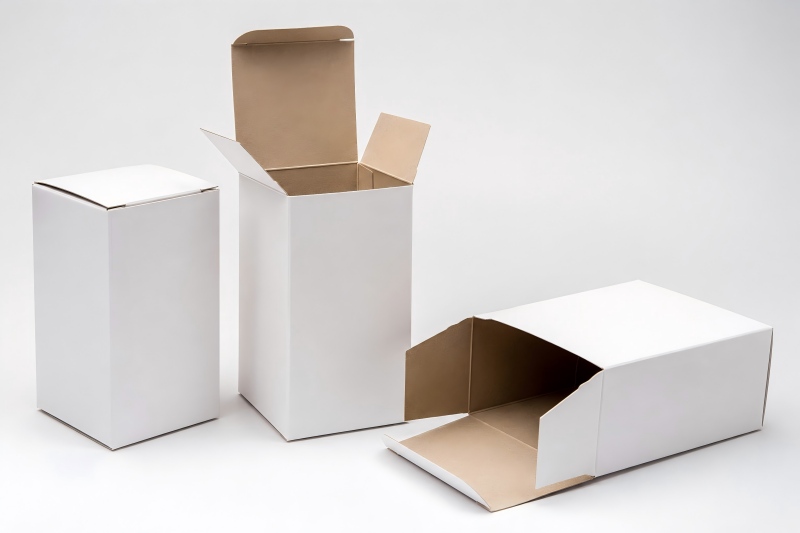
A folding carton is printed paperboard folded into a lightweight box. It is usually shipped flat and assembled before packing the product.
Folding cartons are commonly used in large-volume retail packaging because they are economical, easy to store, and suitable for automatic packing lines. You can find folding cartons in cosmetics, skincare, food, supplements, medicine, toys, and many daily consumer products.
Common folding carton styles include:
- Straight tuck end box
- Reverse tuck end box
- Auto-lock bottom box
- Seal end box
- Sleeve carton
- Window carton
- Display carton
Folding cartons are practical when the product does not require heavy protection or luxury presentation.
Key Difference 1: Material and Thickness
Rigid boxes typically use thick greyboard construction. The board is covered with printed paper or specialty wrapping paper. This creates a strong, long-lasting box structure.
Folding cartons use lightweight paperboard. The board can still be printed and finished beautifully, but it does not provide the same level of strength as a rigid box.
| Material Factor | Rigid Box | Folding Carton |
| Board Type | Greyboard/chipboard | Paperboard/cardboard |
| Typical Feel | Thick, firm, premium | Thin, light, flexible |
| Bend Resistance | High | Medium to low |
| Product Support | Strong | Basic to moderate |
| Premium Texture | Excellent | Good, but less solid |
For luxury products, the thicker structure of a rigid box can make the packaging feel more valuable. For everyday retail products, folding cartons are usually enough.
Key Difference 2: Packaging Cost
Cost is another major difference.
Rigid boxes cost more due to thicker materials, complex production, manual assembly, and premium finishing. They may also need custom inserts, magnetic closures, ribbons, or special wrapping paper.
Folding cartons are more affordable because they use thinner paperboard and can be produced quickly in large quantities. They save space in shipping and storage.
Choose a rigid box when the packaging needs to support a premium price. Use folding cartons for budget-friendly, high-volume packaging.
Key Difference 3: Brand Positioning
Rigid boxes are often connected with luxury, gifts, and high-end retail. They make packaging feel premium from the first touch.
Folding cartons are better for practical retail packaging. They can still look attractive with high-quality printing, foil stamping, embossing, spot UV, or window design, but the overall feeling is more functional.
For example:
A perfume gift set, jewelry set, or premium chocolate collection may look more valuable in a rigid box.
A skincare cream, medicine bottle, tea bag box, or small cosmetic product may be better packed in a folding carton.
Choose packaging based on the customer experience you want.
Key Difference 4: Protection Performance
Rigid boxes offer better protection because they are stronger and thicker. Ideal for delicate, heavy, or premium products.
Folding cartons provide basic protection, but they may need inner trays, blister inserts, or additional outer cartons if the product is fragile.
Rigid boxes are especially useful for:
- Glass perfume bottles
- Candle jars
- Premium chocolate sets
- Electronic devices
- Jewelry and watches
- Gift sets with multiple items
Folding cartons are suitable for:
- Lightweight cosmetics
- Food packaging
- Pharmaceutical products
- Retail accessories
- Small consumer goods
For fragile products, packaging buyers should not only consider the outer box. The insert design is also important. A well-designed insert can reduce movement, protect corners, and improve the product display.
Key Difference 5: Storage and Shipping
Folding cartons are much easier to store and ship because they are usually delivered flat. This saves warehouse space and reduces transportation cost.
Traditional rigid boxes are pre-assembled, so they take more space during shipping and storage. This may raise shipping costs for overseas orders.
However, foldable rigid boxes can solve part of this problem. They provide a more premium look than folding cartons while saving more space than standard rigid boxes.
| Packaging Type | Storage Efficiency | Shipping Cost | Assembly Need | Best Situation |
| Standard Rigid Box | Low | Higher | Usually ready to use | Premium products, luxury gifts |
| Foldable Rigid Box | Medium to high | Lower than standard rigid box | Needs simple assembly | Premium packaging with space saving |
| Folding Carton | Very high | Lower | Needs folding or machine packing | Mass retail packaging |
If your project has a tight logistics budget, folding cartons or foldable rigid boxes may be better choices.
Key Difference 6: Customization Options
Both rigid boxes and folding cartons can be customized, but rigid boxes usually offer more luxury design possibilities.
Rigid box customization can include:
- Magnetic closure
- Ribbon pull tab
- Shoulder neck structure
- Drawer opening
- Satin or velvet lining
- EVA foam insert
- Specialty textured paper
- Leatherette wrapping
- Foil stamping
- Embossing and debossing
- Soft-touch lamination
- Spot UV finish
Folding carton customization can include:
- Full-color printing
- Window cut-out
- Hang tab
- Tuck-end structure
- Auto-lock bottom
- Foil stamping
- Embossing
- Matte or gloss lamination
- Spot UV
- Die-cut shapes
If your goal is luxury presentation, rigid boxes offer more design depth. If your goal is flexible retail packaging with lower cost, folding cartons are more practical.
Key Difference 7: Production Lead Time
Rigid boxes usually take longer to produce because they involve board cutting, wrapping, gluing, forming, finishing, and sometimes insert assembly.
Folding cartons are faster to produce, especially for high-volume orders. They are easier to print, die-cut, fold, and pack.
For urgent retail launches, folding cartons may be easier to manage. For luxury product launches, buyers should allow more time for rigid box sampling, material approval, insert testing, and mass production.
When Should You Choose a Rigid Box?
You should choose a rigid box when your product needs a premium image, stronger protection, or a better unboxing experience.
Rigid boxes are a good choice for:
- Luxury perfume packaging
- Candle gift boxes
- Chocolate gift boxes
- Jewelry boxes
- Watch boxes
- Electronics packaging
- Cosmetic gift sets
- Premium promotional kits
- Holiday gift packaging
Rigid boxes are especially suitable when the packaging is part of the product value. If customers may keep the box after purchase, a rigid box can also extend brand exposure.
When Should You Choose a Folding Carton?
You should choose a folding carton when your product needs affordable, lightweight, and efficient retail packaging.
Folding cartons are a good choice for:
- Skincare products
- Makeup products
- Food products
- Pharmaceutical packaging
- Supplements
- Small accessories
- Tea packaging
- Soap packaging
- Daily consumer goods
Folding cartons are ideal for high-volume products where unit cost, storage space, and packing efficiency are important.