
A window design can change how customers see, touch, trust, and remember a product before they even open the box.
Two common choices are window patching film and unlaminated die-cut window.
Both styles reveal the product inside, but they create very different effects. One protects the opening with a transparent film. The other leaves the window open without film coverage.
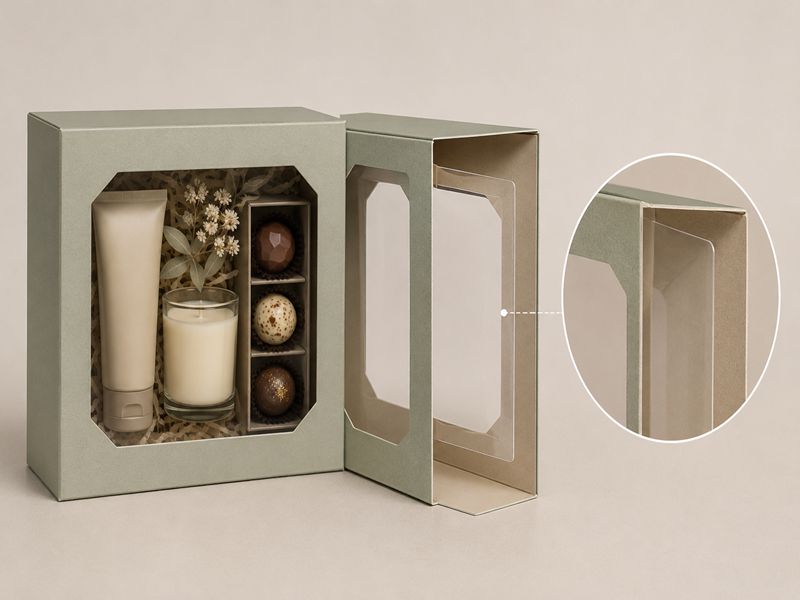
What Is Window Patching Film?
Window patching film means a transparent or semi-transparent film is attached behind the die-cut window opening.
It is common in:
- Cosmetics
- Candles
- Chocolates
- Toys
- Perfume Sets
- Electronics Accessories
- Gift Sets
The box is still made with paperboard, rigid board, or printed wrapping paper, but the window area is covered with a clear material such as PET, PP, PVC, PLA, acetate, or other film options. The product can be seen clearly, but it is not directly exposed.
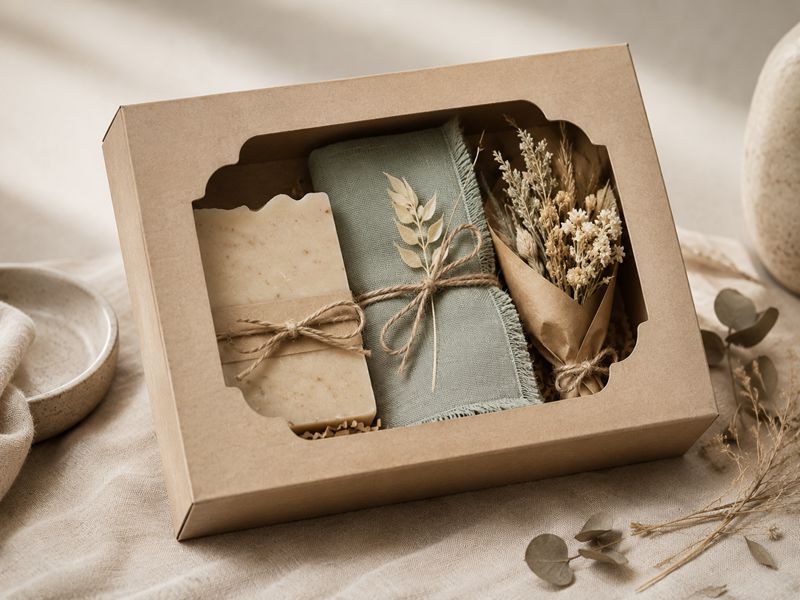
What Is an Unlaminated Die-Cut Window?
An unlaminated die-cut window is a cut-out opening without transparent film attached. The window is open. Customers can see the product directly and may also touch part of it, depending on the insert, product height, and window position.
It is often used for:
- Handmade soap
- Fabric accessories
- Paper crafts
- Dry flowers
- Boutique gifts
- Eco-style products
- Decorative items
This style feels more natural, tactile, and simple. However, because there is no protective film, the product is more exposed to dust, moisture, fingerprints, rubbing, and accidental contact.
Key Difference: Protection vs. Direct Interaction
| Type | Key Points |
| Window Patching Film | Protected / Clean / Dust-proof / No touch |
| Unlaminated Die-Cut Window | Open / Natural / Touchable / More exposed |
Window patching film shows the product while keeping it covered and cleaner. An unlaminated die-cut window feels more natural and direct, but the product is more exposed.
Visual Presentation
Window patching film usually creates a more polished and retail-friendly look. The clear window reflects light, sharpens the display area, and makes the product look protected. For luxury packaging, this can make the whole box feel more complete.
It works well when the packaging needs:
- Clean shelf display
- Clear product visibility
- Premium retail presentation
- Gift-ready appearance
- Stronger product trust
- More controlled visual layout
An unlaminated die-cut window gives a softer and more natural look. It works well when the product has texture, scent, handmade character, or a rustic style. The open cut-out can make the box feel lighter, warmer, and less commercial.
It works well when the packaging needs:
- Natural texture
- Handmade feeling
- Simple paper-based appearance
- Direct product connection
- Low-plastic packaging impression
- More casual gift style
Touch Experience
| Type | Touch Feel | Key Point |
| Window Patching Film | Covered touch | Cleaner and more protected |
| Glossy PET Film | Smooth | Clear but easy to mark |
| Frosted Film | Soft | Premium with less glare |
| Anti-scratch Film | Refined | Better for luxury boxes |
| Unlaminated Die-Cut Window | Direct touch | Natural but more exposed |
Window patching film creates a cleaner and more protected touch experience, while an unlaminated die-cut window gives customers more direct contact with the product but increases exposure risk.
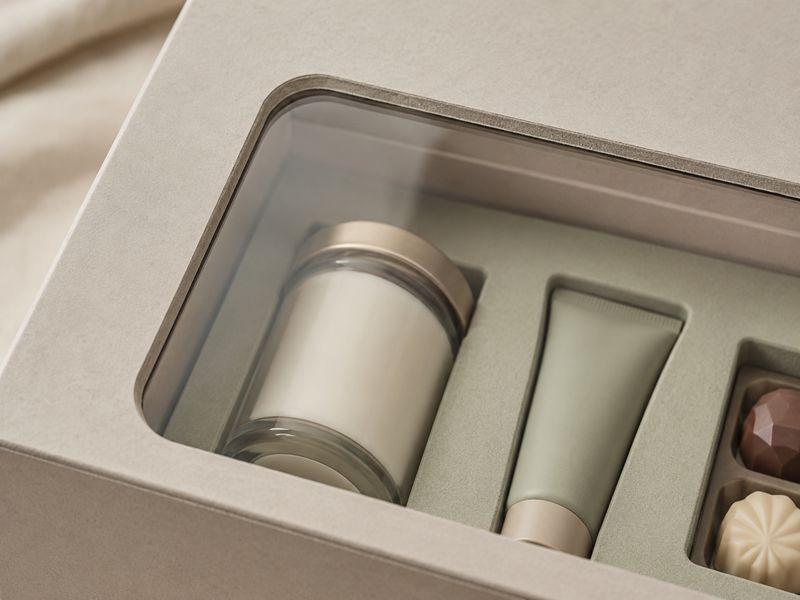
Product Protection
For protection, window patching film is usually the safer choice.
It helps reduce:
- Dust contact
- Fingerprints
- Product rubbing
- Accidental touching
- Small debris entering the box
- Surface scratches
- Moisture exposure to a limited degree
An unlaminated die-cut window offers less protection. The exposed opening can allow dust, air, and physical contact.
If the product is strong, wrapped, sealed, or placed behind an inner sleeve, this may not be a problem. But if the product surface is delicate, glossy, sticky, powdery, edible, or fragile, an open window can create more risk.
Sustainability Considerations
Many brands now compare window patching film and unlaminated die-cut windows from a sustainability angle.For brands that still want a film window but care about material choices, options may include:
| Film Option | Packaging Effect |
| PET film | Clear, strong, widely used |
| PP film | Lightweight and flexible |
| PLA film | Plant-based appearance for eco-positioning |
| Acetate film | Clear and smooth display effect |
| Frosted film | Softer, more premium look |
| Anti-scratch film | Better for luxury display surfaces |
The best choice depends on the product, local recycling expectations, brand positioning, and supplier capability.
Cost Difference
In most cases, an unlaminated die-cut window is simpler than window patching film. It removes the extra film material and patching process. This can help reduce production steps.
Window patching film usually costs more because it may involve:
- Film material
- Die-cutting
- Film patching
- Glue application
- Alignment control
- Additional inspection
- Possible anti-scratch or frosted film selection
For small brands or simple packaging projects, an open die-cut window may be attractive.For premium retail packaging, the additional cost of window patching film may be worthwhile.
Structural Strength Around the Window
A window weakens the box surface because part of the board is removed. This applies to both film-covered and open windows.
Window patching film can slightly support the window opening, but box strength still depends on board thickness, paper quality, window size, and edge distance.
For unlaminated die-cut windows, strong edges are more important because there is no film support, making the paper edge easier to bend, rub, or fray.
Better design choices include:
- Rounded window corners
- Enough border space around the window
- Smaller display openings for heavy products
- Thicker board for large windows
- Insert support behind the product
- Avoiding windows across fold lines
- Matching the window shape to the product shape
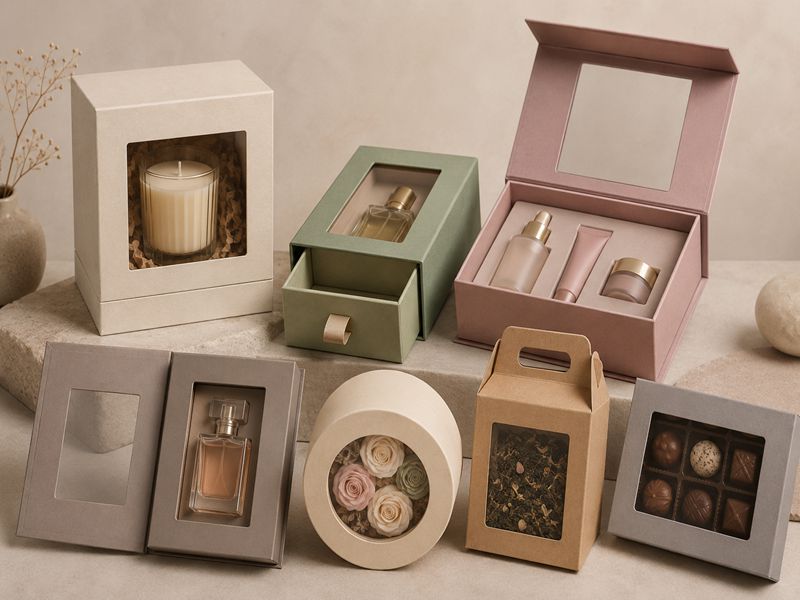
Applications on Different Box Types
| Box Type | Window Patching Film | Unlaminated Die-Cut Window |
| Two Piece Rigid Box | Clean lid display | Simple wrapped gifts |
| Hinged Lid Rigid Box | Premium protected view | Natural inner-protected items |
| Drawer Rigid Box | Sleeve preview | Small tactile products |
| Magnetic Rigid Box | Luxury retail display | Eco-style gifts |
| Shoulder Neck Box | Refined product reveal | Small open details |
| Book Style Box | Perfume / Jewelry / Kits | Insert-fixed products |
| Round Rigid Box | Candles / Tea / Cosmetics | Kraft handmade style |
Window design should match the box structure.The window choice can be adjusted by opening style, product position, and display purpose.
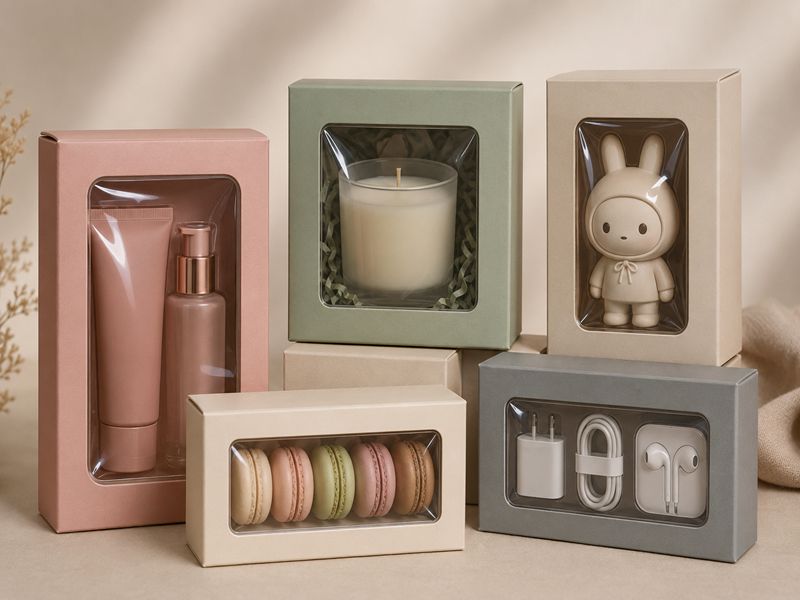
Best Products for Window Patching Film
| Product Type | Best Use | Key Benefit |
| Cosmetics | Lipstick / Skincare / Perfume | Clean product display |
| Candles | Jar candles / Wax melts / Diffusers | Shows color and style |
| Food Gifts | Chocolate / Macarons / Cookies | Better hygiene |
| Toys | Figurines / Collectibles | Visible but protected |
| Electronics | Cables / Earbuds / Watch straps | Easy product checking |
Window patching film is best for products that need clear visibility, cleaner display, and better protection during retail display or gifting.
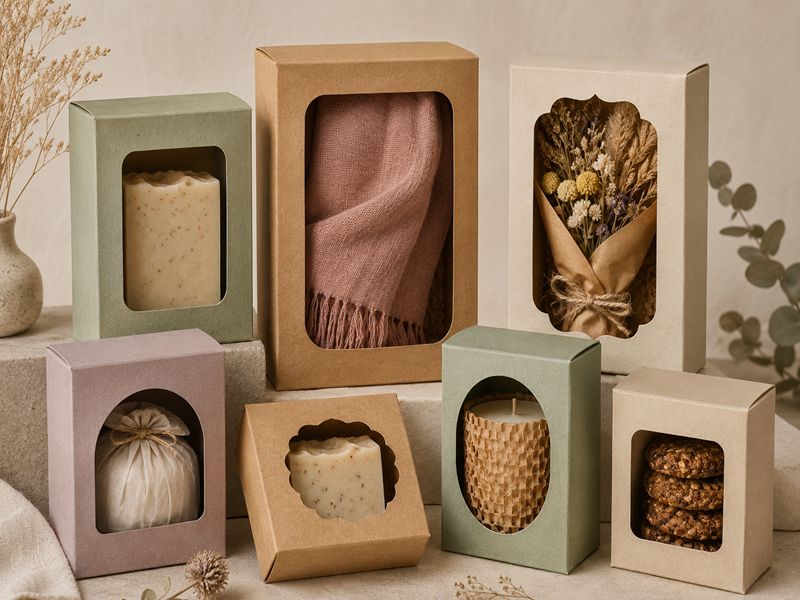
Best Products for Unlaminated Die-Cut Window
| Product Type | Best Use | Key Benefit |
| Handmade Soap | Soap bars / Bath bombs / Shampoo bars | Shows texture and scent |
| Fabric Gifts | Scarves / Socks / Hair bands | Allows direct touch |
| Eco Gifts | Kraft boxes / Dry flowers / Stationery | Natural paper-based look |
| Inner-Wrapped Products | Wrapped candles / Sealed soap / Snack packs | Open look with protection |
Best for durable, tactile, natural, or inner-wrapped products that benefit from open viewing, direct touch, and a simple paper-based look.
How to Choose Between the Two?
Choose Window Patching Film If:
- The product must stay clean
- Customers should not touch the product
- The box will be displayed in stores
- The product is fragile or high-value
- The surface scratches easily
- The product is food, cosmetic, or personal care related
- You want a polished retail look
- The packaging needs stronger dust protection
Choose Unlaminated Die-Cut Window If:
- The product is durable
- Touch or scent is part of the experience
- The brand style is natural or handmade
- You want to reduce plastic usage
- The product already has inner wrapping
- The packaging needs a simple paper-based look
- Budget control is important
- The window is small and well-supported
1. Window Shape and Size
Window shape and size influence both display and structure. Round windows feel soft, rectangles look clean, arches add elegance, and custom shapes highlight product identity.
For rigid boxes, keep windows away from edges and leave enough board width to support strength, stability, balance, neat die-cut finishing, and overall visual appeal.
2. Matching Windows with Inserts
Common insert options include:
| Insert Type | Best Use |
| EVA foam insert | Jewelry, tools, electronics |
| Paperboard insert | Cosmetics, candles, gift sets |
| Pulp insert | Eco-style packaging |
| Velvet insert | Jewelry, watches, premium gifts |
| PET tray | Food, cosmetics, retail products |
| Sponge insert | Fragile items and delicate surfaces |
For window patching film, the insert keeps the product aligned with the clear display area.
For unlaminated die-cut windows, the insert also prevents the product from pressing too far outward or becoming exposed in an uncontrolled way.
Common Mistakes to Avoid
- Making the Window Too Large
- Ignoring Product Movement
- Choosing Film Without Considering Scratches
- Using an Open Window for Sensitive Products
- Forgetting Shelf Lighting
- Poor Edge Finishing
For Custom packaging, the window should work together with the box structure, insert, paper material, printing, coating, finishing, and product position. When details are planned together, the box can show the product beautifully while still protecting the experience customers expect.