
Fit the cushion to the watch in its intended packed configuration, including the strap or bracelet, clasp and case. It should support the watch without stretching a closed bracelet, forcing a sharp strap bend or pressing the crystal against the lid. One cushion can serve several variants only when those variants have been checked individually.
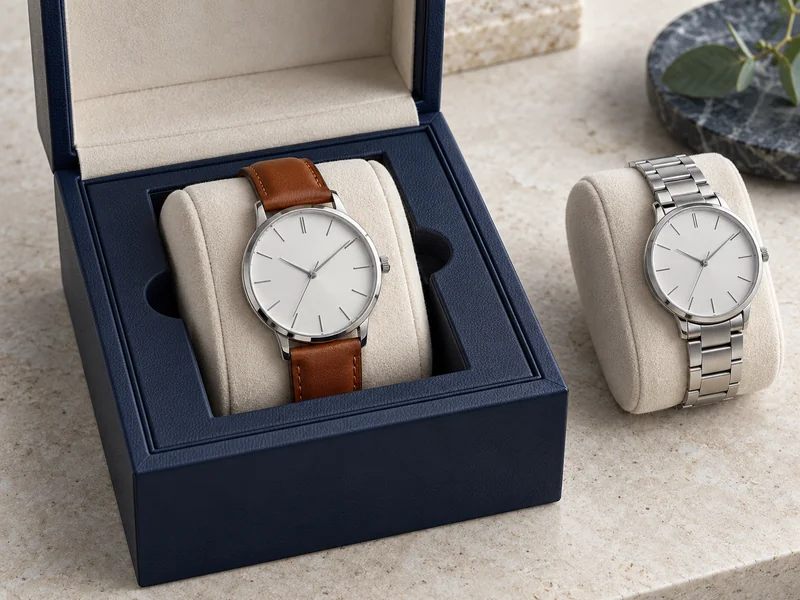
For a SevenRainbowpack watch-box project, treat the cushion as a shaped support component. The visible fabric is only one part of it. The core firmness, compressed size, seam position and seat in the box determine whether the watch actually rests as intended.
Which Watch Configuration Are You Fitting?
Begin with the exact presentation state: clasp closed around a cushion, strap buckled at an agreed hole, or an open strap arranged around a carrier. Record that state with a photograph. Otherwise, two people can assess the same cushion using different strap lengths and reach opposite conclusions.
For a metal bracelet, include the smallest and largest closed inner loops expected in the range. A display sample with extra links may accept a cushion that will not fit a sized watch. Confirm which configuration the customer will receive rather than designing around a convenient showroom example.
For leather, rubber and fabric, note the manufacturer’s guidance on bending and storage. A strap that can buckle around a wrist does not necessarily look good after being held around a tight cushion for an extended period. The gift-box fit should respect the product’s own construction.
For two-piece rigid boxes, SevenRainbowpack can develop the base around a cushion that lifts out with the watch. Alternatively, the recipient may release the strap while the cushion remains seated. Select that sequence early so the surrounding recesses give fingers access to the correct part.
What Does a Correct Metal-Bracelet Fit Feel Like?
The clasp should close in the agreed way without using the cushion as a lever or forcing the bracelet wider. A compressible core may accommodate a defined range, but compression should remain controlled and repeatable. An overfilled cushion can put continuous pressure on the closed assembly.
Look at the bracelet under the case and around the clasp. It should follow a natural supported route rather than folding sharply at one point. Keep hard hardware from pressing directly into the caseback or another finished surface.
An undersized cushion can be troublesome too. The watch may rotate, lean or sink into the seat, leaving the case in a different position from the approved front view. Increase appropriate support rather than tightening the surrounding box cavity indiscriminately.
| Strap Type | Fit Detail to Review |
| Metal bracelet | Closed inner loop, clasp position and hardware contact. |
| Leather strap | Curve at the lugs, buckle position and lasting crease marks. |
| Rubber or silicone strap | Natural spring-back, buckle contact and stability around the cushion. |
| Fabric strap | Folds, loose tail routing and the way thickness builds underneath. |
How Should a Cushion Support Leather Straps?
Use a generous, smooth curve that suits the actual strap and case geometry. Check the transition beside the lugs, where a sharply shaped cushion can force the strap downward. The top of the cushion should support the presentation without becoming an oversized block beneath the case.
Place the buckle and strap tail deliberately. A buckle hidden underneath can form a hard local lump; a tail tucked randomly behind the cushion can change its effective size. Include that routing in the packing photograph.
Inspect the leather after the agreed packed-storage interval. Look for unwanted creasing, impressions and contact transfer, then ask the watch supplier to judge acceptability. A brief fitting demonstration cannot reveal every effect of extended restraint.
Does a Softer Cushion Solve Every Strap Problem?
No: very soft filling can collapse unevenly and let the case tilt. A firmer, correctly shaped core may support the case better while leaving appropriate give around the strap. Compare actual prototypes rather than choosing by the softness of a fabric swatch.
Record the cushion’s unloaded dimensions and its fitted shape around representative watches. The compressible perimeter matters as much as its width and height. Two cushions with the same outer measurements can behave differently when their cores differ.
What Changes With Rubber and Fabric Straps?
A rubber or silicone strap may try to return toward its natural shape. Check whether that spring-back lifts the case or pushes the cushion out of its seat. The solution may be a different cushion profile or packing configuration, not more pressure from the lid.
A fabric strap can create layered thickness where the tail is folded underneath. Keep that fold away from the caseback and make its route repeatable. Avoid asking the packer to tuck spare material wherever it happens to fit.
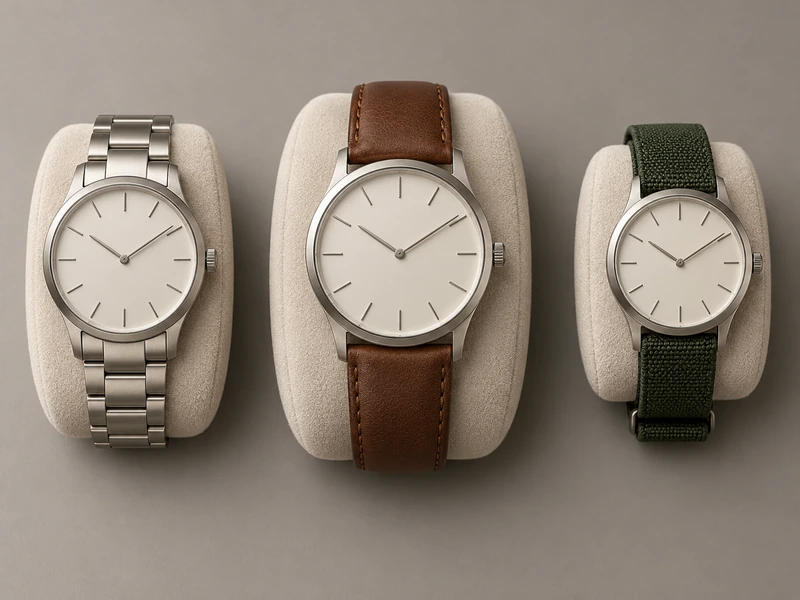
For interchangeable straps, give spare straps their own pocket or carrier. Loose hardware should not share the watch cushion’s cavity. Our article on separating a main product from accessories explores that layout problem in another compact gift format; the separation principle is useful here too.
Which Surfaces Can Touch the Watch?
Review the covering, seams, thread ends, underside and any concealed core edges. A plush top can hide a rough seam against the clasp. Specify where the seam belongs relative to the case and strap route.
GIA recommends protected, padded storage in its jewelry storage guidance. For a watch-box project, that is a reason to examine every contact area, rather than evidence that a selected textile suits the finish. Approval of the covering still belongs with the watch supplier and the actual materials under consideration.
Check pale linings with dark straps and dark linings with polished metal. Look for transfer, shedding and trapped debris after handling. Keep exposed adhesive out of the watch’s contact path and do not assume a luxurious appearance proves a suitable contact surface.
How Does the Cushion Fit the Box?
The seat should locate the loaded cushion while leaving an understandable lifting point. If the entire cushion is buried between tall walls, the user may grip the watch case instead. A discreet side recess can make the intended action clear.
SevenRainbowpack’s shoulder neck rigid boxes can frame a watch attractively. Review the shoulder height against the loaded cushion and fingers, not just against an empty cavity. The frame should reveal the watch rather than obstruct its removal.
Our easier-opening details guide is relevant to this last step. Ask a person who did not pack the watch to remove it. Any attempt to pull on the crown, bracelet or case shows that the lifting cue needs work.
How Much Headroom Is Needed Above the Case?
Enough for the actual case height, crystal profile and approved presentation angle, with the lid clear under expected use. Do not size that gap from an empty cushion. A thick case or an upward-tilted watch can be much taller than the nominal cushion surface.
Check cards or booklets stored in the lid as well. Their edges, pockets and contents occupy space when closed. The lid lining should not become the restraint holding a watch down on its cushion.
Should the Watch Face Be Tilted for Presentation?
A slight presentation angle can make a watch easier to see, but develop it through the cushion seat rather than by forcing the strap into an uneven position. Support the cushion consistently and check that the case remains stable. A tilted display should not depend on the crown or clasp bearing against the box.
Compare the front view with the actual closed section. Raising the front of the cushion can bring one edge of the crystal closer to the lid even when the overall cushion height seems unchanged. Include the thickest watch in that review.
Also inspect the caseback and lower bracelet route, which become less visible as the watch tilts toward the viewer. Hidden hardware contact is still contact. The packing photograph should include a reverse or side view that shows how the strap sits around the support.
If the collection includes noticeably different case sizes, a common presentation angle may not give a common appearance. Adjust the seat or cushion variant deliberately instead of asking packers to arrange each watch by eye.
When Are Two Cushion Sizes Better Than One?
Use separate sizes when the fit range would otherwise require forcing one watch or leaving another loose. A common outer box with identified cushion variants can preserve the collection’s appearance. It also makes the acceptable fit easier to define.
Our multi-SKU rigid box system guide helps distinguish the parts worth sharing from those that need variation. Give each cushion a clear packing reference, including the strap setting and clasp position. A visually identical cushion with a different core needs an operational identity.
Send SevenRainbowpack the watch variants, intended packed states and contact-material requirements. Approve the cushion loaded in its final seat, then inspect removal and repacking. A well-fitted watch should look composed because it is properly supported, not because the strap has been pulled into a photograph.