
Easier-opening gift boxes combine an obvious starting point, a usable grip, a controlled opening movement, and enough room to remove the contents. These details work together: a generous ribbon is less helpful if nobody can see it, and an easy lid offers little benefit when the product remains trapped in its insert. Designing the whole sequence can make an ordinary gift feel more welcoming to different hands.
People approach packaging with different grip strength, dexterity, vision, and experience. Someone may also be opening a gift while holding another object or sitting at a crowded table. A considerate design allows the presentation to remain special without depending on a very precise pinch or an unexplained trick.
Where Does the Opening Experience Become Difficult?
Difficulty often appears at a transition: finding the opening, getting hold of it, moving the lid or tray, and lifting the product. Looking at those moments separately helps a designer see what the next physical action actually requires. A visually simple box can still ask the recipient to make several awkward movements.
The Principles of Universal Design published by NC State include clear information, reduced physical effort, and space for different ways of handling an object. Those principles inform the suggestions here; they do not certify a particular gift box or prove that one design works for everyone. The aim is to remove avoidable obstacles while preserving the box’s protective role.
Consider a fictional stationery gift presented in a drawer box. The recipient sees a smooth sleeve, but a narrow ribbon lies flat beneath its edge and the tray offers no obvious grip. The problem begins before any force is applied: the person must first discover what is supposed to move.
Four Small Changes That Clarify the Experience
Make the Starting Point Visible
A visible notch, an exposed pull, or a short instruction can identify the intended opening edge. These cues are most useful when they agree with the actual movement. A prominent ribbon that is only decorative may direct attention to the wrong place.
Place the cue where the recipient naturally encounters it when the box is upright. A dark pull on a similarly dark surface may disappear visually even when it is physically accessible. Contrast in tone, shape, or texture can help distinguish the working part without turning the whole package into an instruction label.
Words can help too, especially when the opening method is unfamiliar. A brief phrase such as “Slide the tray toward you” explains more than a decorative arrow without context. Keep essential guidance on the package rather than making a phone scan the only route to understanding it.
Offer More Than a Tiny Pinch Point
A broad, loose ribbon loop can offer a larger area to grasp than a very short flat tab. Its usefulness depends on its position, the space behind it, and the resistance of the moving part. Width alone does not establish that a pull will be comfortable for every recipient.
Seven Rainbow’s drawer rigid box options include ribbon pulls and finger-access features. In a design concept, those details can be made part of the visual identity instead of concealed as functional necessities. A contrasting woven pull, for instance, can become the natural focal point of a quiet sleeve.
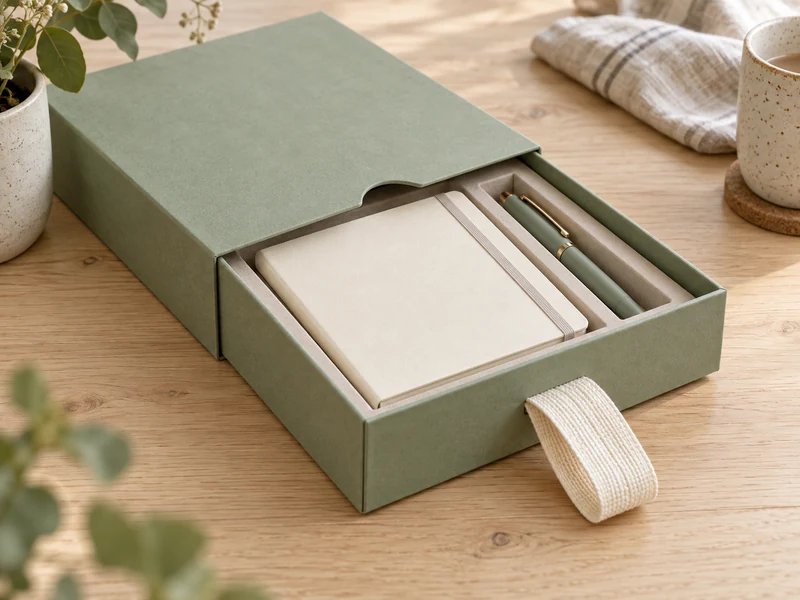
Keep the loop free from tight decorative knots that must be undone before it can work. If a separate ribbon wraps around the entire package, its removal should not hide the actual opening feature beneath loose material. Every added layer changes the sequence the recipient has to understand.
Give the Other Hand Somewhere to Rest
Opening often involves one hand moving a part while the other steadies the package. A broad, unobstructed area on the sleeve or base can support that second role. A glossy surface, busy wrapping, or an awkwardly placed ornament may make the intended grip less obvious.
A drawer needs space to travel as well as somewhere to hold its sleeve. A lift-off lid needs a way to steady the base without covering the opening edge. Neither format is automatically easiest; their movements ask different things from the person and the available tabletop.
The comparison of drawer rigid box styles shows how layouts change the relationship between sleeve and tray. For a gift-opening story, choose the movement that makes the contents understandable and gives the recipient room to act. Avoid adding hidden stages solely to create a longer reveal.
Continue the Help Inside the Box
Once the lid is open, leave a practical way to lift each item. Finger recesses beside a jar or a visible lifting ribbon beneath a flat object can provide an alternative to gripping a small exposed edge. The feature should be located where its purpose is apparent.
A lifting ribbon needs enough exposed length to take hold of and a path that supports the intended movement. It should not encourage someone to jerk a fragile product upward or pull against a part that cannot move. The exact arrangement depends on the product’s weight, shape, and required support.
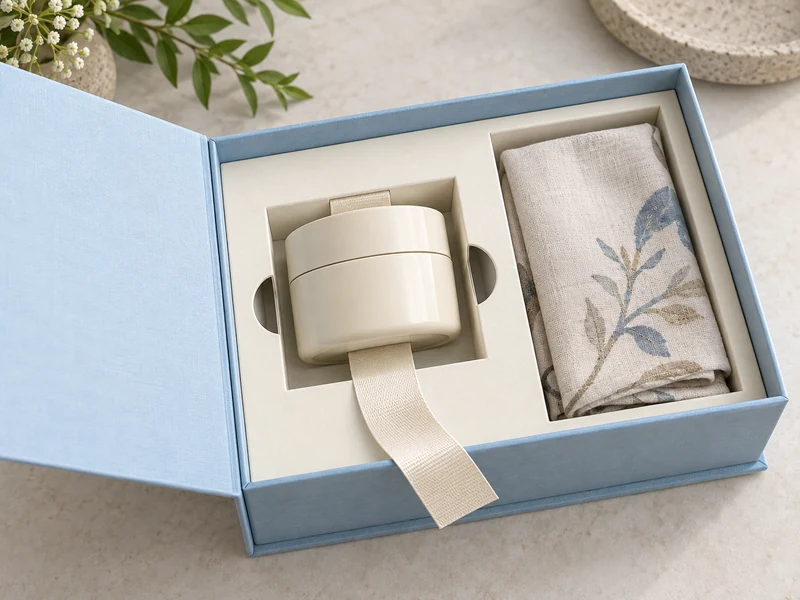
The possibilities in rigid box inserts can be considered alongside access, not only appearance. Keeping a product secure and leaving space to reach it are related design problems. A well-organized cavity can do both without forcing the recipient to dig into the surrounding material.
Follow One Gift From Closed Box to Product in Hand
Imagine a book-style gift containing a small jar and a folded fabric accessory. The following sequence is a design example, rather than a claim about the performance of a finished product. It shows how individual details can form one understandable experience.
- Recognize the front. A visible lip and a short opening cue distinguish the opening edge from the hinge.
- Set the box down. The presentation leaves a clear area for stabilizing the base on a suitable surface.
- Lift the lid. The recipient can reach the intended grip without first removing a tightly tied decoration.
- Identify the contents. Labels and the arrangement make the jar and accessory recognizable before either is removed.
- Lift one item. A finger recess or clearly placed ribbon provides access while the other item remains supported.
- Return or close. The insert and lid remain understandable when the recipient puts the item back.
A book-style rigid box can keep the lid attached during this sequence, reducing the need to find a separate resting place for it. That can be useful on a small table, provided the open lid has sufficient clearance. It does not remove the need to consider closure resistance and access to the contents.
Choose Details That Solve a Specific Difficulty
The most useful feature responds to a recognizable obstacle. Adding every possible aid can make a package more complicated rather than clearer. The following pairings are design starting points, not universal dimensions or performance guarantees.
| Opening Difficulty | Possible Design Response |
| The moving edge is hard to find | A visible notch and a short instruction at that edge |
| The pull lies flat and is hard to grasp | An exposed loop with space behind it |
| The whole box moves with the tray | A clear stabilizing area and a suitable opening movement |
| The product sits below the insert surface | Finger recesses or a deliberately positioned lifting ribbon |
Explain an unusual feature where it is encountered, rather than in a paragraph far away from the action. A short guide can support the experience when the contents need an introduction, and printed insert cards provide a place for that context. The physical cue should still carry as much of the opening explanation as possible.
Questions About Easier-Opening Gift Boxes
Does a Ribbon Automatically Make a Box Easier to Open?
No: a ribbon can be hidden, too short to grasp, or connected to a part that requires substantial resistance to move. Its position and the surrounding space matter alongside its dimensions. Treat the pull and the moving structure as one interaction.
Can a Minimal Design Still Give Clear Instructions?
Yes, if it makes the essential cue prominent and keeps decorative information secondary. A small readable phrase beside an obvious opening feature can be more effective than multiple faint symbols scattered across the box. Minimalism works when it removes distraction rather than useful guidance.
Can One Opening Style Suit Every Person?
No single arrangement should be presented as universally effortless. Different people may prefer different grips, movements, and support surfaces, so direct feedback from intended users remains valuable during design development. An easier-opening concept is an invitation to improve those interactions, not a reason to claim universal accessibility.
The most considerate gift box makes the next action apparent: where to begin, what to hold, which part moves, and how to reach the gift. When these details agree, the recipient can spend more attention on the contents and less on deciphering the package. That is a meaningful form of care to build into the presentation itself.