
Reinforce a collapsible rigid box by tracing the product’s load through the insert, floor, walls and assembled corners. Strengthening only the lid or adding a thicker decorative wrap will not repair a weak floor or a corner that opens under load. The useful reinforcement is the one placed where the weight actually travels.

SevenRainbowpack’s collapsible rigid boxes combine a rigid presentation with a structure that folds for storage and delivery. For a heavy gift, preserve that folding function deliberately. A reinforcement that permanently bridges every moving joint may turn the proposal into a different box.
1. Can a Separate Floor Spreader Support the Product Better?
A fitted base pad can spread concentrated contact from a heavy jar, bottle or device across a larger area of the floor. Size and support it as a structural part. A loose decorative card underneath the product may move or bend without providing useful distribution.
Look at the underside of the insert. If its feet land in a few narrow spots, those spots can govern floor deformation. A spreader may help, but it must itself bear on supported areas rather than span a large unsupported gap.
Decide whether the pad travels flat with the box or is added during assembly. A separate part can retain the storage advantage while requiring an additional packing step. Show its correct orientation and position in the assembly reference.
Does Every Heavy Product Need a Thicker Floor?
Not necessarily: the contact footprint and support arrangement matter alongside mass. A broad product base and a small hard foot can load the same floor very differently. Compare representative products in the actual insert before selecting the reinforcement.
Inspect the floor after the agreed handling and storage conditions. A temporary bend that recovers and a lasting crease are different outcomes. Define which condition is acceptable for the gift rather than relying on the box looking level while empty.
2. Are the Assembled Corners Positively Secured?
Review how the collapsible walls become a stable box. Depending on the construction, adhesive panels, tabs or other assembly features may establish the corners. These features should be fully engaged and appropriate for the proposed load and use.
Keep a magnetic lid closure separate from corner retention. Magnets that hold the lid shut do not automatically hold the sidewalls in their assembled geometry. Ask which component prevents the wall from peeling or unfolding when the heavy product shifts.
Check the real wrap and bonding surfaces around the assembly area. A material or coating change can affect the interface and should be assessed by the manufacturer. More adhesive is not a useful instruction without identifying the load and the suitable bond arrangement.
| Reinforcement | Function and Tradeoff |
| Fitted floor spreader | Distributes contact load; adds a component and some height. |
| Improved corner retention | Keeps walls assembled; must suit the intended setup and reuse. |
| Local wall or edge support | Supports vulnerable spans; must stay clear of folding joints. |
| Load-aware insert | Locates contents and transfers weight; needs an examined underside. |
| Suitable outer transport pack | Protects the shipment; does not replace the gift box’s own support. |
3. Which Walls and Edges Need Local Support?
Support the areas that deform under the intended load rather than increasing every board panel equally. A long sidewall, a vulnerable bottom edge or an assembly corner may need a different response. Examine a loaded sample to locate the weak span.
Doubling a local panel can help in some constructions, but it changes folded thickness and setup behavior. Keep reinforcement clear of moving joints unless the structure has been redesigned for it. Check the flattened pack as well as the erected box.
If the product will be lifted by the box, define where the hands go. A broad base grip loads the structure differently from pinching two sidewalls. Do not add a handle and infer a carrying capacity from its appearance.
Our packaging design brief guide is useful for describing those actions. Include carrying, shelf storage and customer removal as separate situations. Each can expose a different part of the structure.
When Is a Non-Collapsible Box the Better Choice?
When achieving the required support would compromise folding, setup or the desired presentation too severely. Compare a conventional two-piece rigid box as a genuine alternative during development. The decision should account for the complete packing and logistics process.
Avoid preserving a flat-pack claim at the cost of an awkward assembly with many hidden reinforcement pieces. A simpler erected construction may serve a particular heavy product better. Let the sample and operating requirements decide.
4. Does the Insert Transfer Weight to the Right Places?
An insert should do more than make the products look aligned. Its supports must carry weight to the intended floor areas while limiting migration. Deep cavities that suspend a heavy item on a thin rim deserve particular attention.
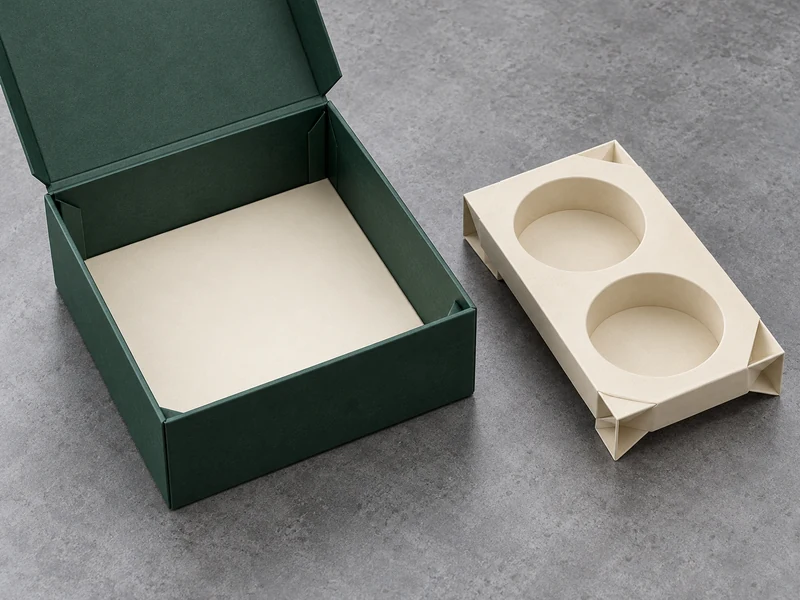
For a mixed set, keep heavy items supported near the base where practical and prevent them striking lighter accessories. Check the arrangement when one item is removed. The remaining load should not leave the box unexpectedly unstable.
Our balanced perfume gift-set layout article considers the presentation relationship between different sizes. Apply that visual planning alongside a structural view of the underside. The most balanced photograph can still conceal uneven floor loading.
Do not rely on the lid to pin a heavy item down. Give the product a defined seat and appropriate restraint, with clearance for the closure. A compressed lid lining can mask movement during a short demonstration while leaving continuous pressure on a cap or delicate surface.
Can an Insert Also Brace the Walls?
It can contribute when designed and evaluated for that role. A fitted perimeter may help locate the assembled walls, but it should not force them outward or conceal incomplete corner engagement. State the intended structural function rather than assuming any tight insert is reinforcement.
Review removal too. If the customer takes out the insert for reuse, the box may lose that contribution. Decide whether the empty reusable box needs the same support and describe the intended condition honestly.
5. Has the Complete Shipping Pack Been Evaluated?
Use the gift box, intended outer carton and cushioning as one defined system for transport evaluation. A heavy rigid gift box is not automatically a parcel shipper. The outer pack needs to control movement and distribute the hazards of the intended route.
For shipping evaluation, ISTA’s design and testing guidance links test selection to distribution conditions and asks that acceptable damage be defined in advance. Have the assessment cover the pack-out intended for those shipments. Treat an informal lift or a single successful delivery as limited feedback, rather than evidence for a carrying-weight claim.
Inspect the floor, corners, bonds and product position afterward. Record whether the box still closes squarely and presents the gift as intended. An intact product inside a visibly distorted gift box may fail the brand’s acceptance criteria.
What Does an Assembly Trial Reveal?
Set out the flat box, loose reinforcing parts and written packing sequence for a person unfamiliar with the structure. Record any uncertainty over a corner fold or the position of a base pad. If a successful setup requires the sample maker’s unrecorded demonstration, improve the instruction or construction before treating that build as repeatable.
Then load the actual product and examine the base from below before closing the lid. Look for unsupported spans, a pad shifted away from its intended position or an insert foot sitting across a folding line. These observations connect the assembly method to the load path.
If the design uses adhesive assembly panels, record the manufacturer’s setup requirements and how full engagement is checked. Do not substitute an improvised waiting time or pressing method. The approved process should come from the materials and construction being supplied.
Finally, flatten and reassemble a sample only if repeated folding is part of the intended use. Some constructions are designed for initial setup rather than frequent reversal; the claimed benefit should match the actual structure.
Which Details Must Stay Consistent in Production?
Tie the approved reference to the board build, reinforcement parts, insert version and assembly instructions. A stronger prototype made with a different floor pad is not evidence for a later simplified pack. Identify the structural parts clearly enough that packing teams can verify them.
Use our sample-stage guide to move from concept to representative build. Check setup with the intended operators and materials. A corner that only the sample maker can assemble neatly is a process problem waiting to become a structural one.
Send SevenRainbowpack the product mass, contact footprint, center-of-gravity concerns, intended carrying method and shipping configuration. Ask for reinforcement proposals tied to those facts. The strongest useful collapsible box is one whose load path, folding function and packing process have all been considered together.