
A chocolate gift box becomes a tasting journey when its arrangement helps people identify each piece, decide where to begin, and notice what changes from one chocolate to the next. Clear compartments, a readable flavor map, and a short invitation to taste can turn an attractive assortment into an experience people share. The packaging should make discovery easier while leaving the chocolate itself at the center.
What Turns an Assortment Into an Experience?
Imagine two people opening a chocolate gift after dinner. They see several beautiful pieces, but neither can tell which contains a filling they enjoy or whether the printed descriptions match the arrangement. The pleasure of choosing quickly becomes a small guessing game.
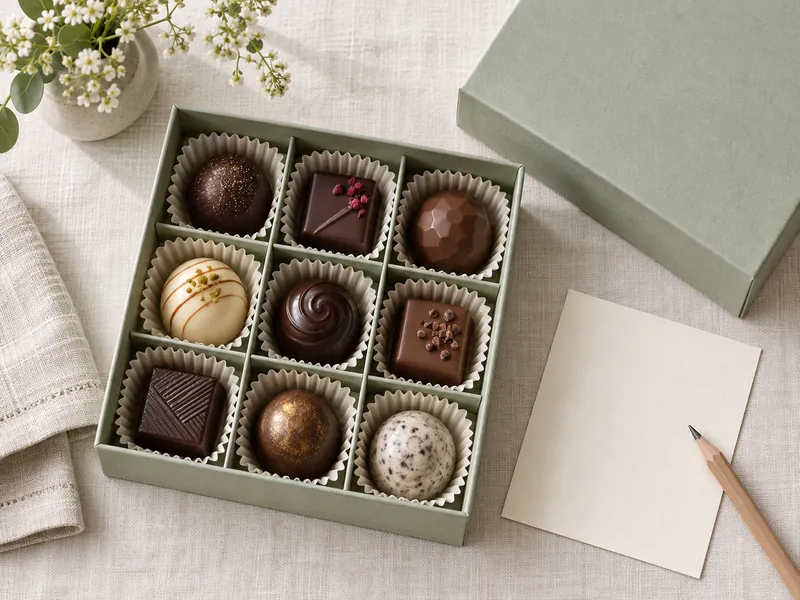
Now imagine the same moment with a simple map that follows the tray layout. Each piece has a recognizable position, the descriptions are brief, and the suggested starting point is optional. This illustrative scene shows the role of packaging: it creates a clear invitation without dictating how every recipient must eat.
Sevenrainbowpack’s rigid chocolate packaging includes formats for bars, truffles, and assorted collections. Those products create different opportunities for storytelling because a row of wrapped bars is read differently from a grid of small bonbons. The experience should begin with the actual chocolate assortment.
How Can the Tray Become a Map?
The tray becomes a map when the printed information and the physical arrangement use the same orientation. A recipient should be able to move from a description to its chocolate without rotating the card several times. Consistent positions are particularly helpful when pieces look similar.
Where Does the Journey Begin?
Provide a gentle starting cue, such as a short introductory line or a clearly organized first row. A suggested sequence can move from a quieter flavor toward a more assertive one, but it should be based on the chocolatier’s actual recipes. Cocoa percentage alone cannot describe the intensity of every filled or flavored chocolate.
For a mixed collection, grouping by a theme may feel more natural than ranking from mild to strong. A row could explore textures, another could introduce contrasting fillings, and another could focus on origin-specific bars. Keep the grouping honest: an origin statement and an ingredient statement communicate different things.
How Should Similar Pieces Be Identified?
Use more than color alone. Position, a small symbol, a name, or a simple code can help connect the piece to its description. Any marks should remain understandable when the box is turned or when one chocolate has already been removed.
Our overview of chocolate types and their packaging explains why bars, pralines, and other forms need different arrangements. For a tasting story, that distinction becomes a creative tool. A flat bar offers space for its own wrapper, while a small bonbon often depends more heavily on the shared map.
Which Details Help at Each Moment?
Different details matter at different stages of the tasting. Keep the first view simple, then make deeper information available when the recipient wants it. The following table describes editorial design ideas, not a fixed specification for every chocolate box.
| Moment | Packaging Detail | Purpose |
| Opening | Clearly oriented tray and map | Show what is inside without a search |
| Choosing | Piece name and accurate filling description | Help the recipient make an informed choice |
| Tasting | Short prompts with room for personal notes | Encourage observation without prescribing an answer |
| Sharing | Easy access to individual cups or wrappers | Keep the remaining assortment orderly |
| Returning Later | Retained identification and storage information | Keep the collection understandable after pieces are removed |
The map should stay useful as the tray empties. If every description depends on a chocolate’s decoration, identification may become difficult after the recipient moves pieces onto plates. A retained position key or individual wrapper can carry the information beyond the first opening.
There is also a practical distinction between decorative separation and appropriate food-contact packaging. A rigid outer shell does not establish that every paper, coating, ink, or insert is suitable for direct contact with chocolate. The complete pack must use materials appropriate to the intended food and conditions of use.
How Can the Box Invite a Relaxed Tasting?
Offer a few easy actions rather than a formal scoring exercise. Most gift recipients want to enjoy the chocolates and talk about their impressions. A small amount of guidance can give them confidence while leaving space for different preferences.
- Find the piece. Read its name and relevant ingredient information before selecting it.
- Notice the appearance. Look at its shape and surface without treating color as a complete guide to flavor.
- Explore the aroma. Take a moment to notice what is present before the first bite.
- Taste slowly. Observe how the texture and flavor develop, allowing time between pieces.
- Describe it personally. Record a word or two, or share an impression with someone at the table.
The Cocoa of Excellence chocolate tasting guide provides a useful reference for attending to aroma, texture, and the progression of flavor. Its professional tasting context is more detailed than a casual gift experience. A consumer-facing card can borrow the principle of attentive observation without copying a technical score sheet.
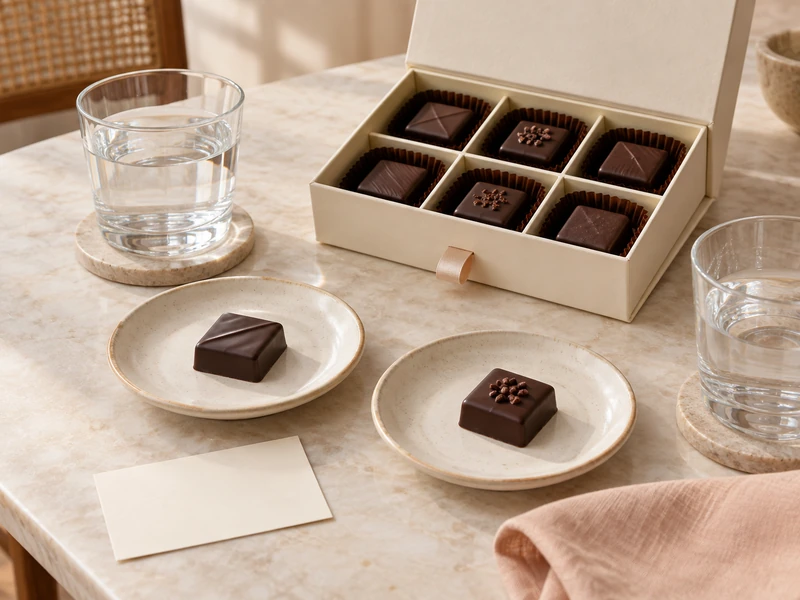
Keep the setting comfortable and avoid distracting strong odors. Water can be placed nearby for a pause between samples, with glasses kept away from the paper packaging. Always follow the chocolate maker’s storage and serving instructions, particularly when the collection includes fillings with different requirements.
How Much Story Belongs on the Packaging?
Enough to make a piece more understandable, without interrupting the act of enjoying it. A concise description can explain a genuine ingredient, a documented origin, or a creative pairing. Decorative language should not blur those categories or create claims the producer cannot support.
What Should the Flavor Card Say?
Lead with the chocolate’s identity and then add one useful detail. For a hypothetical collection, “Dark Chocolate With Raspberry Filling” conveys a different kind of information from a tasting note that mentions a berry-like aroma. One describes an ingredient; the other describes an impression.
Do not let poetic copy hide information people need before eating. Ingredient, allergen, and other required food information must remain accurate and accessible in the form required for the relevant market. A removable storytelling card should complement that information, not substitute for it.
The site’s article on printed insert cards for gift boxes offers a broader view of how a card can support an unboxing. For chocolate, give the card a specific purpose: identification, a tasting invitation, or a verified producer story. Combining all possible messages on one small card often makes each harder to read.
When Does a Longer Story Work?
A longer story works when the collection genuinely has more to explain and the reader can choose when to engage with it. A booklet might accompany an origin exploration, while a short card may be enough for a small seasonal assortment. Information depth should follow the collection, not the amount of empty space on the lid.
What Changes When Chocolates Are Shared?
Shared tasting makes visibility and access more important. People should be able to identify a piece without passing the whole box around repeatedly. A lid placed aside, a readable card, and clear compartments can keep the experience comfortable at a small table.
A drawer rigid box introduces a sliding reveal, but the tray still needs a stable place to rest during serving. Once open, the arrangement should be easy to approach from the expected seating positions. Avoid relying on a dramatic opening motion as the entire experience.
Our guide to rigid box inserts describes ways products can be organized inside a box. In a chocolate tasting setting, the relevant question is how the layout supports separation and comfortable access. Material suitability for the food remains a separate requirement from the visual arrangement.
What Do Recipients Often Want to Know?
Must Everyone Follow the Suggested Order?
No. Present the sequence as an invitation, allowing people to begin with a familiar flavor or share pieces in a different order. The map should help them navigate either way.
Does a Larger Assortment Make a Better Journey?
Not automatically. A smaller set with clear identities can offer a more coherent experience than a large tray with little explanation. Give each included piece a reason to be part of the story.
What Makes the Experience Memorable?
A clear connection between the chocolates, their arrangement, and the information that accompanies them. When recipients can find their way, share a discovery, and return to a favorite piece, the packaging has done something useful. It has made the tasting feel welcoming.