
A ribbon pull generally offers a more visible grasping point, while a thumb notch keeps a drawer box’s front simpler and exposes part of the tray for opening. Neither is inherently better: the right choice depends on loaded weight, sleeve resistance, grip space and the way the customer will hold the box.
Seven Rainbow customises drawer boxes with different inserts, finishes and pull details. The opening feature should be sampled alongside those choices, because a beautiful ribbon cannot correct a binding tray and a discreet notch cannot compensate for inaccessible fingers.
What Does Each Opening Feature Actually Do?
A ribbon pull attaches to the tray and presents a loop or tab outside the sleeve. The user grasps it and draws the tray towards them while stabilising the sleeve.
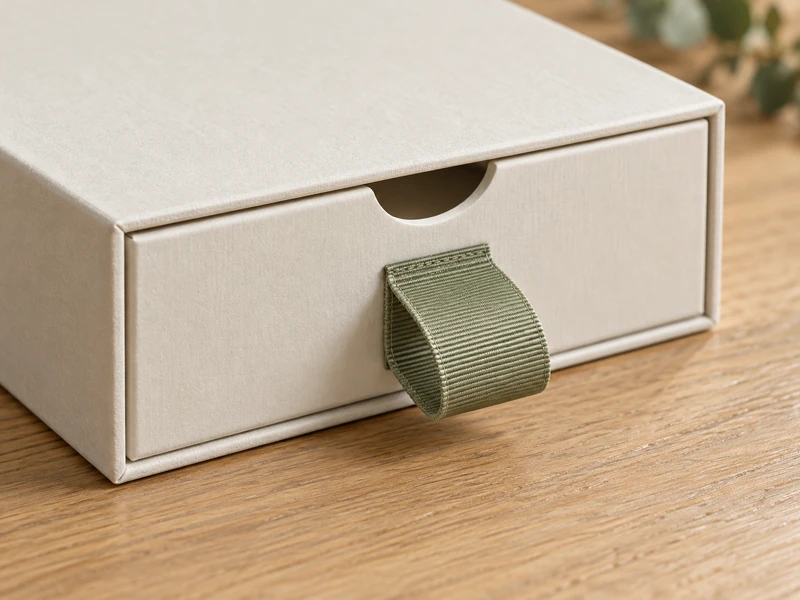
A thumb notch removes part of the sleeve edge to expose the tray front. The user then grips or pushes the accessible tray surface, depending on the exact construction.
Show that construction on the drawing. A notch in the sleeve and a notch in the tray are not interchangeable details, and a shallow decorative crescent may provide less useful access than its appearance suggests.
Start with the custom drawer rigid box structure, then identify where the opening force enters the assembly. That makes the comparison more practical than choosing between “romantic ribbon” and “minimal notch.”
When Does a Ribbon Pull Make the Most Sense?
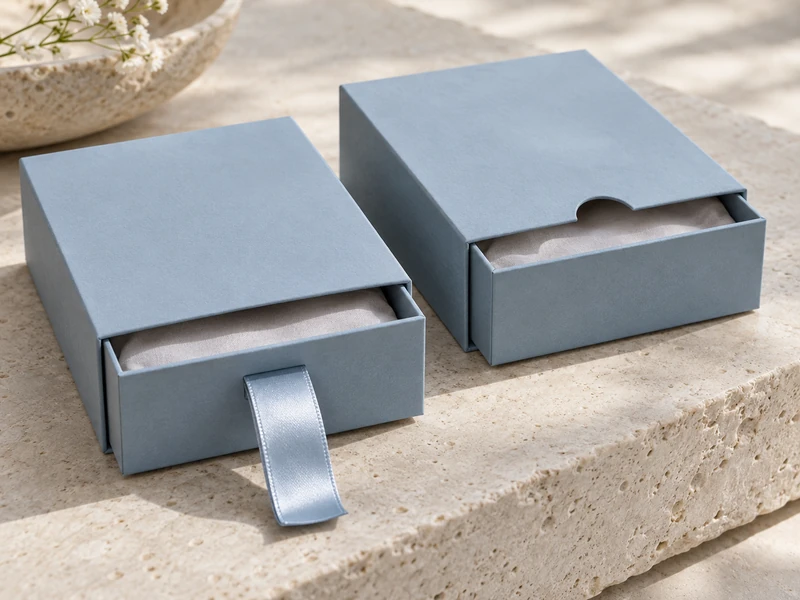
A ribbon is useful when the tray front would otherwise be hard to grip, or when the design benefits from an obvious invitation to open. It can also carry a quiet colour accent across an otherwise restrained package.
For a mist-blue candle drawer, for example, a matching woven loop can make the opening point clear without adding printed instructions. A contrasting sage loop on ivory creates a stronger visual cue.
Width, exposed length and surface texture all affect the grasp. A tiny slippery tab may look delicate but be awkward to pinch; an oversized loop can catch during packing or look untidy against the closed sleeve.
What Needs Reinforcement Behind the Ribbon?
The attachment must transfer the pull into the tray without peeling the visible wrap or tearing a small local area. Review how the ribbon passes through or bonds to the tray front, including any concealed reinforcement.
Test with the loaded contents and finished sleeve. A pull that survives an empty demonstration may face greater force when a heavy jar and tight insert are added.
Also check the inside face of the tray front. The ribbon attachment should not create a ridge that presses against a product or interferes with insert placement.
When Is a Thumb Notch the Better Choice?
A notch can suit a compact drawer with a tray that is easy to engage directly. It reduces the visible accessory count and keeps the closed front visually quiet.
The notch must expose a useful gripping area rather than merely reveal a sliver of the tray. Its position should also fit the way the box will be held, especially when the user needs the other hand to stabilise a broad sleeve.
Check the wrapped edge around the cutout. Tight curves, thick surface materials and layered paper can make that small area harder to finish neatly than a straight front edge.
A very narrow notch can encourage fingernail use. If testers repeatedly hook a nail into the gap, enlarge or reposition the access feature instead of treating the behaviour as user error.
How Do the Two Options Compare in a Loaded Sample?
Compare versions with the same sleeve, tray, insert and contents. Otherwise, differences in fit can be mistaken for differences caused by the ribbon or notch.
| Review Point | Ribbon Pull | Thumb Notch |
| Opening Cue | Visible tab or loop indicates where to pull | Cutout exposes the tray at a chosen point |
| Grip | Depends on ribbon width, texture and length | Depends on notch size and exposed tray area |
| Construction Detail | Attachment and reinforcement need review | Cut edge and wrapping need review |
| Appearance | Adds a material and colour accent | Keeps the front relatively restrained |
| Handling Risk | Loop may snag or encourage a sharp tug | Insufficient access may encourage squeezing or nail use |
The goal is a controlled opening, not the lowest possible pull resistance. A tray that releases too suddenly can be awkward even when the grasping feature is comfortable.
How Much Does Sleeve Fit Influence the Decision?
It influences both options substantially. If the tray binds, the ribbon experiences higher loads and the notch user may squeeze or twist the sleeve to compensate.
Resolve corner interference, squareness and surface build-up before judging the opening aid. Then compare the final materials, since a change of lining or finish can alter the sliding feel.
Seven Rainbow’s sample-stage comparison is useful here. A white sample can settle geometry, while the finished sample establishes what the chosen paper and ribbon feel like together.
Can Both Features Be Used Together?
Yes, if each has a clear purpose. A shallow notch can expose the front edge while a broad ribbon provides the main pull, but adding both should follow a successful handling trial.
Extra details can also create visual clutter or unnecessary assembly. If the ribbon already provides clear, comfortable access, a second feature may contribute little.
How Will Customers With Different Grips Open This Drawer?
Compare the loaded prototypes in use; a front-view rendering offers no evidence of a comfortable grasp. Ask people with different hand sizes and grip preferences to open the loaded sample without coaching.
Observe whether they can locate the feature, establish a grip and draw the tray smoothly while supporting the sleeve. Record any need for repeated pinching, fingernails or abrupt pulling.
The NC State principles of universal design call for manageable operating effort and room for different hand and grip sizes. Applied to a drawer, those principles suggest assessing the grasping area and loaded movement together; they do not establish that a particular opening detail is suitable without testing.
For this project, comfort should be demonstrated on the proposed package. A ribbon is not automatically accessible, and a notch is not automatically difficult.
Does Either Detail Keep the Drawer Closed?
Not by itself. A pull is an opening aid, and a notch is an access feature; neither should be assumed to provide closed-position retention or a travel stop.
If the loaded tray can slide out when tilted, specify a separate retention strategy. If it can detach at full extension, review a stop or tether designed for that role.
This matters particularly for a collection such as the mini candle discovery gift box, where the tray carries several glass items. The ribbon’s visual softness should not obscure the need to control the loaded movement.
How Should the Detail Fit the Brand’s Visual Language?
Use material and colour with restraint. A textured ribbon can echo the wrapping paper, while a notch can reveal a deliberate contrast between the sleeve and tray front.
Try the box closed as well as open. A ribbon that photographs beautifully when extended may hang unevenly during retail display, and a notch may expose more of a contrasting tray colour than expected.
Seven Rainbow’s article on small details for easier opening connects those visual choices with use. The opening cue should feel like part of the package rather than a decorative addition competing with it.
If a sliding sequence requires too much handling for the intended product, compare it with a hinged-lid rigid box before finalising artwork. Opening both samples around the same contents helps identify whether to revise the grasping detail or reconsider the sliding architecture.
What Happens During Packing and Retail Display?
Watch how the ribbon is positioned when the tray is closed. It should remain available to grasp without being trapped between the sliding surfaces or folded into an unintended crease.
If the package travels inside a fitted outer carton, check whether the loop is pressed against the front for a long period. The first opening should still be obvious after unpacking, rather than depending on someone arranging the ribbon before display.
For a notch, examine the visible tray surface after ordinary handling. That area becomes part of the exterior impression and should be finished accordingly, including any exposed paper edges.
These observations also help estimate the practical packing sequence. A feature that requires careful individual styling may be appropriate for one project, but that labour should be understood before the design is approved.
What Should Be Written Into the Approval?
Record the opening feature’s dimensions, material and position, together with the approved sleeve fit. For a ribbon, include the attachment method and exposed loop; for a notch, identify the cutout and the amount of tray it reveals.
Keep the loaded reference sample and a short opening sequence as part of the approval record. Recheck the detail if product weight, surface paper or insert construction changes.
The better option is the one a customer can recognise, grasp and use smoothly in the finished package. Once that is established, the ribbon or notch can carry the visual tone with confidence.