
Stationery gift boxes can turn a notebook and pen into an invitation to create by presenting a clear relationship between the objects and offering one approachable place to begin. The notebook provides the space, the pen makes the first mark possible, and a small card can suggest a starting idea. Packaging works best when it makes those roles apparent without prescribing what the recipient must produce.
A beautifully arranged set can still feel distant if the recipient is afraid to disturb it. For a creative gift, the presentation should make using the contents feel as natural as admiring them. That means balancing the pleasure of discovery with an arrangement that releases the objects easily.
A Gift Arrives at an Empty Desk
Imagine a fictional welcome gift for someone beginning a personal writing project. Inside are a cloth-covered notebook, a capped pen, and a card inviting the recipient to note something they would like to explore. The story is deliberately modest: a place to put an idea, rather than a promise to transform their productivity.
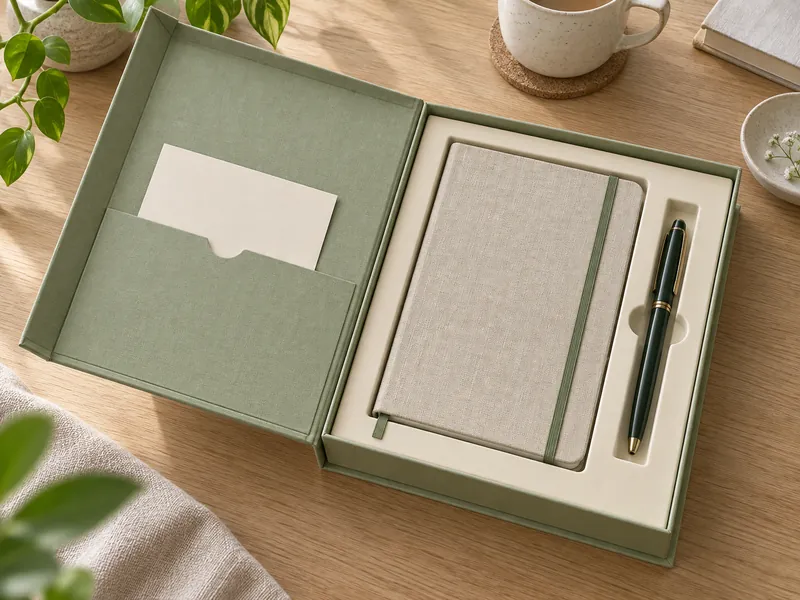
The box can introduce this story before any object is lifted. A quiet cover creates anticipation, while the first open view places the notebook in the lead and the pen within easy reach. The card supplies context without hiding the two things that make the gift usable.
Seven Rainbow’s book-style rigid boxes include stationery applications such as notebooks and pens. An attached lid can echo the movement of opening a book and provide space for a brief introduction. That association is a design opportunity, not a reason to disguise which part of the package actually opens.
What Should the First View Communicate?
The first view should answer three quiet questions: what is included, how do the pieces belong together, and what can I do with them? Clear spacing and a small amount of relevant language can answer these questions without a long explanatory leaflet. The recipient should recognize the gift before reading its full story.
Let the Notebook Carry the Main Idea
The notebook usually occupies the largest area, so its cover becomes an important part of the open composition. Give it enough visual space that its material, color, and proportions remain readable. A narrow channel beside it can introduce the pen without allowing the smaller object to disappear.
A decorated notebook may need a quieter box lining, while a plain notebook can sit comfortably against a restrained pattern. When the notebook cover already carries a lively illustration, a restrained lining gives that artwork a clearer setting; when the cover is plain, the lining can introduce a little more pattern while keeping the notebook recognizable as the main object in the gift. Repeating a single accent color is often more useful than reproducing the entire cover design on the lid.
Make the Pen Feel Related, Not Added Later
Place the pen so its purpose and full silhouette are easy to recognize. A dedicated position beside the notebook can show that the two objects form a pair, while also keeping the pen from lying across the cover. Avoid an arrangement that makes the recipient dismantle several decorative layers to reach it.
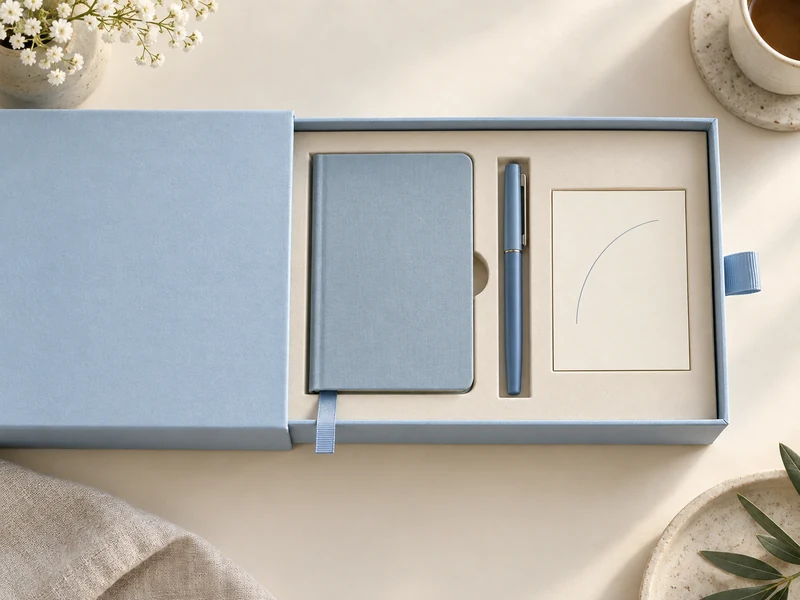
For a horizontal reveal, drawer rigid boxes offer another possible narrative. The tray brings the notebook and pen into view together as it moves out of the sleeve. Leave room for that movement on a desk, and let the pull indicate the intended direction.
Move From Looking to Making
How can packaging encourage a first action? Offer a small, optional prompt that relates to the included stationery and can be understood at a glance. It should feel like an invitation the recipient may adapt, rather than a task they are expected to complete correctly.
Keep the Prompt Close to the Tools
A card resting in a visible lid pocket can be read while the notebook remains in its tray. Alternatively, a small card beside the pen can connect the message directly to the act of writing. Keep it separate from any necessary product information so an imaginative suggestion is not mistaken for an instruction about care or use.
Possible original prompts include writing a question to return to later, making a small map of a familiar place, or describing an ordinary object without naming it. The point is to give the recipient a manageable starting choice. A notebook with ruled pages and a set intended for sketching may call for different invitations.
The National Gallery of Art’s drawing activities that embrace experimentation present prompts as opportunities to explore rather than achieve a polished result. A stationery gift can borrow that welcoming attitude without copying the exercises or claiming therapeutic benefits. Its own card can leave room for unfinished thoughts and unexpected uses.
Do Not Fill Every Blank Space
A blank notebook already offers possibility; the packaging does not need to explain every way it could be used. One prompt and a short welcome may be enough for the first encounter. Additional ideas can sit on the reverse of the card, leaving the front calm.
The considerations in printed insert cards for luxury gift boxes help separate useful information from repeated decoration. For this application, the card earns its place by connecting the objects to a possible action. A second version of the brand slogan adds less to that connection.
A Layout That Makes Sense in the Hand
The open composition should remain understandable when the recipient begins removing things. A notebook that sits below a rigid rim needs a clear lifting point, and a slender pen needs space for fingers beside it. The gift should not depend on squeezing a decorative part that was never intended to act as a handle.
Use the choices described in rigid box inserts to think about presentation and access together. A fitted tray can establish distinct places for the notebook, pen, and card. The exact support and clearances depend on the actual objects, rather than on a universal layout formula.
- Keep the notebook cover visible so the recipient understands its orientation.
- Separate the pen from the cover to avoid a loose object crossing the main surface.
- Leave the invitation card reachable without lifting the entire tray.
- Make any lifting ribbon visibly different from a decorative tie.
- Allow removed pieces to return to their places without confusing overlap.
A compact set does not need a large empty border to appear thoughtful. Space should have a purpose, such as separating objects or providing access. If the box feels substantially larger than its contents, the recipient may experience the presentation as padding rather than generosity.
Three Creative Directions for the Same Pair of Objects
The Everyday Observer
This fictional concept pairs an understated notebook with a pen and a card about noticing small details. A thin line motif can travel from the outer cover to the card, where it becomes the beginning of an unfinished shape. The recipient is invited to continue the idea in their own way.
The interior stays light and open, with the notebook and pen presented side by side. The message could suggest capturing a sound, a phrase, or an overlooked object from the day. Keep the invitation broad enough that someone who prefers words over drawings still feels included.
The Personal Correspondent
A second concept frames the notebook as a place to collect thoughts before sharing them. A card can invite the recipient to begin a note to someone they appreciate, without requiring the note to be sent. The design might echo the proportions of an envelope while remaining clearly a notebook gift.
A contrasting inner lid can create a private-feeling space for the welcome message. Avoid filling it with a long brand history that interrupts the personal theme. The package sets the tone, then gives the recipient room to make the gesture their own.
The New Chapter
A third concept marks a beginning: a new study, a personal project, or a move to a different place. A simple dividing line on the cover can continue onto the card as a visual suggestion of a fresh page. The prompt can invite one question or intention instead of a complete plan.
Keep the language open rather than assuming everyone celebrates the same milestones in the same way. A recipient may use the notebook for lists, sketches, or practical reminders. The gift remains meaningful when its story allows that flexibility.
Let the Materials Support the Invitation
Paper texture can link the exterior, notebook cover, and card without making them identical. The range of rigid box wrapping materials provides different visual and tactile possibilities. A subtle texture can carry interest where additional print would make the composition busier.
The final design should bring the recipient from recognition to possibility: here is a notebook, here is a pen, and here is an idea you can make your own. A clear reveal, accessible arrangement, and thoughtful prompt give the stationery a shared purpose. The most memorable part can then happen after the box is opened, when the recipient makes the first mark.